

Your draft for an English class comes back with a similarity score, and the report suddenly feels more important than the paper itself.
That reaction makes sense. Turnitin results look precise, but they still depend on interpretation, file quality, and assignment context.
The useful question is where the report is strong, where it is limited, and how to review it fairly.
Quick Answer to Whether Turnitin Is Accurate
The Turnitin plagiarism checking tool can be accurate at locating matching text and identifying patterns that deserve attention, but it is not a tool that proves plagiarism or misconduct on its own. That distinction is the main point students need. Turnitin explains that it identifies similarity, while instructors decide what the overlap actually means. A highlighted sentence might come from a properly quoted source, a reference list, a common phrase used across the class, or a passage that needs better citation.
The same caution applies to AI writing indicators. Turnitin says its AI writing capability is designed to help educators identify text that might be prepared by generative AI tools, chatbots, word spinners, and bypasser tools. It also says the model may misidentify human-written, AI-generated, and AI-paraphrased text and should not be the sole basis for adverse action.
For students, the practical answer is simple: the report can be helpful and sometimes very strong at surfacing issues, but it is most fair and most accurate when a human reviews the details instead of reacting only to the number.
Accuracy Means Different Things in Turnitin Reports
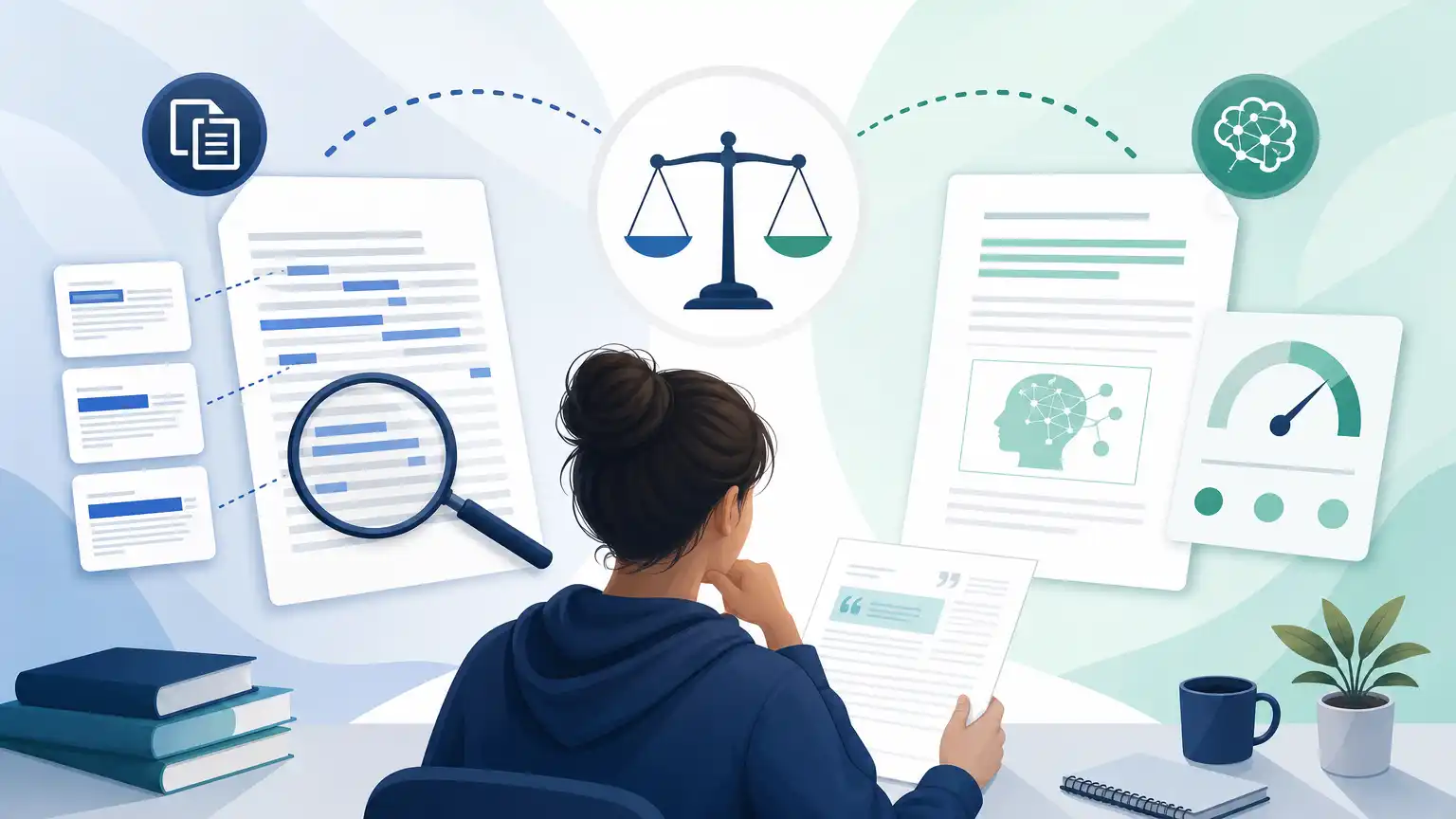
When students ask whether a report is accurate, they are often combining two different questions. One question is whether Turnitin found real text overlap with existing sources. The other is whether an AI writing indicator fairly reflects how the draft was produced. Those are not the same task, and they should not be judged by the same standard.
Report Element | What It Is Designed To Indicate | What It Cannot Decide Alone |
|---|---|---|
Similarity score | How much text overlaps with material in comparison sources | Whether plagiarism happened |
Source matches | Where the overlapping language appears | Whether the overlap is acceptable in context |
AI writing percentage | How much text may fit AI-related writing patterns | Who wrote the text or what the student's intent was |
Turnitin also states that the AI percentage is different from and independent of the Similarity score. A paper can have a modest similarity score and still show AI-related signals, or it can have a high similarity score because of quotations and references without raising the same AI concerns.
Once you separate those categories, the report becomes easier to read. Accuracy for similarity matching is about whether the system found overlapping text. Evaluating the Turnitin AI detection reliability means deciding whether a pattern-based signal should prompt closer human review. Students usually feel less blindsided when they stop treating the whole report as one all-purpose verdict.
Why Similarity Scores Need Context
A similarity percentage feels definitive because it is neat, colorful, and easy to compare. In practice, though, the number is only a starting point. Turnitin tells students that a high similarity score does not automatically prove plagiarism and that a low score does not automatically prove the absence of a problem. That official warning matters because many normal parts of academic writing can raise the score.
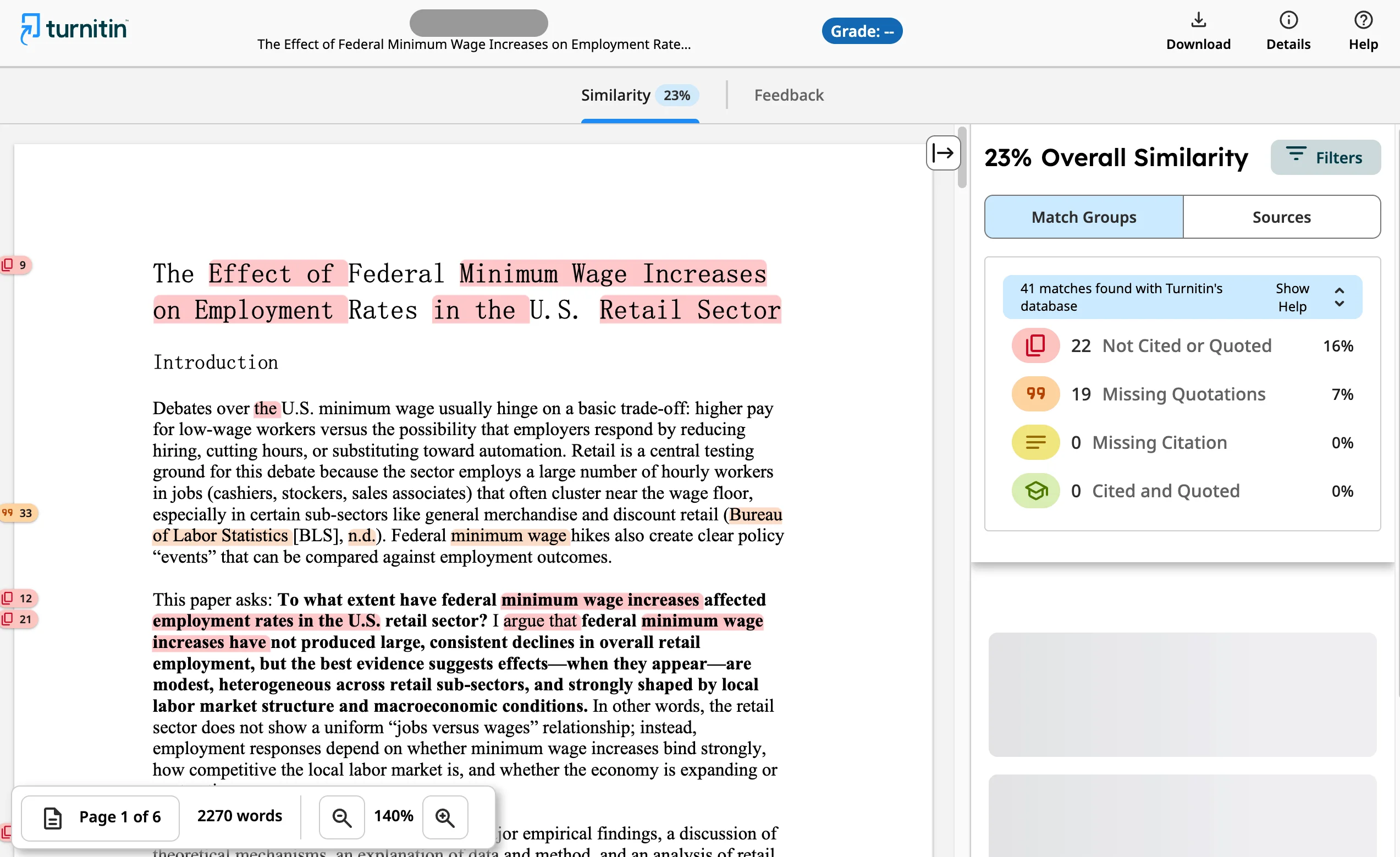
Think about assignments that naturally repeat language. A nursing paper may include standard terminology. A lab report may repeat methods phrasing. A literature review may contain many short quoted passages and source-heavy discussion. Even a correctly formatted bibliography can contribute to overlap. None of those examples means the report is wrong. They show why a 36% Turnitin similarity result, for example, is incomplete without context.
The better question is where the overlap appears. If the matches are concentrated in titles, references, quoted material, or common expressions, the score may look more alarming than the actual writing issue. If the overlap appears in your analysis, topic sentences, or paraphrased source discussion, the concern is more serious.
Turnitin's own explanation is useful here: it does not detect plagiarism by itself; it identifies similarity that instructors must interpret. You can read that distinction directly in Turnitin's overview of similarity and plagiarism. For a student trying to judge fairness, that is the central rule.
Why AI Writing Scores Need Human Review
AI writing percentages can feel even more intimidating because students may not know what the score actually represents. Turnitin says the AI Writing tab contains the overall percentage of text detected as AI in the new Similarity Report. It also says the model may misidentify human-written, AI-generated, and AI-paraphrased text. That means the score is a caution signal, not a self-executing accusation.
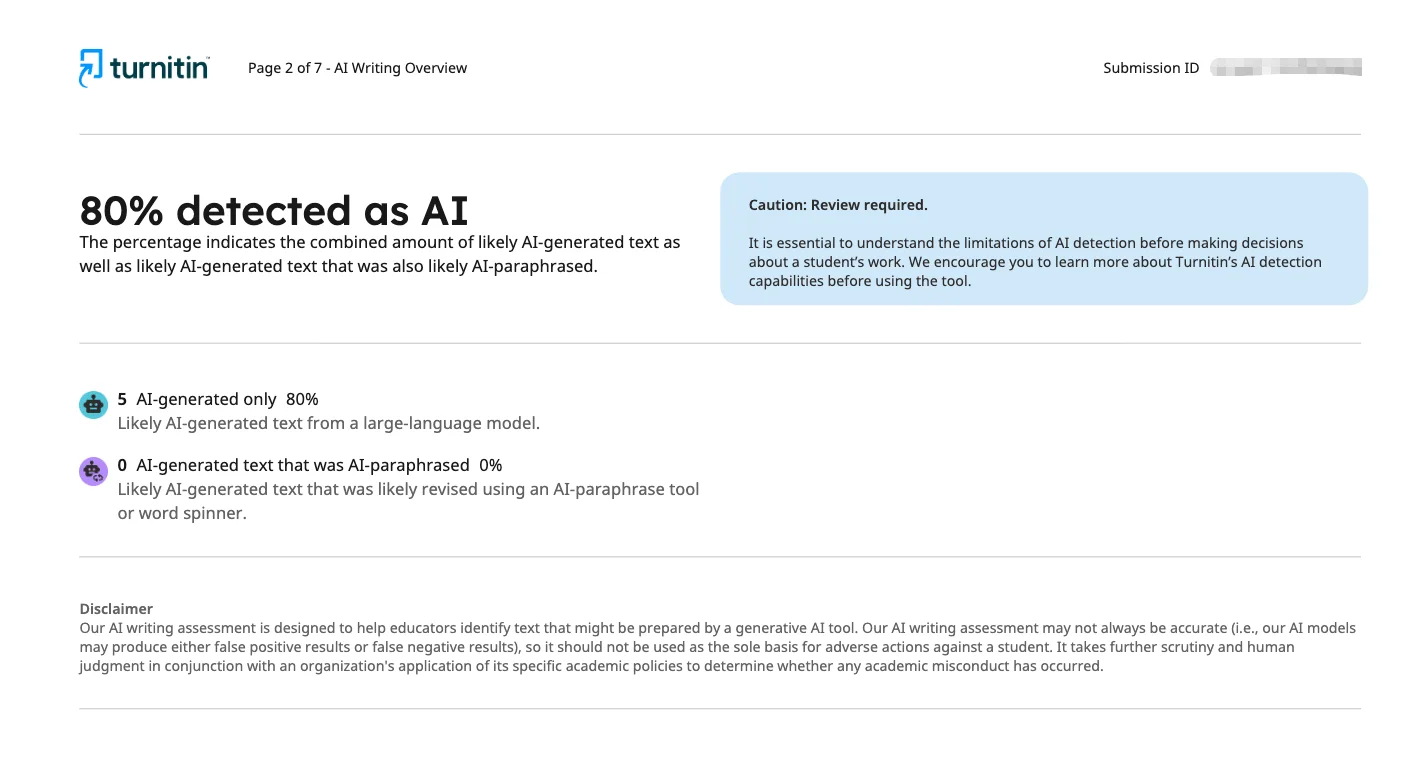
Turnitin describes two interactive AI report categories: AI-generated only and AI-generated text that was AI-paraphrased. Its discussion of Turnitin QuillBot paraphrase detection names QuillBot as an example of an AI paraphrasing tool or word spinner. For students, that means the system is not just looking for copied content. It is evaluating writing patterns that may resemble machine-produced or machine-reworked text.
Another important limit appears in Turnitin's guidance on access to the AI Writing Report. Scores below 20% are shown with an asterisk in some views because results are less reliable and false positives are more likely. That is a clear reason to avoid overreading a small percentage.
If you used AI in any limited, allowed way, the responsible move is not to hide it or chase a bypass. Instead, verify your claims, rewrite weak sections from your own understanding, and make sure your final wording reflects your real thinking. If a draft still sounds stiff after honest revision, some students use Dr. Humanizer to reduce robotic phrasing, but the substance still needs to be yours.
What Makes a Report More or Less Reliable
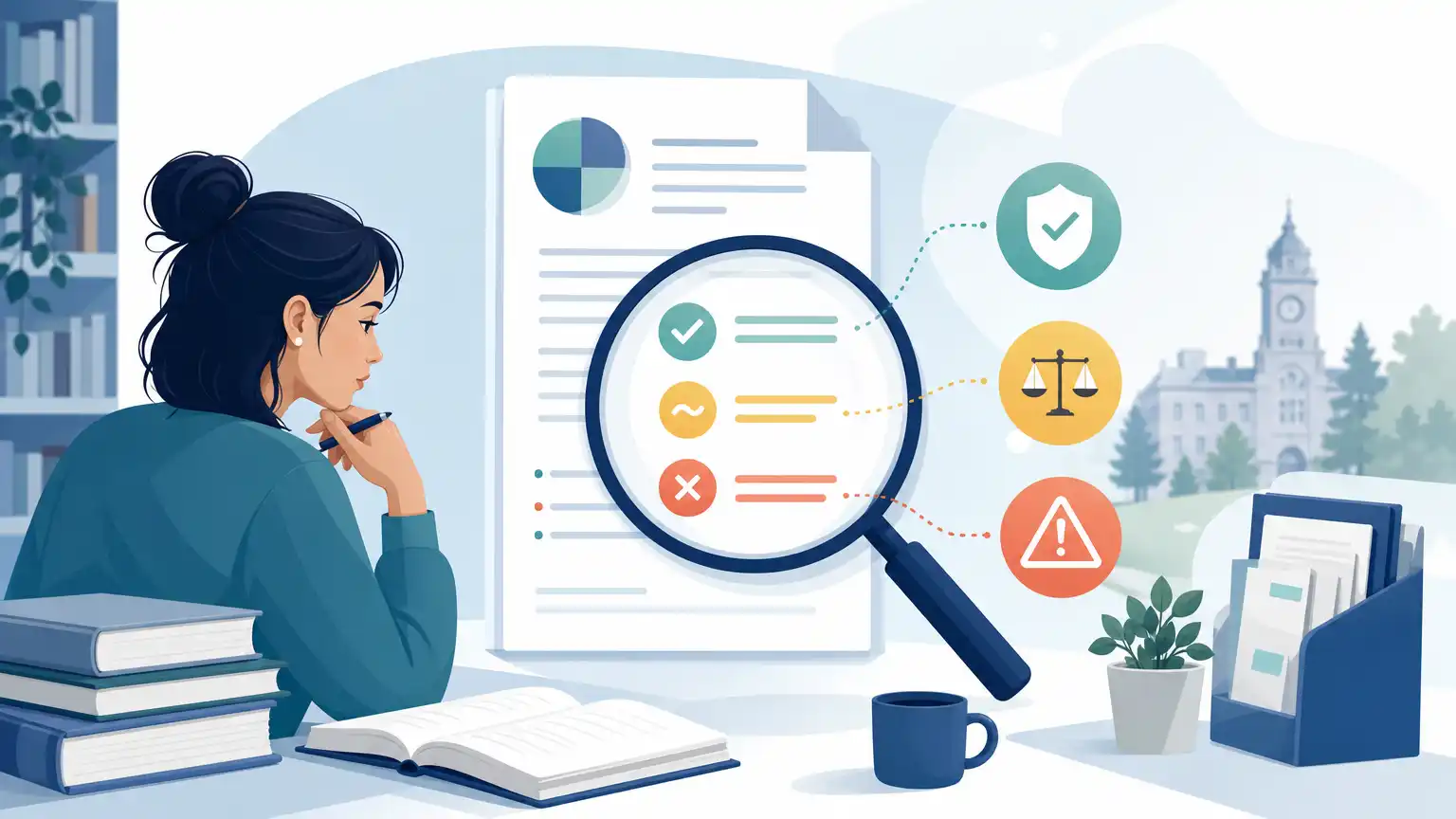
Software quality matters, but so do the conditions around the submission. A report is more reliable when the file is readable, the assignment is set up consistently, and the system has had enough time to process the document. Turnitin warns that PDFs with non-selectable text, embedded extra files, or unreadable formatting may be rejected or fail to process correctly. If the text cannot be handled cleanly, the output may be delayed or incomplete.
Turnitin also recommends using a consistent file format across students when AI writing detection is used for an assignment. That advice may sound technical, but it points to a fairness issue. If one student uploads a clean document and another uploads a messy PDF export, the processing conditions are not identical.
The Turnitin processing times can also affect what you see. Turnitin says uploaded files can take 10 to 15 minutes to process and generate a Similarity Report. Overwritten or resubmitted papers may take up to 24 hours, and after three resubmission attempts the longer wait can apply. A student who keeps refreshing the page right after a resubmission may be reacting to an unfinished process rather than a stable result.
So if a report seems odd, check the basics first: Was the file readable? Was it a single document? Was it recently resubmitted? Has enough processing time passed? Those practical questions often explain why a result feels inconsistent.
Key Takeaways About Turnitin Accuracy
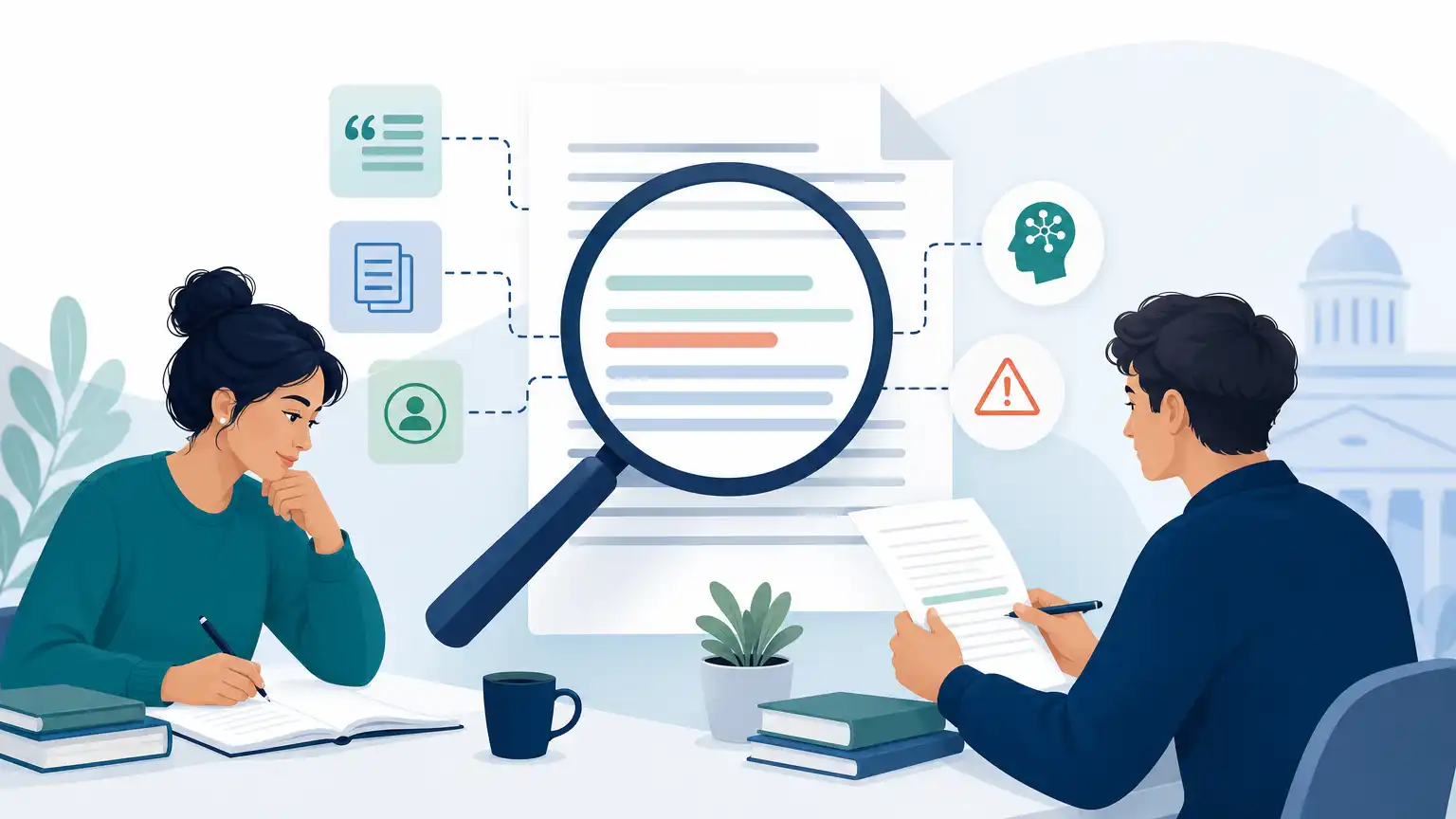
Turnitin is best read as an academic review tool, not as a final judge.
Similarity matching can accurately find overlap, but overlap still needs human interpretation.
Turnitin states that similarity is not the same as plagiarism.
AI writing percentages are separate from similarity scores and should be interpreted independently.
Turnitin says its AI model may misidentify human-written, AI-generated, and AI-paraphrased text.
Scores below 20% in some AI views are marked with an asterisk because false positives are more likely.
Readable files, consistent formatting, and enough processing time all support more reliable reports.
The fairest student response is to review the highlighted passages, not just the overall number.
These takeaways matter most when a report feels personal or stressful. Numbers can create a sense of certainty that the underlying evidence does not always support. Looking at the actual matched text, your citations, and the assignment type usually gives a much clearer picture than reacting to a percentage alone.
If an instructor raises concerns, it helps to discuss the specific passages, your drafting process, and the sources you used. That conversation is usually more productive than arguing over whether a score looks high or low in the abstract.
Frequently Asked Questions
Can Turnitin Prove Plagiarism by Itself?
No. Turnitin states that it identifies similarity, not plagiarism itself. An instructor still has to review the matched passages and decide whether they reflect quotation, citation, common wording, or a real academic integrity problem.
Does a High Similarity Score Mean the Report Is Accurate?
It may accurately show a lot of overlap, but that does not mean the interpretation is automatically negative. A high score can come from references, quotations, or assignment-specific language. Accuracy in matching text is different from accuracy in judging misconduct.
Why Are Small AI Percentages Treated Carefully?
Turnitin says scores below 20% are shown with an asterisk in some views because results are less reliable and false positives are more likely. That is one reason educators are told not to use the AI score as the sole basis for adverse action.
Can Resubmitting a Paper Change What I See?
Yes. Turnitin says overwritten or resubmitted papers may take up to 24 hours to generate a new Similarity Report. The first three resubmission attempts may process immediately, but after that a longer wait can apply.
Do File Type and Formatting Affect Reliability?
They can. Turnitin warns that some PDFs with non-selectable text or unreadable formatting may not process correctly. It also recommends consistent file formats across students when AI writing detection is being used for an assignment.
Conclusion on Whether Turnitin Is Accurate

For students asking whether Turnitin is accurate, the fairest answer is that Turnitin can accurately surface text matches and useful AI-related signals, but it cannot replace human judgment. Similarity is not the same as plagiarism, and an AI writing percentage is not proof that a student acted improperly.
If your report seems unfair, slow down and inspect the evidence behind it. Look at where the overlap appears, whether your citations and quotation marks are correct, whether the file processed cleanly, and whether a recent resubmission may still be updating. That approach gives you a better basis for talking with an instructor and a more realistic sense of what the report can and cannot say.