
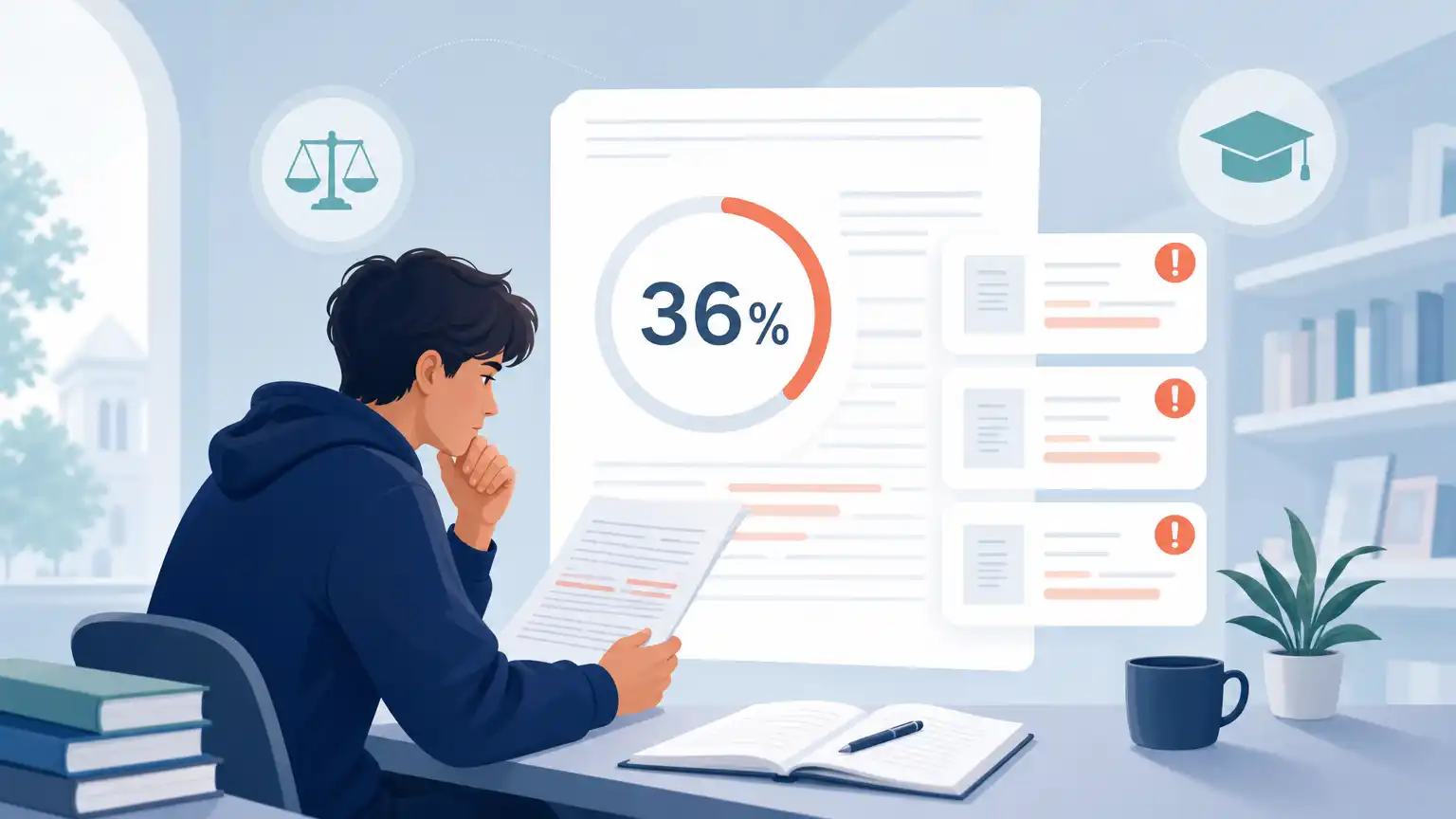
Your draft for a sociology class comes back with a 36% Turnitin similarity score, and suddenly the report feels more important than the paper.
If you are wondering whether is 36 % similarity on turnitin bad, the short answer is that the number matters, but the matches matter more.
The useful move is to review the matched sources before treating 36% as good or bad.
Quick Answer to Is 36 % Similarity on Turnitin Bad
A 36% similarity score is not automatically bad, but it is high enough that you should stop and review the report carefully. Turnitin tells students that a high similarity score does not automatically prove plagiarism, and a low score does not automatically prove that a paper is problem-free. The score is a signal for interpretation, not a final judgment.
That distinction matters because one 36% report may be mostly harmless while another may be genuinely concerning. A paper heavy with direct quotations, a long references page, or required template language can produce a noticeable percentage without showing dishonest source use. A different paper might reach 36% because several body paragraphs stay very close to one source's wording or structure.
The best first reaction is calm triage. Open the largest matches, see where they appear, and ask whether those passages belong there. If overlap appears mainly in quotations, headings, or bibliography material, the score may be explainable. If overlap appears in your thesis, analysis, or final judgment, that usually deserves revision before you resubmit.
Why 36% Similarity Needs Source-level Review
The overall percentage can be misleading because it compresses many kinds of overlap into one number. Two students can each receive 36%, yet one report may show dozens of tiny matches from common phrases while the other shows long uninterrupted blocks from a single article. Those are not the same situation, even though the score looks identical at the top.
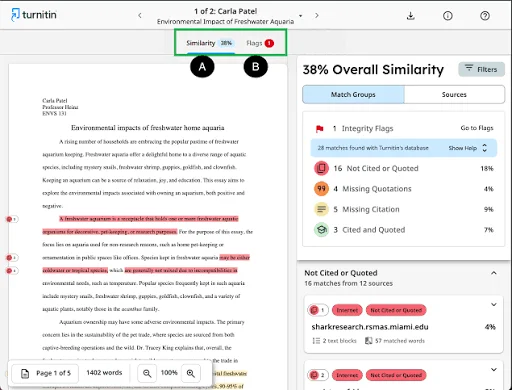
Start by checking the biggest sources first. If one source contributes a large share of the report, that often points to overreliance. You may have quoted too much, paraphrased too closely, or followed the source's organization so closely that your own writing gets buried. If the score is spread across many small sources, the issue may be less about copying and more about ordinary academic phrasing, citation entries, or assignment language.
Location matters just as much as size. Overlap in a works cited page, title, prompt text, or clearly marked quotation usually raises less concern than overlap in your central claims. The Turnitin plagiarism checking process identifies text similarity for instructors to interpret. Its own blog also states that it does not detect plagiarism directly; it identifies similarity that still requires human judgment.
Report Pattern | Usually Less Concerning | Usually More Concerning |
|---|---|---|
Largest Match | Short quoted or formulaic text | Long continuous body paragraph |
Source Spread | Many small matches | One dominant source |
Match Location | References, headings, instructions | Analysis, discussion, interpretation |
Writing Quality | Clear citation and explanation | Close paraphrase with minimal originality |
What Could Make 36% Acceptable or Concerning
A 36% score can land very differently depending on the assignment. In a lab report, business memo, nursing care plan, or legal analysis, some repeated wording is normal. Methods sections, discipline-specific terms, and standard headings often look similar across many submissions. In those settings, a moderate-to-high similarity percentage may be easier to explain if your interpretation and judgments are still clearly your own.
In a personal reflection, literary analysis, or response essay, the tolerance for repeated wording is usually lower. Those assignments expect your own phrasing, point of view, and sentence rhythm. If the highlighted material appears in places where your original thinking should be most visible, then 36% becomes more concerning.

Another factor is how the paper uses sources overall. A paper built from short, properly integrated quotations with commentary may be defensible. A paper built from paraphrases that merely swap a few words is harder to defend, even if every source is cited. Citation helps with attribution, but it does not automatically make close copying acceptable.
Instructor policy also matters. Some professors mention preferred similarity ranges, while others care more about whether the paper demonstrates independent thought, honest attribution, and fit with the assignment. If your class rubric or syllabus says anything about source use, read that language before assuming the score tells the whole story.
How Quotes, References, and Templates Affect the Score
Many students are surprised to learn that correctly used material can still raise a similarity score. Direct quotations are supposed to match the original wording exactly, so Turnitin will often highlight them. That does not mean the quote is wrong. It means the software found matching text and displayed it for review.
References pages can have the same effect. Citation formats are standardized, and many students cite the same books, journal articles, and websites in nearly identical form. Required templates can also inflate the score. If everyone in the class uses the same headings, cover format, case prompts, or response structure, some overlap is built into the assignment itself.
Even so, these features should not distract you from the body paragraphs. The real question is whether your core writing sounds like your own work. If most of the highlighted text sits in the bibliography or in properly marked quotations, the score may be less alarming. If highlighted text fills your explanation, argument, or synthesis, you likely need to revise.
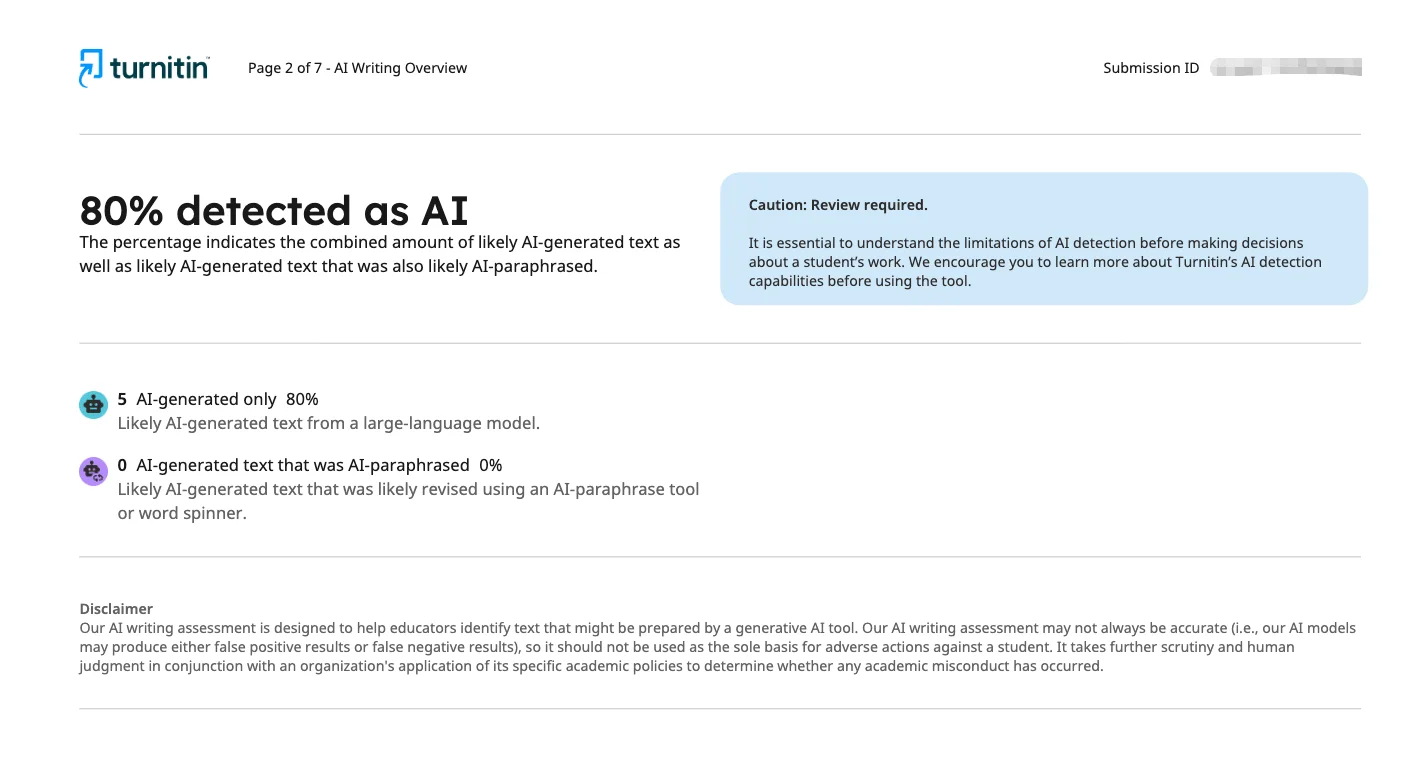
If you also see an AI-related percentage, do not treat it as the same thing as similarity. Turnitin says the AI Writing Report is separate from and independent of the Similarity score. It also warns about Turnitin AI detection errors involving human-written, AI-generated, and AI-paraphrased text and says AI results should not be the sole basis for adverse action. Turnitin further describes two report categories, AI-generated only and AI-generated text that was AI-paraphrased. Those indicators answer a different question from text overlap. Students who use AI for brainstorming or drafting should still review wording closely so the final prose reflects real understanding and revision.
What to Revise Before You Resubmit
If the report makes you uneasy, revise for clarity and ownership rather than trying to game the number. Begin with the longest body matches. Compare your sentence to the source and ask whether you borrowed its wording, structure, or sequence of ideas too closely. If so, set the source aside for a moment and rewrite from your own understanding, then return to verify accuracy and citation.
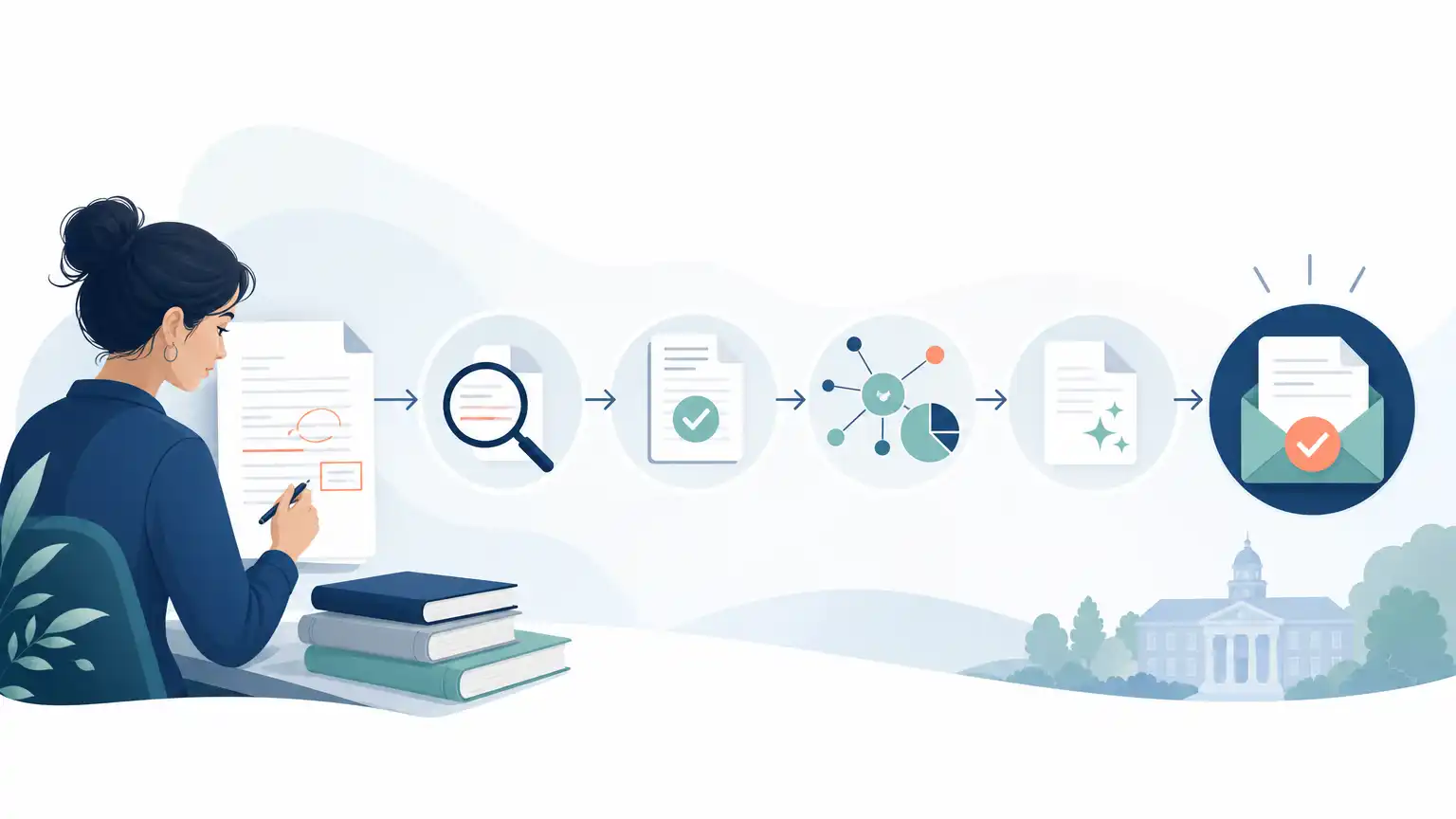
Next, trim unnecessary quotations. Keep direct quotes when exact wording matters, but do not let quoted language carry your whole paragraph. After each quote, explain why it matters in your own voice. For paraphrases, make sure you are not just replacing a few nouns and verbs. Strong paraphrasing changes the structure while preserving the meaning and citation.
Also clean up accidental contributors. Remove pasted assignment instructions, duplicated headings, or sample text left in a template. Then check your file format before uploading. Turnitin warns that some PDFs with non-selectable text, embedded extra files, or unreadable formatting may fail to process correctly, and standard assignments accept only a single document. Turnitin resubmission processing times matter too. Turnitin says many files process within about 10 to 15 minutes, but overwritten or resubmitted papers may take up to 24 hours. It also notes that after three resubmission attempts, the longer wait may apply.
Key Takeaways for a 36% Similarity Score
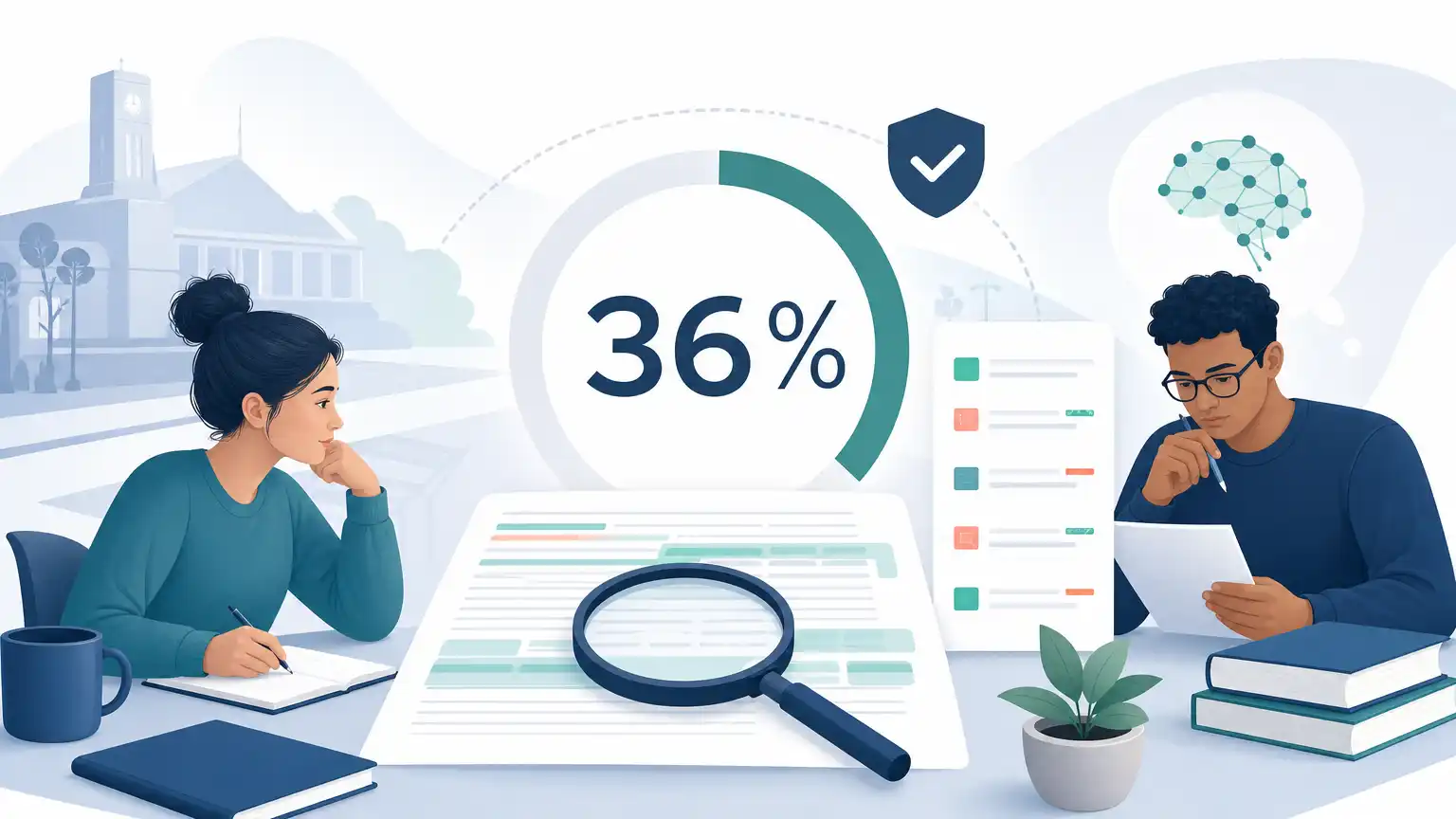
A 36% score is worth reviewing carefully, but it is not automatic proof of misconduct.
Turnitin says similarity shows matched text, not a final plagiarism decision.
The most useful questions are where the matches appear and what kinds of sources they come from.
One large source match is often more concerning than many small, scattered matches.
Quotes, references, and assignment templates can raise the percentage for understandable reasons.
Close paraphrasing in your main analysis is usually a bigger issue than overlap in a bibliography.
Similarity and AI writing indicators are separate in Turnitin and should not be read as the same result.
Resubmission timing can slow down, so revise early instead of waiting until the deadline.
If you want one simple rule, focus less on the number and more on ownership. Your instructor is likely to care most about whether the paper's key ideas, phrasing, and interpretation genuinely sound like your work.
Frequently Asked Questions
Can 36% Similarity Still Be Fine If Everything Is Cited?
Sometimes, yes, but citation does not fix every issue. A paper can identify the source correctly and still rely too heavily on the source's wording or organization. Most instructors expect attribution plus original phrasing and analysis.
Does Turnitin Decide Whether I Plagiarized?
No. Turnitin states that it identifies text similarity, and instructors must interpret what the report shows. According to Turnitin's explanation of similarity and plagiarism, similarity findings are not the same thing as a direct plagiarism verdict.
Should I Worry If One Source Dominates the Score?
Yes, that usually deserves close review. When one source contributes most of the overlap, it can suggest that your draft follows that source too closely in wording, structure, or development. One dominant match is often more concerning than the same percentage scattered across many small matches.
Is the AI Writing Percentage the Same as the Similarity Score?
No. Turnitin says the AI Writing Report is different from and independent of the Similarity score. It also says AI results can misidentify human-written, AI-generated, and AI-paraphrased text, so that percentage should not be treated as a stand-alone judgment.
How Long Will a New Similarity Report Take After Resubmission?
Sometimes it appears fairly quickly, but Turnitin says overwritten or resubmitted papers may take up to 24 hours. The first few resubmissions may generate reports sooner, but later attempts can trigger the longer delay.
Conclusion on Is 36 % Similarity on Turnitin Bad
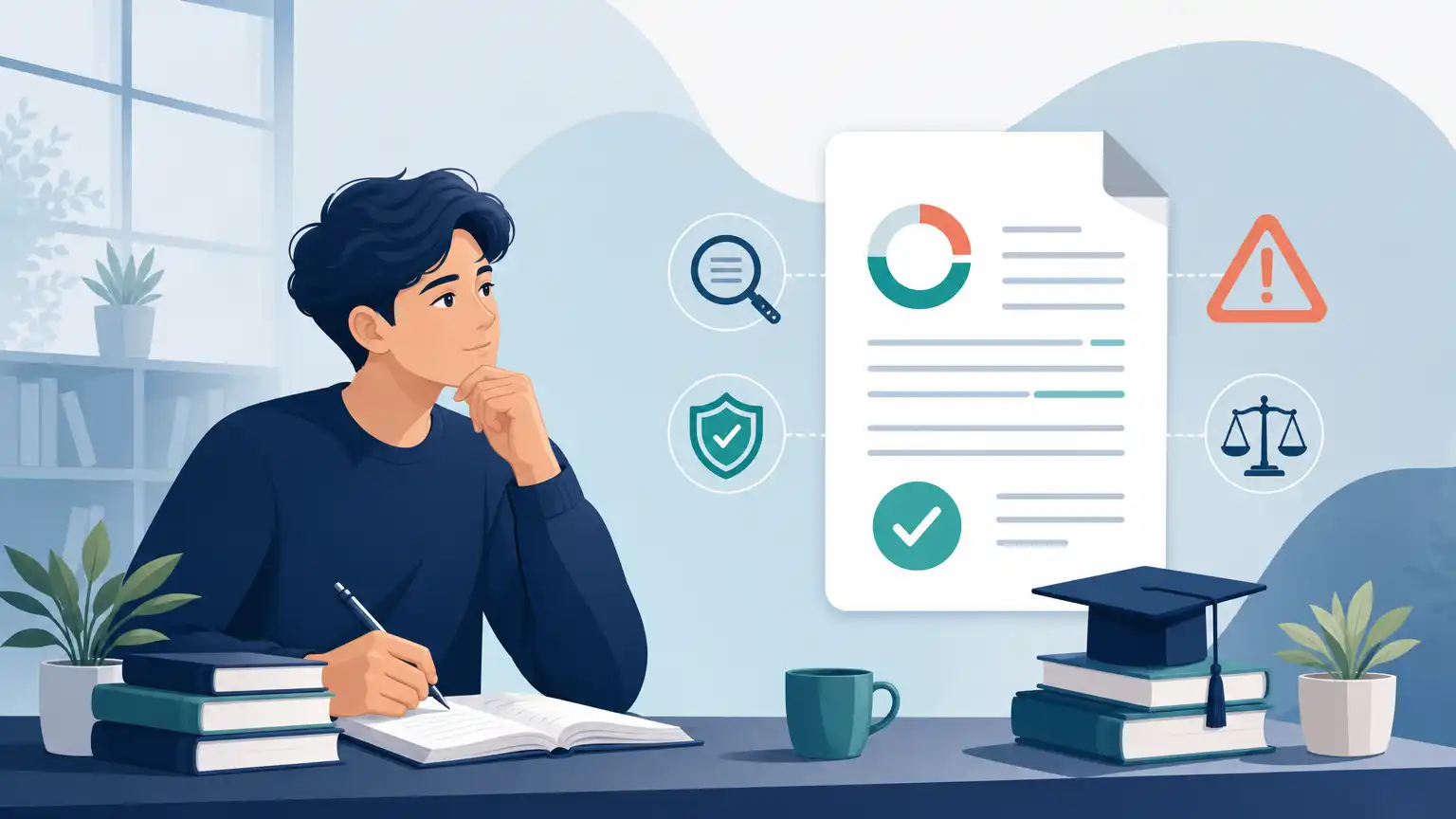
When students ask whether is 36 % similarity on turnitin bad, the most accurate response is that 36% is significant but not self-explanatory. It is high enough to take seriously, yet too broad to judge without reading the report in context.
Look at the source type, the size of the matches, and where they appear in the paper. A score shaped by quotations, references, or template language may be understandable. A score shaped by long matched passages in your main discussion usually points to revision needs.
The best next step is not panic. Open the report, review the biggest matches first, and strengthen the parts of the paper where your own thinking should be clearest. That approach turns the score into a revision tool instead of a final label.