

Your draft is due tonight, and after running several paragraphs through QuillBot, you are wondering what your instructor might see in a Turnitin report.
That concern usually blends three separate issues: paraphrasing, similarity matches, and AI-related signals. They can overlap, but they are not the same thing.
The useful move is to revise for authorship and citation clarity, not just wording changes.
Quick Answer to Can Turnitin Detect QuillBot
The short answer is no simple yes-or-no label exists that tells an instructor, with certainty, that QuillBot was used on a paper. Turnitin does not describe its system as an app-specific confession tool. Instead, in its official AI writing materials, Turnitin says its AI writing capability is designed to help educators identify text that might be prepared by generative AI tools, chatbots, word spinners, and bypasser tools.
That wording matters because QuillBot falls into the broader paraphrasing or word-spinning context rather than a guaranteed named detection result. In Turnitin's overview of its AI writing detection model, it specifically names QuillBot as an example of an AI paraphrasing tool or word spinner. It also explains that its reporting can distinguish between AI-generated only text and AI-generated text that was AI-paraphrased.
At the same time, Turnitin warns that its AI model may misidentify human-written, AI-generated, and AI-paraphrased text, and it says the report should not be the sole basis for adverse action. For students, the practical takeaway is straightforward: QuillBot use does not guarantee one outcome, but paraphrased text can still create review risk if the final writing remains too close to source structure or sounds mechanically reworded.
How Turnitin Describes Ai-paraphrased Text
Turnitin's own language is more precise than many student rumors. In its documentation on the AI writing detection model, Turnitin describes two interactive categories inside the AI report: AI-generated only and AI-generated text that was AI-paraphrased. That means the platform is not limited to finding exact copied wording. It is also attempting to identify text patterns associated with generated writing that has been reworked by an AI paraphrasing tool.
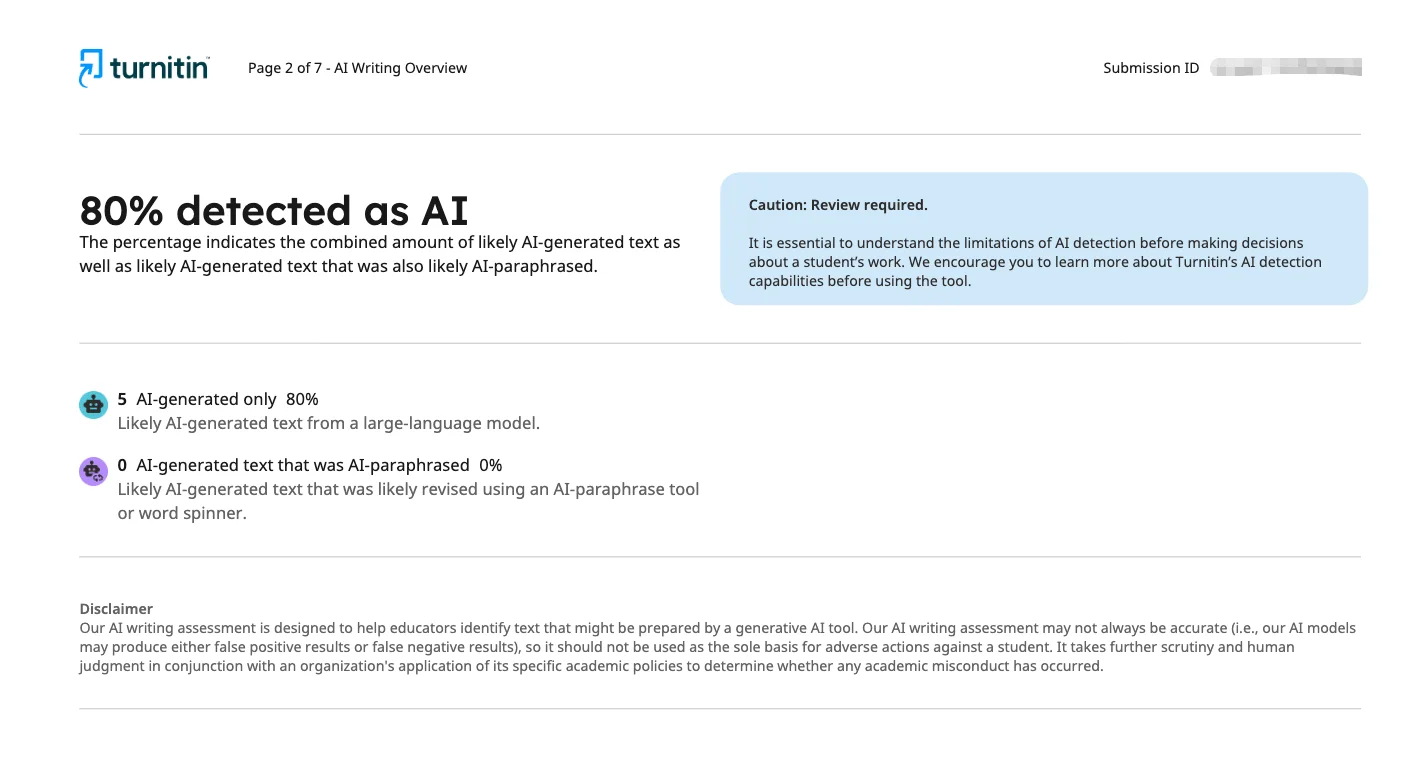
Turnitin also says the AI Writing tab contains the overall percentage of text detected as AI within the newer Similarity Report experience. Just as important, Turnitin says that this AI percentage is different from and independent of the Similarity score. Students often assume one number explains everything in the report, but Turnitin's guidance says otherwise.
Another detail students should know is that, in some views, scores below 20% are shown with an asterisk because those results are considered less reliable and false positives are more likely. That does not mean higher numbers are automatic proof of wrongdoing. Turnitin explicitly says its AI model may misidentify text and should not be the sole basis for penalties. If an instructor reviews a paper responsibly, the report is part of the conversation, not the entire final judgment.
For the official wording, see Turnitin's AI Writing Report guide and its AI writing detection model overview.
Why QuillBot Text May Still Look Detectable
Students sometimes assume that if enough words change, the writing will automatically look original. In practice, paraphrasing tools often preserve the source's logic, sentence order, and evidence pattern even when the vocabulary shifts. The result can read like a polished echo of the original passage instead of a fresh explanation written from understanding.
That is one reason QuillBot-processed text may still draw attention. A paragraph can avoid exact phrase overlap yet remain heavily dependent on the source's structure. It may also sound oddly even from sentence to sentence, with generic transitions, flattened voice, and synonym swaps that are technically grammatical but not quite natural. Those features do not prove anything by themselves, but they can make a draft appear more machine-shaped than student-developed.

There is also a practical submission issue to remember. Turnitin notes that PDFs with non-selectable text, embedded extra files, or unreadable formatting may be rejected or may fail to process correctly. If the file does process, the focus stays on the writing that appears in the document. So the better question is not how to make paraphrased text less noticeable. It is whether the final paragraph reflects your own comprehension, organization, and explanation.
If a section still sounds like it was mechanically rewritten from a source, revise from your notes first. Build the paragraph around your own claim, then use the source to support that claim rather than to dictate the paragraph's shape.
Similarity Matches vs. AI Writing Signals
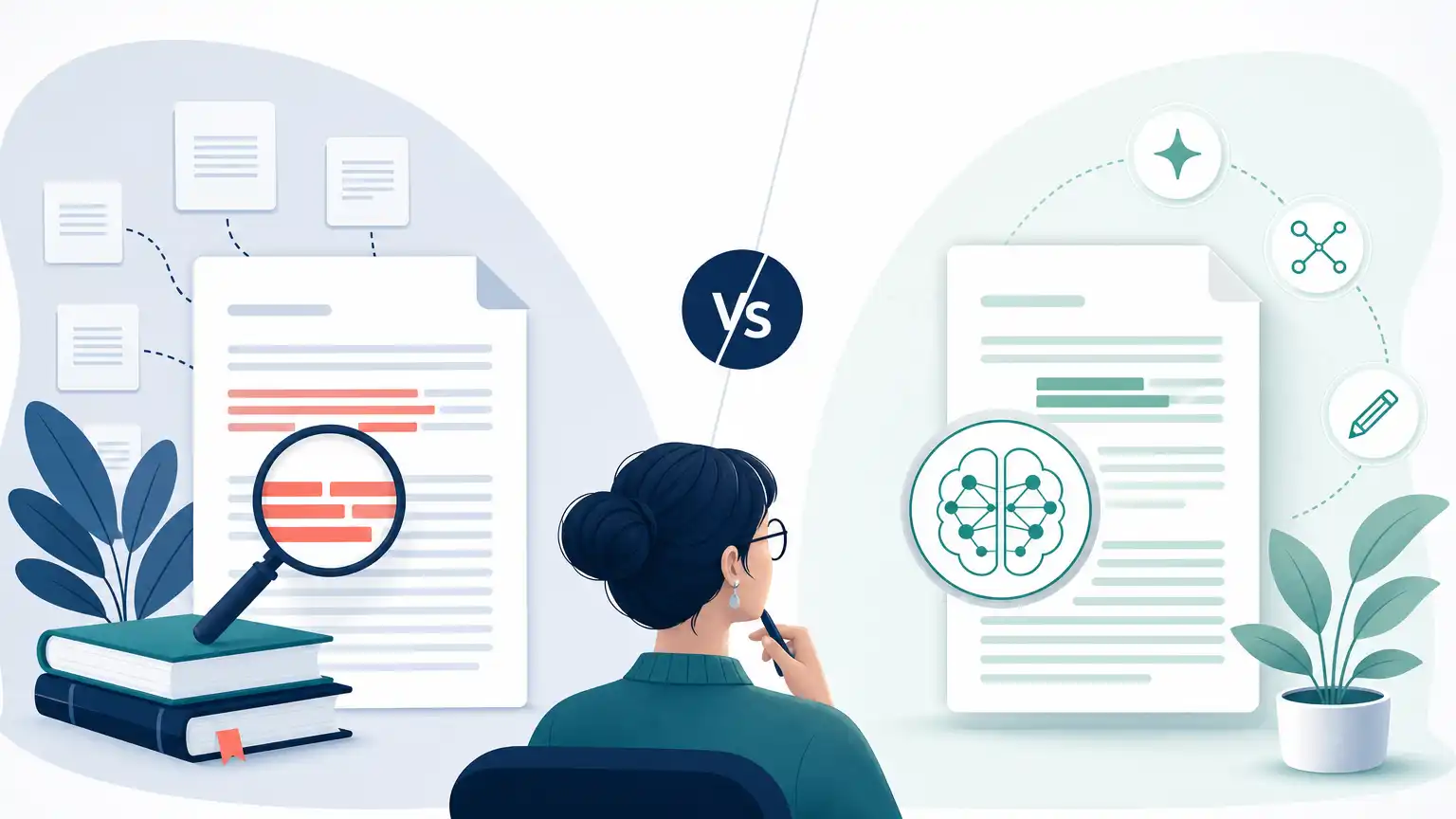
One of the biggest misunderstandings around Turnitin is the idea that every percentage in the report means the same thing. It does not. Turnitin’s plagiarism checker identifies text similarity that instructors must interpret, rather than detecting plagiarism directly. It also tells students that a high similarity score does not automatically prove plagiarism and a low score does not automatically prove the opposite.
Report Element | What It Measures | Why It Matters |
|---|---|---|
Similarity Score | Text overlap with sources in Turnitin's comparison databases | Overlap may come from quotes, references, templates, or wording that remains too close to a source |
AI Writing Percentage | Text Turnitin identifies as potentially AI-generated or AI-paraphrased | This percentage is separate from Similarity and is not a final verdict by itself |
Instructor Review | Human reading of the report and the paper | Assignment context, citation use, and writing quality still shape the final interpretation |
This distinction helps answer the student's concern more clearly. A QuillBot-revised paragraph might reduce exact overlap in one area while still preserving enough source language or structure to create similarity matches elsewhere. Or it might show limited overlap but still raise AI-related concerns if the phrasing appears heavily machine-shaped. Those are different forms of review, not one combined score.
Turnitin’s report processing time can add confusion too. Turnitin says uploaded files can take 10 to 15 minutes to process and generate a Similarity Report. It also says overwritten or resubmitted papers may take up to 24 hours to generate a new report, and after three resubmission attempts that longer wait may apply. Before reacting to a number, make sure you are looking at the latest processed version.
What to Do If a Paraphrased Draft Feels Too Mechanical
If your draft sounds stiff after paraphrasing, the answer is not to keep running the same sentences through more rewording tools. That turns revision into a concealment exercise, and it usually leaves the prose thinner, stranger, and less connected to your actual thinking. A better move is to rebuild the paragraph from comprehension.
Start by closing both the original source and the paraphrased version. Write out the point you are trying to make in plain language, as if you were explaining it to a classmate after class. Then reopen the source and check whether your explanation is accurate. Once that core idea is clear, add only the evidence or phrasing you truly need, and cite it correctly. This process often changes the order, emphasis, and sentence design enough to sound like real academic writing rather than automated substitution.
Next, listen for warning signs: repeated transition words, slightly off synonyms, vague verbs, and sentences that are smooth but oddly impersonal. Reading aloud helps because robotic phrasing is easier to hear than to spot silently. A writing center tutor or trusted peer can also point out places where the paragraph stops sounding like you.
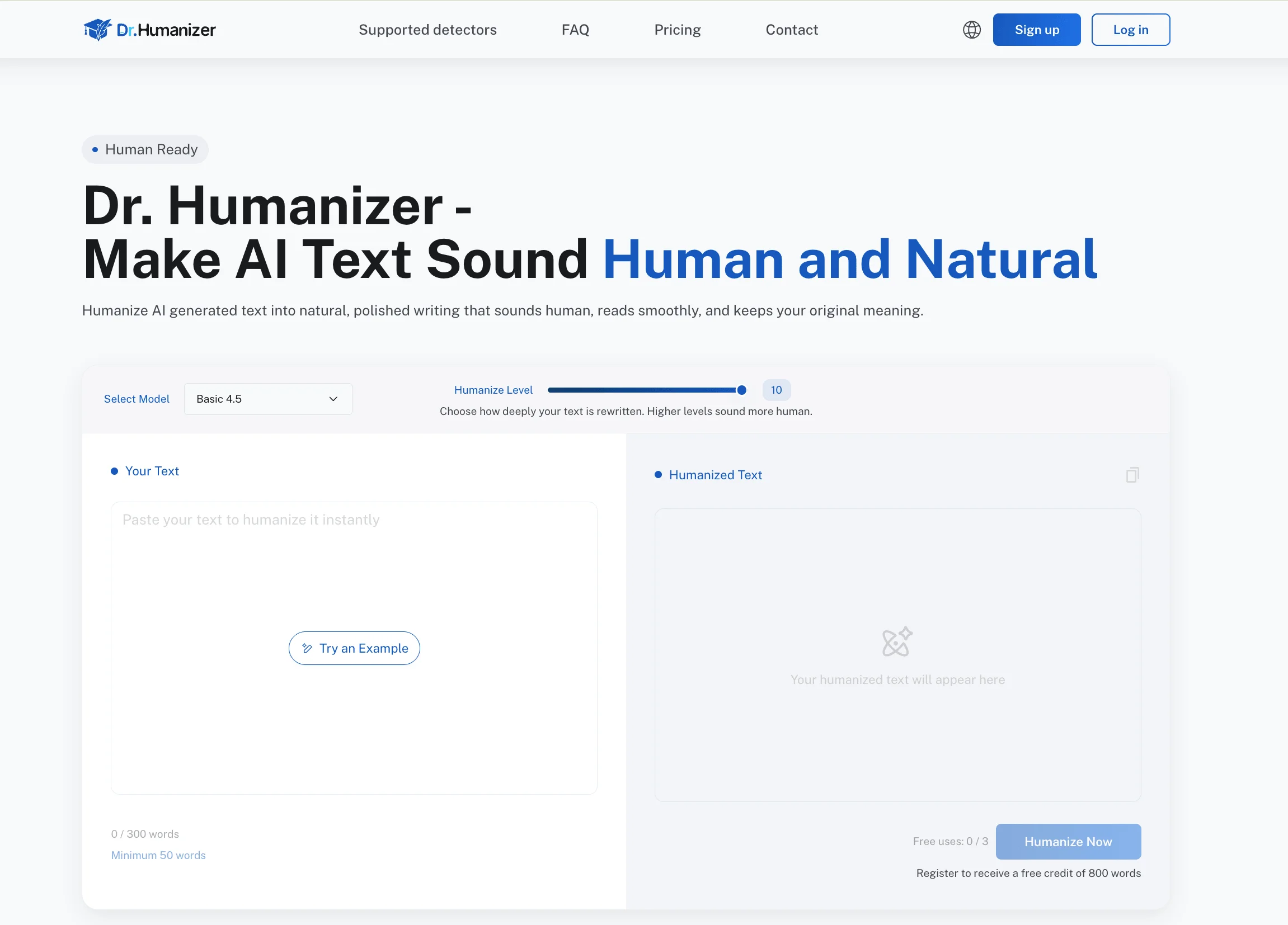
If you used AI in early drafting, a later style pass with Dr. Humanizer may help identify robotic wording, but the essential work still needs to come from your own reasoning and revision. The goal is stronger writing, not a cleaner disguise.
Key Takeaways Before Submitting Paraphrased Work

Turnitin does not promise a guaranteed app-by-app verdict proving QuillBot was used, but its documentation does discuss AI-paraphrased text and names QuillBot as an example in that context.
The AI writing percentage and the Similarity score are separate report elements. One should not be treated as a shortcut explanation for the other.
A lower similarity result does not make a paraphrased passage risk-free. Source structure, mechanical tone, and AI-paraphrase signals can still matter during review.
Turnitin says its AI model may misidentify text and should not be the sole basis for adverse action, so instructor judgment remains important.
Revise from understanding, not from a chain of synonym swaps. Your own organization and explanation are stronger signs of authentic student writing.
Check submission basics before uploading: Turnitin says only one document may be submitted to a standard assignment, and some PDFs may not process correctly if the text is unreadable or non-selectable.
If you resubmit, give the system time. A fresh report may not appear immediately, especially after multiple attempts.
One final point is easy to overlook: not every class uses Turnitin in the same way. Some instructors use a direct submission link, while others use a standard assignment portal. Turnitin also presents itself as an institutional platform for academic integrity, grading, feedback, research integrity, and assessment, not as a free student self-checking service. Read your assignment directions carefully so you know what submission setup applies to your class.
Frequently Asked Questions
Can Turnitin Detect Paraphrased Text?
Turnitin can identify similarity between your paper and existing sources, and its AI writing materials also discuss AI-paraphrased text as a report category. That does not mean every paraphrased sentence will be identified the same way. The report still requires human interpretation.
Does a Low Similarity Score Mean QuillBot Is Safe to Use?
No. A low similarity score only means there is less visible text overlap in that report. Turnitin says the Similarity score is different from the AI writing percentage, so a lower overlap result does not automatically remove concerns about machine-shaped paraphrasing.
Can Instructors See Ai-paraphrased Writing in Turnitin?
Turnitin says its AI Writing Report includes categories for AI-generated only text and AI-generated text that was AI-paraphrased. If your institution has access to that reporting, an instructor may see AI-related indicators alongside the Similarity Report.
Why Did My Resubmitted Report Not Update Right Away?
Turnitin says uploaded files may take 10 to 15 minutes to process, while overwritten or resubmitted papers may take up to 24 hours to generate a new Similarity Report. After three resubmission attempts, that longer wait may apply.
Can Turnitin Prove I Used QuillBot?
Turnitin's published materials do not promise a perfect tool-specific proof statement for every paper. Instead, they describe systems that may identify text associated with AI generation or AI paraphrasing. Turnitin also says those results may include misidentifications and should not be the sole basis for adverse action.
Conclusion on Can Turnitin Detect QuillBot

A careful answer starts with what Turnitin actually reports. Turnitin does not simply stamp a paper with a guaranteed QuillBot label, but its official documentation does say it looks for text that may be prepared by generative AI tools, word spinners, and AI paraphrasers, and it specifically names QuillBot in that discussion. That means paraphrased writing can still attract attention even when the exact wording has changed.
For students, the safest approach is to separate the issues clearly. Similarity matches are not the same as AI writing signals, and neither one should be treated as automatic proof without context. If your draft feels too generic, too polished in an unnatural way, or too close to the source's structure, revise for ownership before you submit. A paper built from your own understanding, organization, and explanation is easier to defend, easier to read, and usually much stronger as college writing.