

Your seminar draft comes back with an AI percentage, and now you have to decide how seriously to take that report before final submission.
For graduate students, the hard part is not panic. It is figuring out what the score actually means, what it does not mean, and what to review before talking with an instructor.
The next step is to understand accuracy as a review question, not a single yes-or-no score.

Quick Answer to Turnitin AI Detection Accuracy
A Turnitin AI score should be treated as a signal for review, not as a final judgment about how a paper was written. The Turnitin AI detection method is designed to help educators identify text that might be prepared by generative AI tools, chatbots, word spinners, and bypasser tools. At the same time, the company also says the model may misidentify human-written, AI-generated, and AI-paraphrased text and should not be the sole basis for adverse action.
That matters for graduate students because polished academic prose can sometimes look formulaic even when it is fully your own. A cautious reading starts with three questions: What percentage is shown, is it under 20%, and what passages are actually being highlighted in the report? Turnitin also separates the AI percentage from the Similarity score, so a low similarity result does not automatically cancel an AI flag, and a high similarity result does not prove AI writing.
The safest approach is to review the flagged sections, compare them with your drafting history, and be ready to explain your research and revision process if asked.
What Turnitin Says About AI Report Reliability
Turnitin is unusually direct about the limits of its AI writing report. In its help documentation, the company says the model can misidentify text and should not be used by itself to justify penalties. That language is important because it tells students and instructors that the report is an aid to human judgment, not a verdict machine.
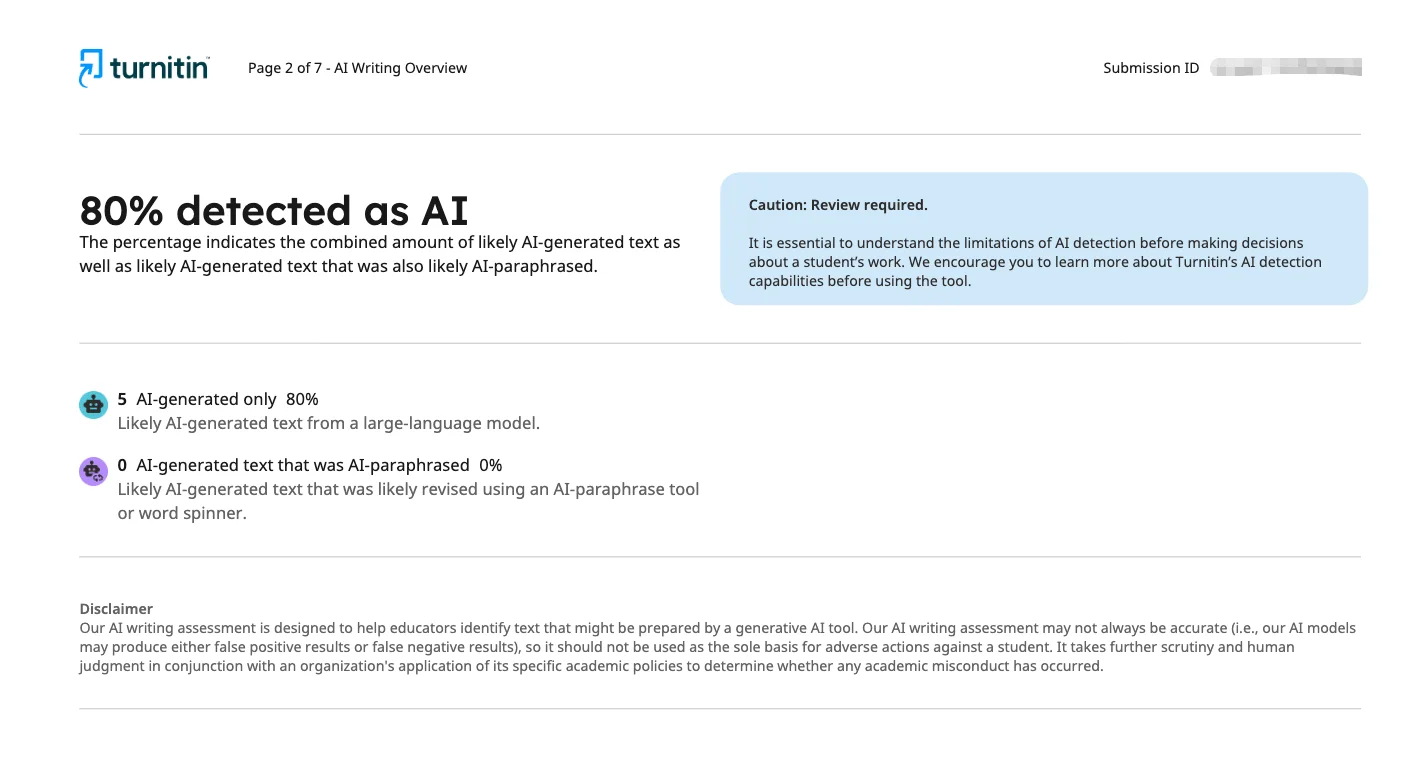
Turnitin also explains that the AI Writing tab shows an overall percentage of text detected as AI in the newer Similarity Report environment. That percentage is independent from the Similarity score. In other words, the two numbers answer different questions. Similarity points to matching text in existing sources, while the AI report estimates whether portions of writing resemble AI-generated or AI-paraphrased patterns.
Another reliability issue is document handling. Turnitin recommends consistent file formats across a class when AI detection is used for an assignment, and it warns that some PDFs with unreadable or non-selectable text may fail to process correctly. If a submission format is messy, confidence in any automated report should drop. For current guidance, students can review Turnitin's official help pages at the AI Writing Report guide.
Why Scores Below 20% Need Extra Caution
One of the most useful details Turnitin gives students is its warning about low-range AI scores. According to Turnitin, scores below 20% are marked with an asterisk in some views because those results are less reliable and false positives are more likely. For a graduate student, that warning should immediately change how much weight you give the number.

A score in that range does not mean you should ignore the report. It means you should slow down and inspect context. Maybe a methods section uses predictable phrasing common to your field. Maybe a literature review repeats standard transitions. Maybe an abstract compresses ideas into highly regular sentence patterns. Those features can make prose look mechanically uniform without proving outside generation.
The table below shows a reasonable way to interpret low and higher ranges without turning them into hard rules.
AI Report Range | How Much Weight To Give It | Best Next Step |
|---|---|---|
Below 20% | Limited weight; review carefully because Turnitin warns false positives are more likely | Check highlighted passages, drafting notes, and discipline-specific phrasing |
20% and Above | More attention warranted, but still not proof by itself | Review flagged text in context and compare with your actual writing process |
The main point is simple: low percentages should invite verification, not automatic judgments.
How Ai-generated and Ai-paraphrased Categories Work
Turnitin describes two interactive categories in its AI writing detection model. One category is AI-generated only. The other is AI-generated text that was AI-paraphrased. The distinction matters because the report is not only asking whether text resembles direct machine output. It may also identify writing that appears to have been run through an AI paraphrasing or word-spinning tool. Turnitin specifically names QuillBot as an example in its discussion of AI detection of QuillBot text.
For students, this means a report can reflect more than one kind of concern. A passage may read like direct generated prose, or it may read like language that has been mechanically reworded after generation. Neither category should be treated as infallible, but the labels help explain why an instructor might look more closely at certain sections.
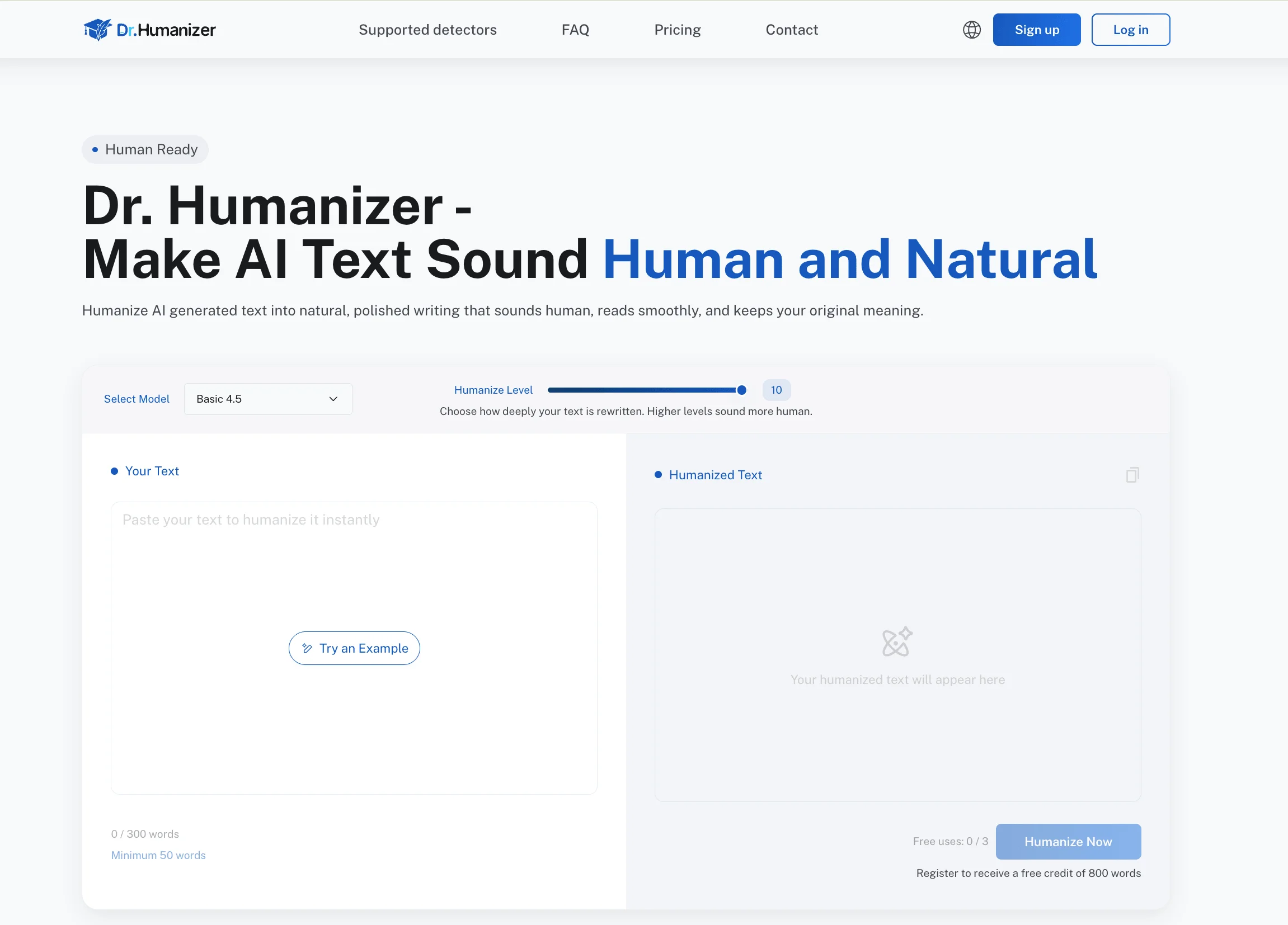
If you used AI tools for brainstorming, outlining, or language smoothing, the responsible move is not to chase a lower number through artificial rewriting. Instead, make sure the final prose clearly reflects your own reasoning, source use, and sentence choices. If a draft still sounds generic or overly even in tone, revise for specificity, evidence, and authentic disciplinary voice. A tool such as Dr. Humanizer may help reduce robotic phrasing, but your final review still needs to be human and course-appropriate.
What Accuracy Cannot Decide by Itself
Even a well-designed AI detection system cannot answer the questions that matter most in an academic setting. It cannot determine intent. It cannot confirm whether a student misunderstood a policy, used approved assistance, or independently wrote a passage that merely resembles common AI patterns. It also cannot replace an instructor's reading of the assignment, genre, and evidence.
This limitation mirrors the role of plagiarism checking with Turnitin. Turnitin says it does not detect plagiarism; it identifies similarity that instructors must interpret. The same mindset helps with AI reports. A percentage can point to text worth discussing, but it cannot independently establish misconduct.

Students should also remember that timing and processing issues affect what they see. Uploaded files may take 10 to 15 minutes to process, while overwritten or resubmitted papers may take up to 24 hours for a new Similarity Report. After three resubmission attempts, that longer wait can apply as well. If a report looks inconsistent, do not assume the newest version has fully processed.
Finally, Turnitin is a school-facing platform, not a universal student self-check tool. Access, report visibility, and assignment setup depend on institutional settings and instructor choices.
Key Takeaways About AI Detection Accuracy

Give the AI percentage moderate, not absolute, weight. Turnitin says the report can misidentify text.
Do not confuse the AI percentage with the Similarity score. They are separate measures and should be interpreted separately.
Be especially careful with scores below 20%. Turnitin warns those results are less reliable and more prone to false positives.
Read flagged passages in context. Formulaic methods language, repeated academic transitions, and compressed summaries can affect how prose is classified.
Review your file format before submission. Inconsistent or hard-to-read files can create processing problems that weaken confidence in the report.
If you revise after a report, allow time for processing. Immediate rechecks are not guaranteed, especially after repeated resubmissions.
If an instructor raises concerns, respond with drafts, notes, source trails, and a calm explanation of your writing process.
For graduate work, the most useful habit is documentation. Save outlines, annotated readings, and revision history. Those materials often explain your authorship more clearly than any automated percentage can.
Frequently Asked Questions

Can Turnitin Prove That I Used AI?
No. Turnitin says its AI model may misidentify text and should not be the sole basis for adverse action. A report can support further review, but it does not prove authorship by itself.
Does a Low Similarity Score Mean My AI Score Must Also Be Low?
No. Turnitin states that the AI percentage is different from and independent of the Similarity score. A paper can have little matched source text and still receive AI-related attention, or the reverse.
Why Does Turnitin Mark Some AI Scores with an Asterisk?
Turnitin says scores below 20% are shown with an asterisk in some views because those results are less reliable and false positives are more likely. That is a cue to interpret the number carefully.
Can Turnitin Detect Ai-paraphrased Writing?
Turnitin says its model includes a category for AI-generated text that was AI-paraphrased. It also references paraphrasing and word-spinning tools in that explanation. Still, the result should be reviewed by a human rather than treated as conclusive proof.
What Should I Do If My Report Looks Wrong?
First, confirm that the correct file uploaded and had readable text. Turnitin notes that some PDFs and formatting problems can affect processing. Then allow enough time for the report to finish generating, especially after resubmissions. If concerns remain, compare the flagged text with your drafts and ask your instructor how they interpret the report in your course.
Conclusion on Turnitin AI Detection Accuracy
When students ask about turnitin AI detection accuracy, the most honest answer is that the report deserves attention but not blind trust. Turnitin's own documentation says the system can misidentify text, that scores below 20% need extra caution, and that the AI percentage is separate from the Similarity score. Those limits matter most for graduate writers, whose prose may be polished, compressed, and discipline-specific in ways that automated systems do not always read perfectly.
If your paper receives an AI percentage, focus on evidence, not panic. Review the flagged passages, confirm the file processed correctly, and keep records of your drafting process. A careful human explanation of your sources, revisions, and argument usually carries more weight than a single automated number viewed in isolation.