

A Turnitin report can look like a plagiarism label when all you see first is a percentage and colored matches.
That moment can feel like the system has already judged your paper. Many students assume a percentage automatically means they committed plagiarism.
In practice, this Turnitin report question is part of a review process, not the final decision.
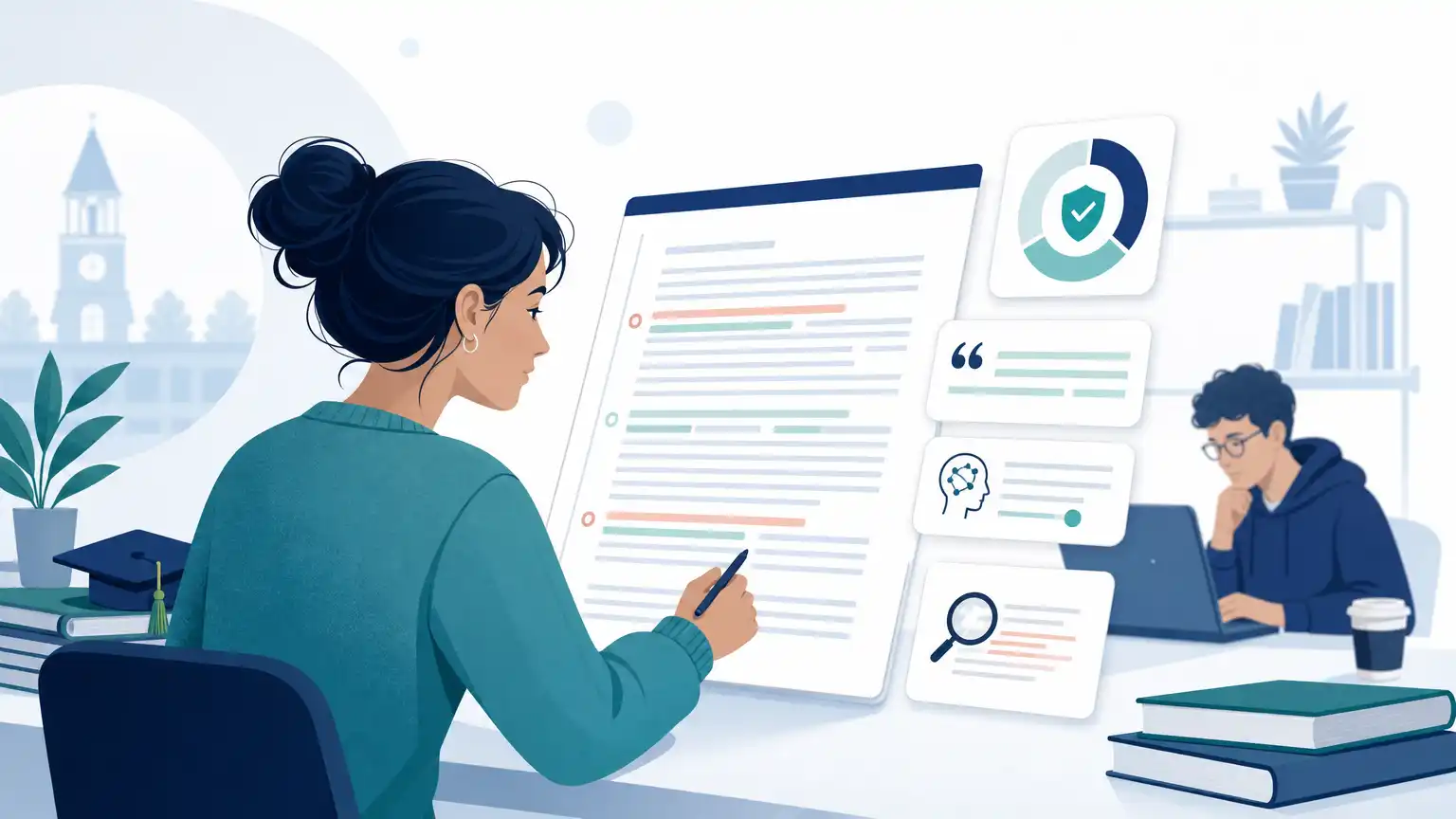
Quick Answer to Turnitin Plagiarism Checker
If you hear classmates talk about a “plagiarism checker,” it helps to translate that phrase into what Turnitin actually does. Turnitin states that it does not detect plagiarism by itself. Instead, it identifies text similarity and presents that information in a report that an instructor must interpret. That distinction matters because matching text can appear for many normal reasons, including quotations, references, common phrases, assignment templates, and properly cited source material.
For students, the most useful mindset is this: a score is a signal to review, not a verdict. A high percentage does not automatically prove plagiarism, and a low percentage does not automatically prove everything is fine. Turnitin says that clearly in its student guidance. If your instructor also uses the AI Writing Report, that percentage is separate from the Similarity score and should not be treated as the sole basis for a penalty either.
So before you panic, read the report source by source and ask what each match actually means in your paper.
What Turnitin Actually Checks
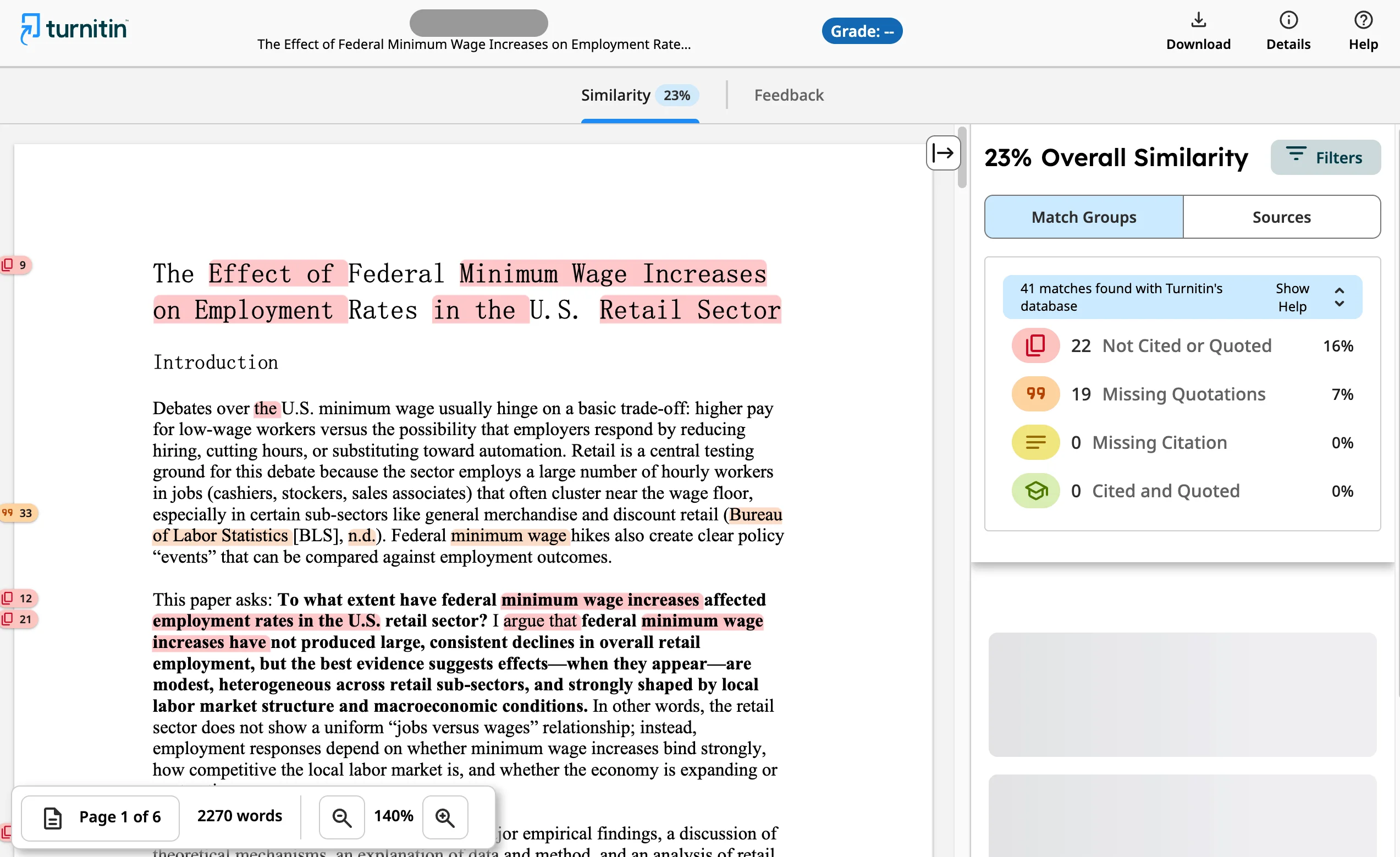
Turnitin is best understood as a matching and reporting system used inside a school or course workflow. When a paper is submitted, the platform compares text against material in its comparison sources and then highlights overlaps in the Similarity Report. The report shows where wording matches and groups those matches by source so an instructor can inspect them.
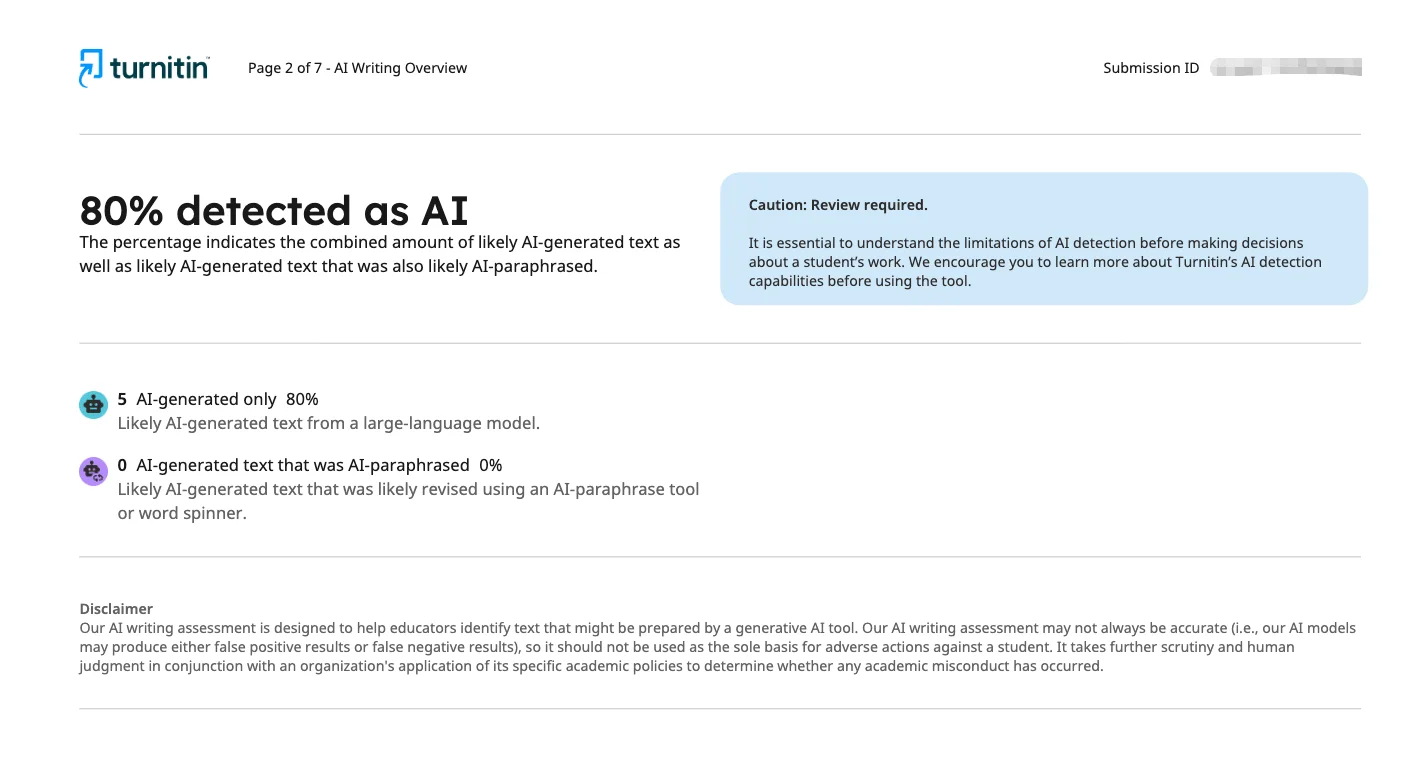
Some classes may also have access to AI-generated text detection in Turnitin through the AI Writing Report. Turnitin says that feature is designed to help educators identify text that might be prepared by generative AI tools, chatbots, word spinners, and bypasser tools. It also says the AI percentage is independent of the Similarity score. In other words, these are different reports answering different questions.
Submission details matter too. Turnitin says only one document can be submitted to a standard assignment, not a zip file or multi-document upload. It also warns that some PDFs with non-selectable text or unreadable formatting may fail to process correctly. Clean formatting and the right file type can prevent avoidable confusion before your report is even generated.
Why Similarity Is Not the Same as Plagiarism
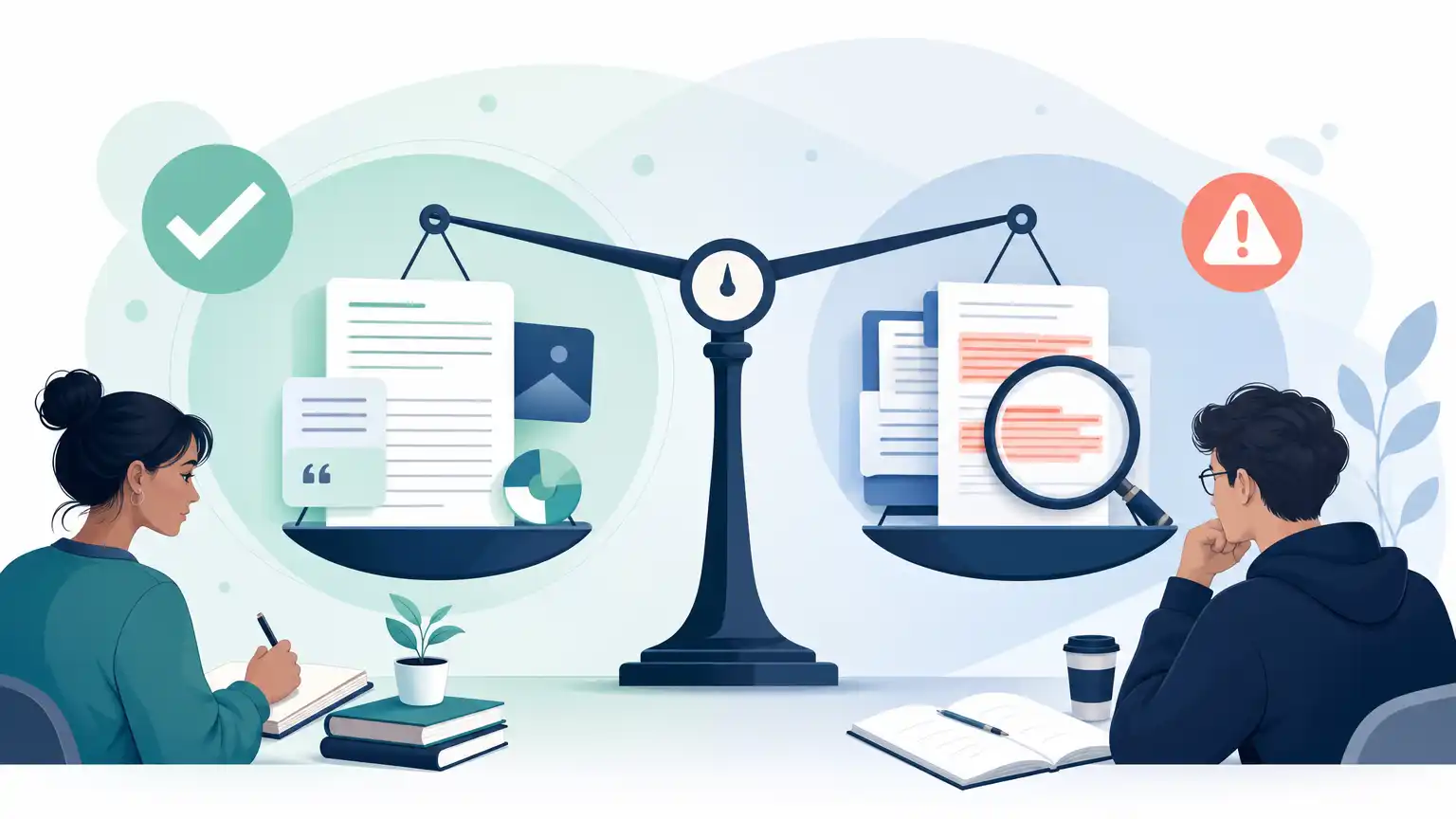
Similarity measures overlap, not intent. That is the core reason students should not treat a Turnitin percentage as a direct accusation. A paper can produce matches because it includes a title page format, a bibliography, a required prompt phrase, or properly quoted passages. In a lab report or nursing discussion board, repeated technical wording may also be hard to avoid.
Plagiarism, by contrast, is an academic judgment about how source material was used. Instructors usually look at whether borrowed language is quoted, cited, paraphrased accurately, and integrated honestly. A report can therefore show substantial matching text, such as a 36% Turnitin similarity score, while the writing still follows assignment rules. The opposite can also happen: a paper may show a modest score but still contain uncited borrowing in a few important lines.
What the Report Shows | What an Instructor Still Has to Decide |
|---|---|
Matched wording and source overlap | Whether the use is quoted, cited, and appropriate |
A percentage of similarity | Whether the percentage reflects normal academic writing or a problem |
Highlighted passages | Whether those passages show patchwriting, copying, or acceptable reuse |
This is why reading the highlighted sections matters more than reacting to the number alone.
How Instructors Use the Similarity Report
Most instructors do not stop at the overall score. They open the report, review the largest matches, and decide whether the overlap makes sense for the assignment. A literature review may naturally contain many citations and repeated author names. A personal reflection should usually show much less source overlap. Context changes the meaning of the same percentage.
Instructors may also compare the report to the assignment directions and course policies. If a professor allowed draft resubmissions, they may expect students to review source integration and revise before the final deadline. Turnitin notes that uploaded files can take around 10 to 15 minutes to process in many cases, while overwritten or resubmitted papers may take up to 24 hours. After three resubmission attempts, a 24-hour wait can apply. These Turnitin report generation delays matter if you are trying to make last-minute edits.
When AI writing review is enabled, instructors may see an AI Writing tab in the new Similarity Report. Turnitin says results below 20% are shown with an asterisk in some views because those results are less reliable and false positives are more likely. That is another reminder that reports support human review rather than replace it.
How Students Can Prepare Original Work
The safest approach is to build originality into the draft from the start. Take notes in your own words, mark direct quotations clearly in your research notes, and keep source details nearby so you can cite as you write. Many similarity problems begin earlier than the final upload, especially when copied notes get mixed into a draft.
During revision, check each highlighted idea sentence by sentence. Ask yourself whether the wording is truly yours, whether a quote needs quotation marks, and whether the citation points to the exact borrowed material. If a paragraph leans too heavily on a source, pause and rewrite from your understanding rather than shuffling a few words around. Mechanical paraphrasing often creates awkward prose and can still look too close to the original. If you used AI to brainstorm, revise carefully so the final paper reflects your reasoning and course voice; some students use tools such as Dr. Humanizer to smooth robotic phrasing, but that does not replace fact-checking, citation, or genuine revision.
Before uploading, confirm that your file is readable, complete, and in the format your instructor requested. If your class uses direct submission, Turnitin says an instructor can provide a unique link and you may not need to create an account.
Key Takeaways About Turnitin and Plagiarism
Turnitin says it identifies similarity, not plagiarism itself.
A Similarity score is only one part of an instructor’s review.
High similarity can come from quotations, references, templates, or repeated academic phrasing.
Low similarity does not automatically prove that all source use is appropriate.
The AI Writing Report, when available, is separate from the Similarity score.
Turnitin says AI results may misidentify human-written or AI-generated text and should not be the sole basis for adverse action.
Resubmissions may be delayed, so avoid waiting until the final minutes before a deadline.
Readable file formatting matters because some PDFs and embedded content may not process correctly.
If you remember only one point, make it this: the report helps start a conversation about source use. It does not end that conversation for you or your instructor.
Frequently Asked Questions
Does Turnitin Automatically Decide That I Plagiarized?
No. Turnitin states that it does not detect plagiarism on its own. It identifies similarity between your submission and other text, then presents that information for human interpretation. Your instructor still has to review the matches and decide whether they reflect proper quotation, citation, common wording, or a real academic integrity concern.
Is a High Similarity Score Always Bad?
Not always. A higher score can be expected in assignments with many quotations, references, or standardized wording. What matters is where the matches appear and whether they are used appropriately. A score should prompt careful review, not automatic panic.
Can a Low Similarity Score Mean My Paper Is Safe?
Not completely. Turnitin tells students that a low score does not automatically prove there is no problem. A paper could still include uncited ideas or close paraphrasing in a few key places. The better check is whether every borrowed idea and phrase is handled honestly and clearly.
How Long Does It Take to Get a New Report After Resubmitting?
Turnitin says many uploads process within about 10 to 15 minutes, but overwritten or resubmitted papers may take up to 24 hours. It also says the first three resubmission attempts may generate reports immediately, while later attempts can trigger the 24-hour delay. Plan your revision time around that possibility.
Does Turnitin Have an AI Detector Too?
Some institutions use Turnitin’s AI Writing Report. Turnitin says that feature is designed to help educators identify text that might be prepared by generative AI tools, chatbots, word spinners, and bypasser tools. It also warns that the model can misidentify text and should not be the sole basis for adverse action. The AI percentage is separate from the Similarity score.
Can I Upload Multiple Files for One Assignment?
For a standard Turnitin assignment, no. Turnitin says only a single document may be submitted, and multiple documents or zip files cannot be selected for upload. If you have charts, appendices, or other materials, check your instructor’s directions about how they want those included.
Conclusion on Turnitin Plagiarism Checker
Students often talk about the turnitin plagiarism checker as if it delivers a final label, but Turnitin’s own explanation is more limited and more useful. The platform highlights similarity so instructors can review source use in context. That means your job is not to obsess over one number. Your job is to make sure quotations are marked, paraphrases are genuinely rewritten from understanding, citations are accurate, and the file you submit is clean and readable.
If a report looks higher than expected, slow down and inspect the matches before assuming the worst. A thoughtful review of the highlighted passages usually tells you much more than the percentage alone. When you understand that difference, you can submit with a clearer sense of what Turnitin reports actually mean.