

A public AI detector gives your essay one score, while a classmate says Turnitin may read the same draft differently.
If you are comparing public tools and wondering which ai detector is closest to turnitin, the hard part is that matching one score to another usually fails.
The safer comparison is tool behavior, not a promise that two scores will match.

Quick Answer to Which AI Detector Is Closest to Turnitin
No public checker should be treated as a true stand-in for Turnitin. For students comparing GPTZero, Copyleaks, Originality.ai, and similar tools, the closest option depends less on brand name and more on report purpose. Turnitin positions its system inside a larger academic integrity workflow, not as a free student self-checker. Its AI Writing Report is designed to help educators identify text that might be prepared by generative AI tools, chatbots, word spinners, and bypasser tools, but Turnitin also says the model can misidentify human-written, AI-generated, and AI-paraphrased text and should not be the sole basis for adverse action.
That means “closest” does not mean “same score.” A public detector may feel close if it helps you spot sections that sound generic, over-smoothed, or oddly uniform before submission. But it is still only a rough preview. If your goal is to predict exactly what an instructor will see in Turnitin, no public tool can promise that. A more useful goal is to review your draft for clarity, authorship consistency, and documentation quality before you upload.
What Makes Turnitin Different from Public AI Detectors
Turnitin is different because its report sits inside an institutional submission system. Students usually encounter it through a class assignment, a direct submission link from an instructor, or a campus workflow, not as an open consumer app. That context matters. Turnitin’s own materials separate the AI percentage from the Similarity score, and the company also states that similarity is not the same as plagiarism. Instructors must interpret both reports rather than treat either one as automatic proof.
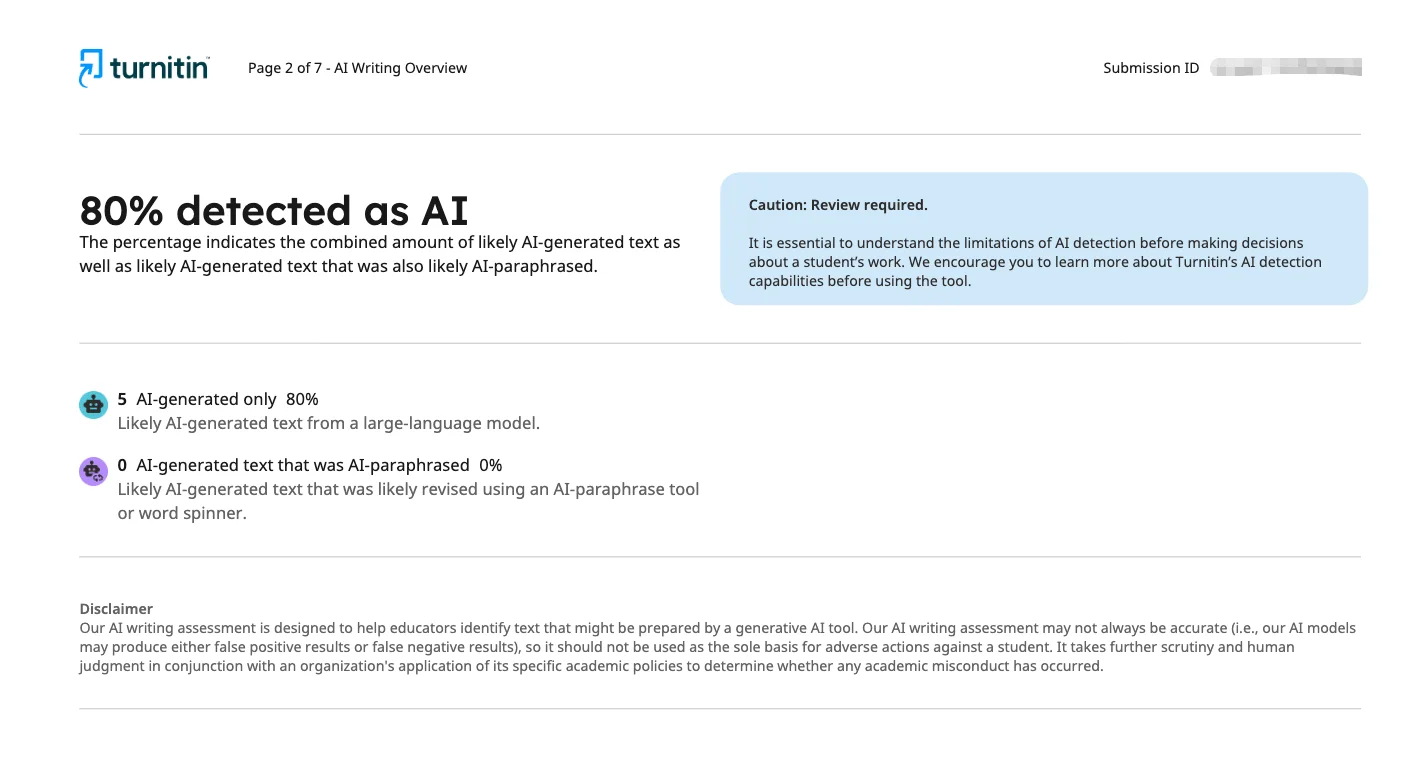
Turnitin also describes two interactive AI report categories: AI-generated only and AI-generated text that was AI-paraphrased. Its discussion of QuillBot detection names QuillBot as an example of an AI paraphrasing tool or word spinner. Public detectors may not present categories in the same way, and they may not be embedded in the same assignment record that an instructor reviews.
There are also practical differences. Turnitin notes that some views show scores below 20% with an asterisk because results are less reliable and false positives are more likely. It also has file-processing rules, format expectations, and report delays that affect what a teacher actually sees after submission.
How Gptzero, Copyleaks, and Originality.ai Compare
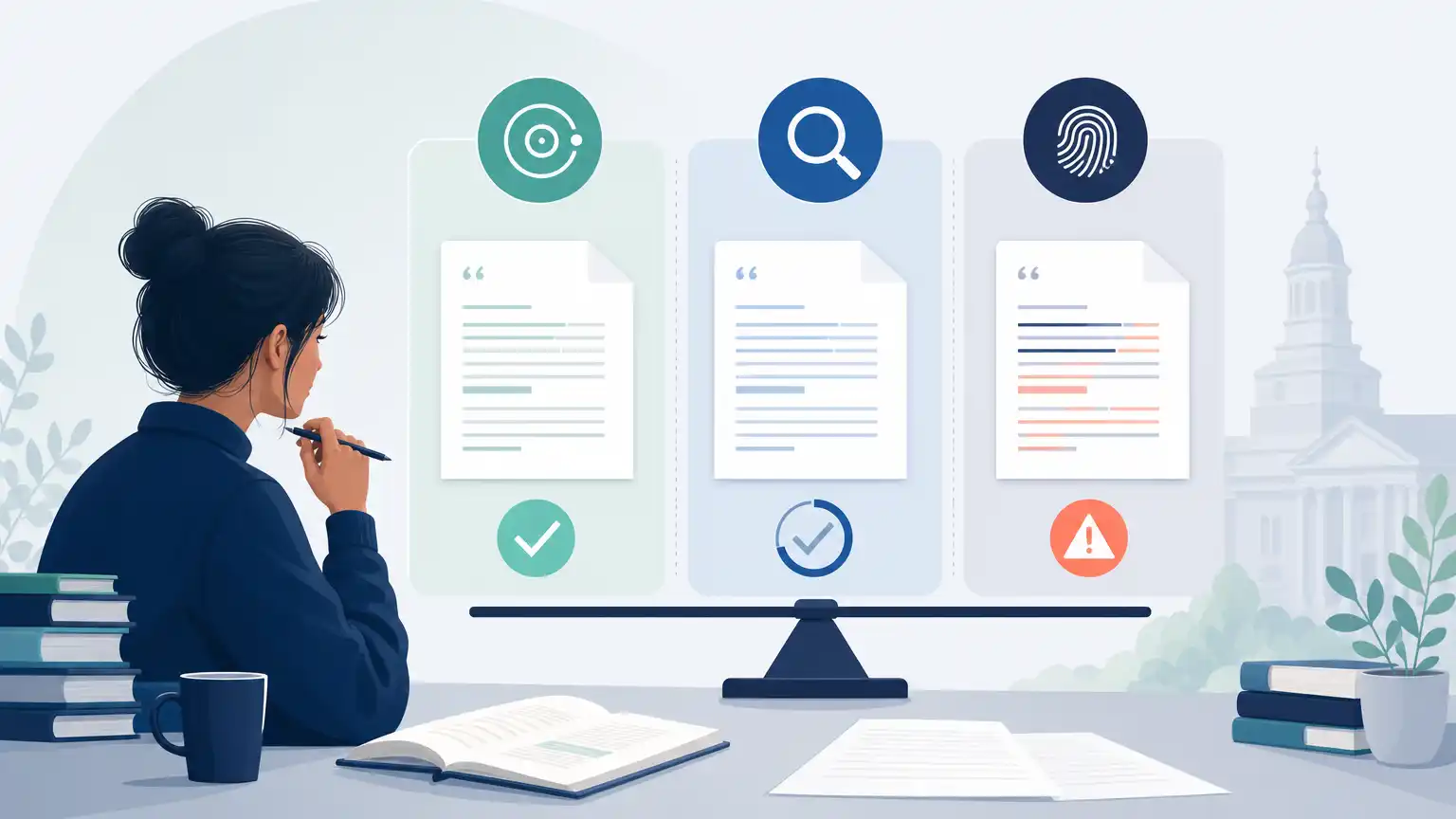
For a student, the best comparison is not “Which one matches Turnitin every time?” but “Which one helps me review the same kinds of concerns my instructor may notice?” GPTZero is often used as a readability and AI-likelihood check on plain text. Copyleaks is commonly discussed as a broader institutional-style detector. Originality.ai is frequently used in publishing and content review settings. None of those roles is identical to Turnitin’s classroom reporting environment.
Tool | Best Way To Think About It | Closest Point to Turnitin | Main Limitation for Students |
|---|---|---|---|
GPTZero | Draft signal checker | Can highlight writing that feels unusually uniform | Not the same classroom report structure |
Copyleaks | Institution-style comparison point | Often framed more like a formal detector workflow | Still not Turnitin’s exact model, categories, or access context |
Originality.ai | Editorial review tool | Useful for spotting machine-like passages | Built for a different use case than student submission review |
If you want the closest practical comparison, Copyleaks may feel more similar in tone because students often perceive it as more formal. If you want sentence-level revision clues, GPTZero or Originality.ai may be more useful. The important point is that “close” changes depending on whether you care about dashboard style, flagged passages, or the final educational context.
When a Similar Score Still Means Something Different
A common mistake is assuming that two tools showing similar percentages must be saying the same thing. Turnitin specifically says its AI percentage is different from and independent of the Similarity score. That alone should make students cautious. A paper could have low similarity and still raise AI-writing questions, or it could have high similarity because of quotations, references, or common phrasing without proving plagiarism.

The same logic applies across public detectors. One tool may be reacting to repetitive sentence rhythm, another to predicted token patterns, and another to paraphrased passages. Even if all three return numbers in the same range, they may be measuring different signals. Turnitin also warns about limits to AI score accuracy at lower percentages in some views, which means a small number should not be overinterpreted either.
For international students, this matters even more. Clear but simple sentence structures, formulaic transitions, or cautious grammar choices can sometimes look more uniform than intended. A similar score across tools may reflect writing style, assignment genre, or formatting issues rather than one simple final judgment.
A Better Pre-submission Review Workflow
Instead of chasing a matching detector, use a workflow that prepares your draft for responsible review. First, confirm your assignment format. Turnitin recommends using a consistent file format across students when AI writing detection is used, and it warns that some PDFs with non-selectable text, embedded extra files, or unreadable formatting may be rejected or fail to process correctly. It also allows only a single document per assignment submission, not multiple files or zip folders.
Second, read your own draft aloud and mark places where the voice suddenly becomes flatter, broader, or less specific. Those are the passages most likely to invite questions from any reviewer, human or automated. Third, verify citation style, quotation boundaries, and source-based paraphrases. Fourth, if you revise and resubmit, remember that report timing can change. Turnitin says uploaded files may take 10 to 15 minutes for a Similarity Report, while overwritten or resubmitted files may take up to 24 hours, especially after three resubmission attempts.
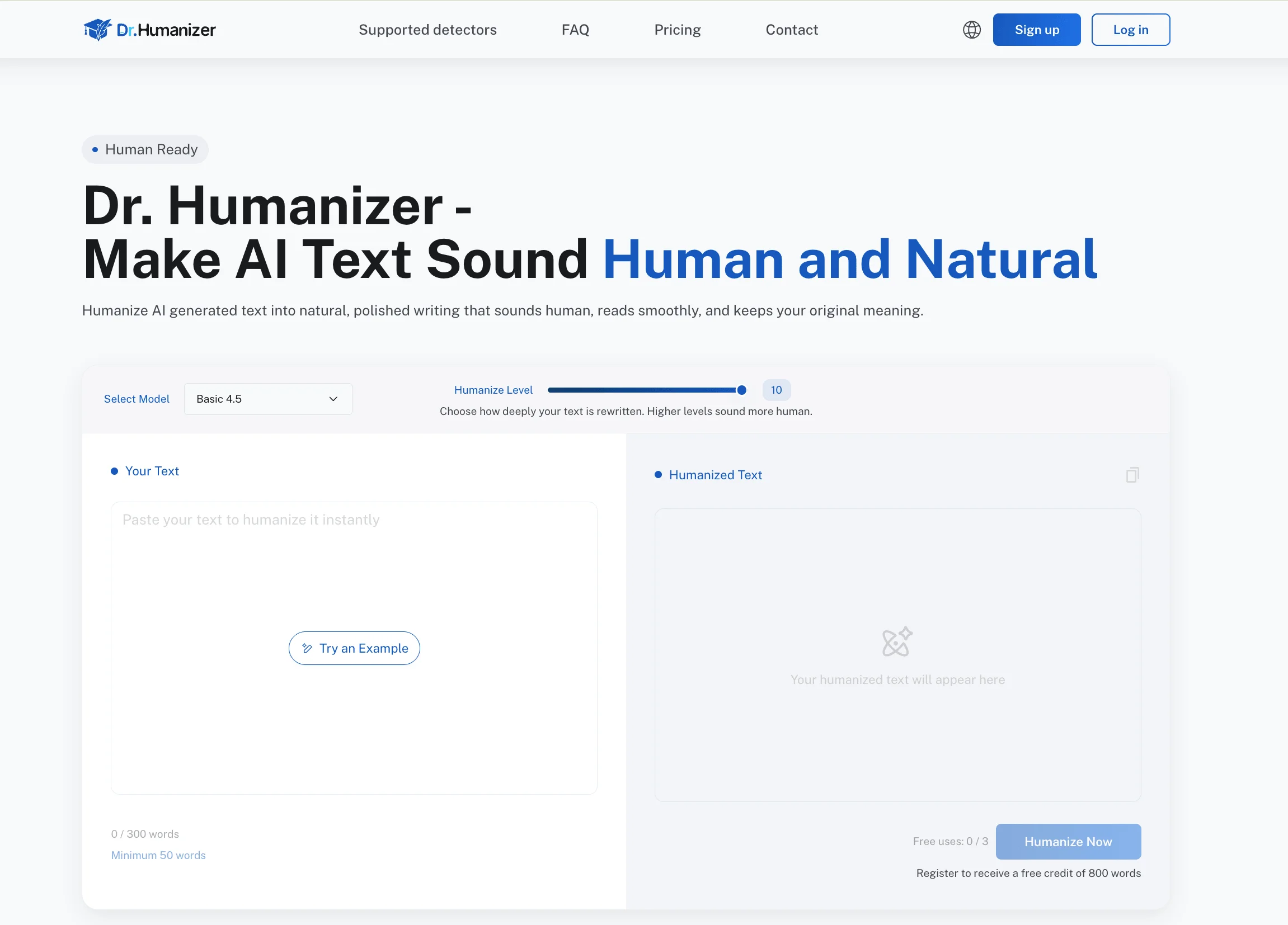
If a paragraph feels polished but impersonal, revise for concrete evidence and your own analysis. If you used AI assistance for brainstorming or wording support, responsible editing matters more than trying to outguess a detector. Tools such as Dr. Humanizer may help reduce robotic phrasing, but the final check should still be whether the writing honestly reflects your understanding.
Key Takeaways for Comparing AI Detectors

Do not expect any public tool to reproduce Turnitin’s exact AI Writing Report or Similarity Report behavior.
Compare tools by purpose: draft feedback, institutional-style review, or editorial screening.
Remember that Turnitin says AI percentages and Similarity scores are separate signals.
Treat low numbers carefully. Turnitin notes that some results below 20% are less reliable and more prone to false positives.
Use detector output as a prompt to review voice consistency, evidence, paraphrase quality, and formatting.
Plan ahead for processing delays, especially if you overwrite or resubmit a file near the deadline.
The most student-safe mindset is to treat any detector as one clue, not a verdict. Your instructor may be reading the assignment prompt, your citation choices, and your writing history alongside the report. That broader context is impossible for a public checker to duplicate.
Frequently Asked Questions

Can a Public AI Detector Predict My Turnitin Result?
Not reliably. A public detector may give you a rough sense of whether some passages read as unusually generic or machine-like, but it cannot promise the same categories, thresholds, or report context that Turnitin uses in a class submission workflow.
Does Turnitin Treat AI Detection and Similarity as the Same Thing?
No. Turnitin says the AI percentage is different from and independent of the Similarity score. It also says similarity is not automatic proof of plagiarism, so both reports require interpretation rather than snap judgments.
Why Might My Draft Change After Resubmission?
Timing and processing rules can affect what you see and when you see it. Turnitin says standard uploads may process in 10 to 15 minutes, but overwritten or resubmitted papers can take up to 24 hours. After three resubmission attempts, that longer wait may apply.
Do Low AI Percentages Mean I Am Completely Safe?
No. Turnitin notes that in some views, scores below 20% are marked with an asterisk because those results are less reliable and false positives are more likely. A low number should not be treated as a guarantee, and a high number should not be treated as automatic proof either.
What Should I Do If I Am Worried About Robotic Phrasing?
Revise ethically. Add specific examples, explain why your evidence matters, and make sure your transitions sound like your normal academic voice. If a sentence feels too polished but vague, rewrite it for precision rather than trying to hide tool use or game a detector.
Conclusion on Which AI Detector Is Closest to Turnitin

For students trying to decide which AI detector is closest to turnitin, the most honest answer is that closeness depends on what you want to compare. If you want a public tool that feels formal, one option may seem closer. If you want help spotting flat or over-smoothed passages, another may be more useful. But none of them reproduces Turnitin’s institutional setting, separate AI and Similarity signals, file-processing rules, or instructor-facing interpretation.
The safest approach before submission is to stop chasing a matching score and start reviewing the draft the way a professor would. Check formatting, voice consistency, paraphrase quality, citations, and timing for resubmissions. That workflow will help you more than any single detector comparison, especially when the real decision is made by a human reader using Turnitin as one tool among several.