

A blue Turnitin bubble looks reassuring at first, but the color can still leave you unsure about what was checked.
That reaction is normal because Turnitin uses colors and percentages, but neither one tells the whole story by itself.
The useful move is to connect the color to the percentage, sources, and assignment expectations.
Quick Answer to What Does Blue Mean on Turnitin
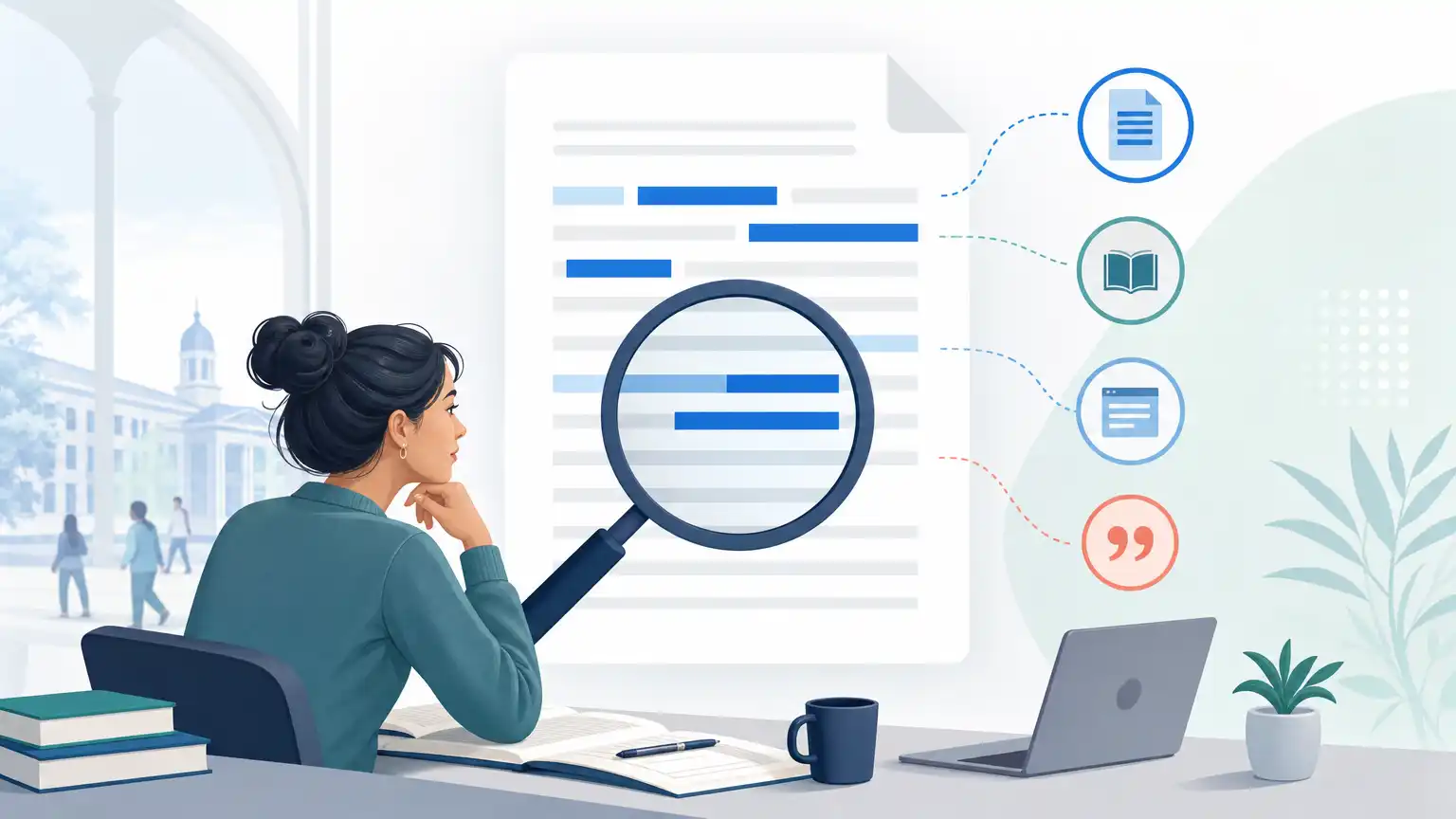
A blue Turnitin similarity color usually means the paper has a very low overall similarity score. In student-facing explanations from Turnitin, blue is associated with a score in the 0% to 24% range. That often sounds reassuring, and in many cases it is. A blue bubble can mean your assignment contains little matched text compared with Turnitin's database.
Still, blue is not a final verdict on originality or academic integrity. Turnitin explains that a low similarity score does not automatically prove a paper is problem-free, just as a high score does not automatically prove plagiarism. The report shows text similarity that a human still has to interpret. That matters because a low percentage can still include one uncited quotation, a copied sentence, or a formatting issue that deserves attention.
So the practical answer is simple: blue usually signals a low similarity result, but you should still open the report, look at the matched passages, and confirm that quotes, citations, and borrowed wording are handled correctly.
How Turnitin Uses Similarity Score Colors
Turnitin uses color coding to help students and instructors read the similarity score quickly. The color is a visual shortcut, not a judgment about intent. Blue generally marks the lowest range, while warmer colors signal increasing levels of matched text. That design helps you scan a class submission dashboard or report page without reading every number first.
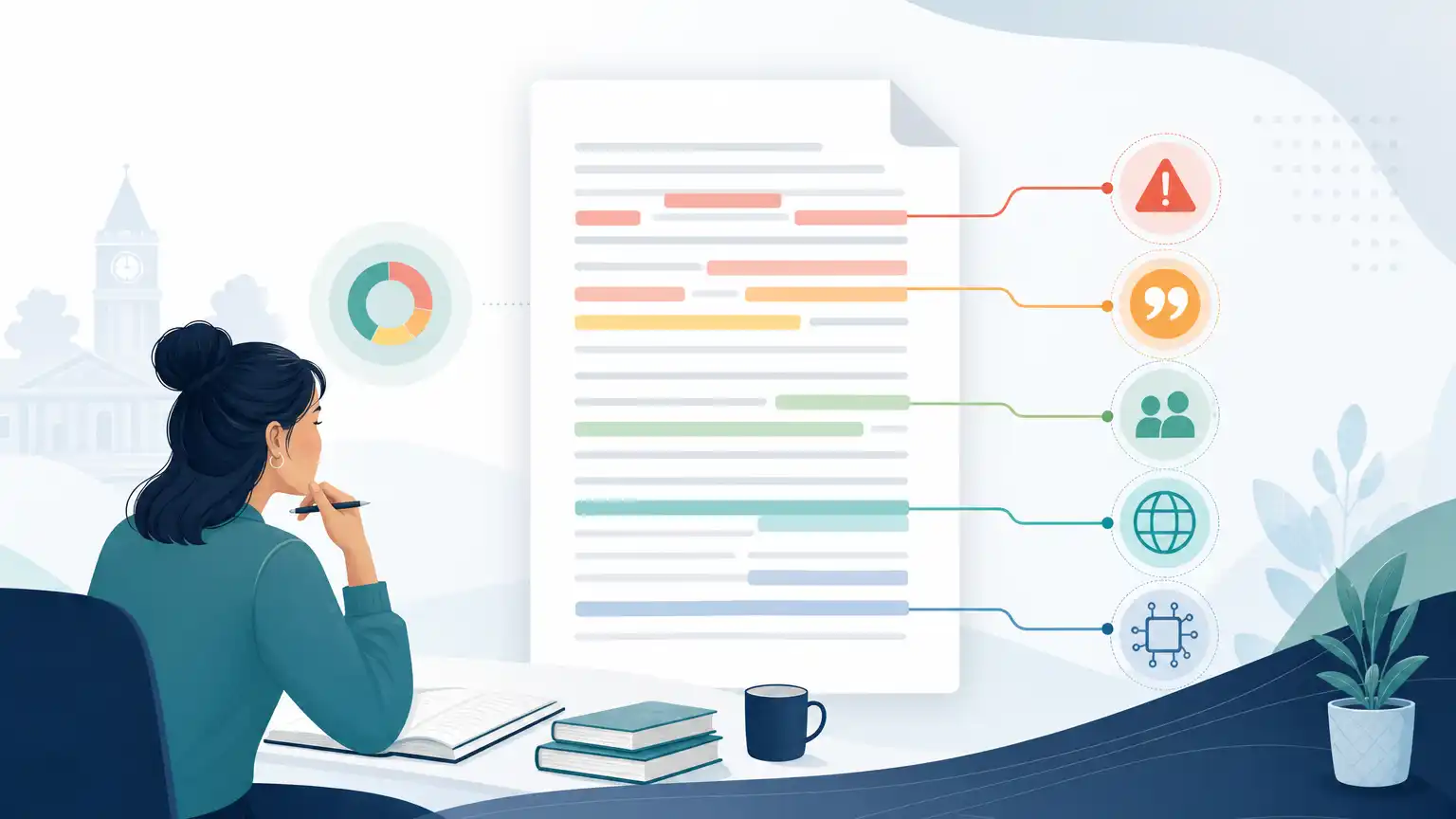
The important part is understanding what the color represents. It reflects the percentage of text in your submission that matches content in Turnitin's comparison sources. It does not mean Turnitin has decided whether plagiarism occurred. The Turnitin plagiarism checker report identifies similarity, and instructors must interpret what those matches mean in context.
Color | General Meaning | Student Takeaway |
|---|---|---|
Blue | Low similarity range | Usually low matched text, but still review sources |
Green/Yellow/Orange/Red | Higher similarity ranges | Needs closer source-by-source inspection |
That is why students should avoid reading a color as a grade. A blue result is best understood as a starting point for review, not a guarantee that your instructor will have no questions about the submission.
Why Blue Still Deserves a Quick Review
Even when the similarity color is blue, a fast review is worth your time. A low overall percentage can hide a small but important issue. For example, one sentence copied from a website without quotation marks may not push the total score very high, but it could still matter to your instructor. The same goes for patchy paraphrasing, missing page numbers in a direct quote, or an accidentally pasted sentence from your notes.
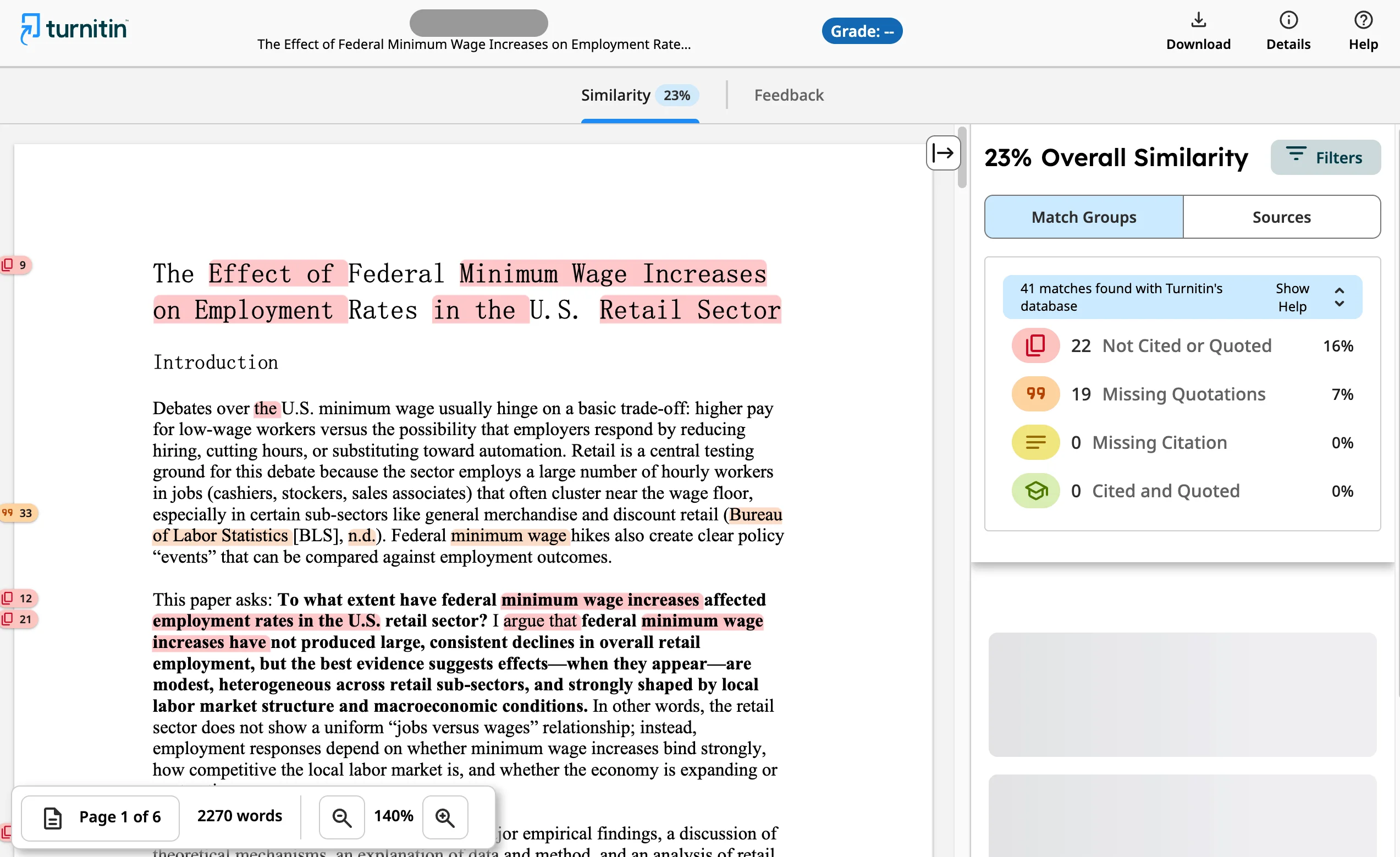
Blue can also appear when most of your paper is original, but a few routine parts match common language. Title pages, assignment prompts, references, and standard terminology sometimes create harmless matches. Looking inside the report helps you separate normal overlap from wording that needs revision.
Another reason to check is timing. If you just resubmitted a file, Turnitin notes that a new Similarity Report may take time to appear. Initial uploads can take around 10 to 15 minutes to process, while overwritten or resubmitted papers may take up to 24 hours in some cases. If your report looks incomplete or different from what you expected, the issue may be processing rather than your writing.
Blue Similarity vs. Blue AI Writing Indicator
Students sometimes confuse the blue similarity color with Turnitin's AI writing indicators, but they are not the same thing. The Similarity Report measures matched text against comparison sources. The AI Writing Report provides Turnitin AI writing detection, a separate feature that Turnitin says is designed to help educators identify text that might be prepared by generative AI tools, chatbots, word spinners, and bypasser tools. Turnitin also states that the AI percentage is different from and independent of the Similarity score.
That distinction matters because a paper can have a blue similarity score and still raise separate questions in an AI Writing Report, or the reverse. Turnitin also says its AI model may misidentify human-written, AI-generated, and AI-paraphrased text, and that the report should not be the sole basis for adverse action. In some views, scores below 20% are shown with an asterisk because results are less reliable and false positives are more likely.
If your school uses AI reporting, read each tab carefully. Do not assume the blue similarity bubble answers everything. If you used AI-assisted drafting, revise for accuracy, voice, and citation quality. If you need help smoothing stiff phrasing into more natural language, Dr. Humanizer may be relevant, but your final submission still needs your own review and judgment.
What to Check After Seeing Blue
Once you see blue, open the report and review it with a short checklist. Start with the largest matches. Are they quotations, references, or standard assignment language? If yes, they may be expected. If not, inspect whether you paraphrased closely enough and whether the source is cited clearly.
Next, check for technical issues. Turnitin warns that some PDFs with non-selectable text, embedded extra files, or unreadable formatting may be rejected or fail to process correctly. Also remember that only a single document can be submitted to a standard assignment. If you combined sections in a rushed way before upload, make sure the file displayed correctly after submission.
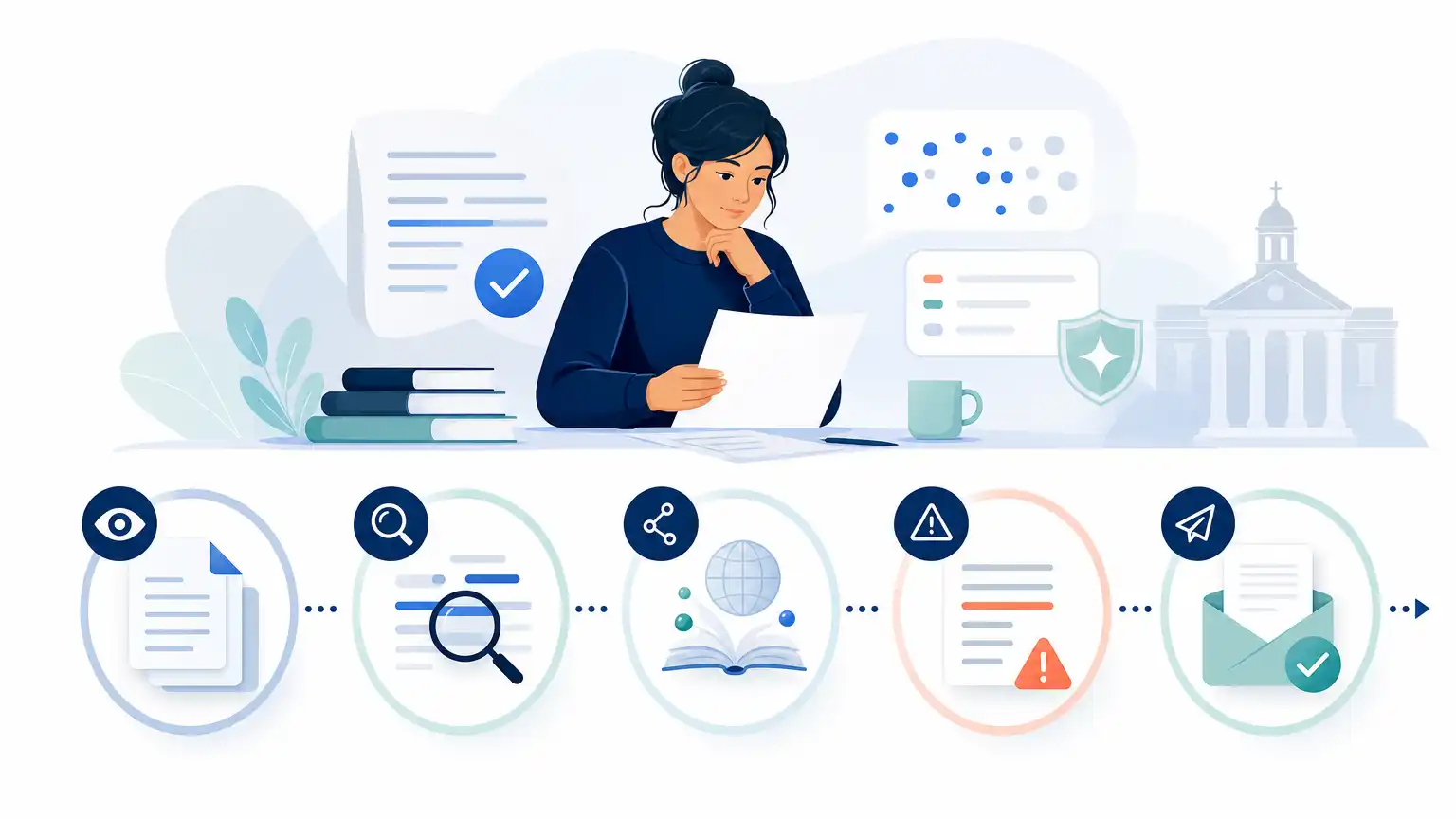
Then confirm that the report is current. Turnitin says the first few resubmission attempts may generate reports immediately, but after three attempts, a 24-hour wait can apply. These Turnitin report processing times matter if you are revising right before a deadline.
A good student review after a blue score usually includes these questions:
Do all direct quotes have quotation marks and citations?
Are paraphrased sections genuinely rewritten in your own structure and wording?
Did the file upload cleanly and display readable text?
Is this the newest report after your latest revision?
Those checks take only a few minutes and can prevent avoidable problems.
Key Takeaways About Blue Turnitin Scores
Blue is helpful because it usually signals low similarity, but the smartest way to read it is with context. Students often feel immediate relief when they see a blue bubble, and that reaction makes sense. Low matched text generally suggests less overlap with outside sources. Even so, Turnitin's own guidance makes clear that low similarity does not automatically prove there are no citation or originality issues.
Blue usually means your Similarity Report falls in Turnitin's low range.
The color reflects matched text percentage, not a plagiarism ruling.
A low score can still contain one or two passages worth fixing.
The Similarity Report and AI Writing Report are separate tools.
Resubmissions and file formatting can affect when or how a report appears.
Your best move is to inspect the actual matches before submitting with confidence.
In other words, blue is encouraging, not magical. Treat it as a sign to verify the details, not as permission to stop checking the paper. That habit is especially useful in college courses where instructors care about source handling, not just the final number.
Frequently Asked Questions
Does Blue Mean My Paper Is Safe?
Blue usually means the similarity score is low, which is often a good sign. But it does not guarantee that every quote, citation, or paraphrase is correct. A small amount of problematic text can still matter even when the overall percentage is low.
Can a Blue Score Still Include Plagiarism Concerns?
Yes. Turnitin says a low similarity score does not automatically prove a paper is free of problems. One uncited borrowed sentence or a too-close paraphrase may not create a high percentage, but it can still raise concerns if an instructor reviews the matched passage.
Is Blue the Same as a Good Grade?
No. The color only reflects similarity range. It does not measure argument quality, source credibility, grammar, or whether you answered the assignment well. An instructor may still give detailed feedback on writing even if the similarity color is blue.
Why Did My Blue Report Change After Resubmission?
Turnitin says uploaded files may take 10 to 15 minutes to process, while overwritten or resubmitted files can take up to 24 hours in some cases. After three resubmission attempts, the waiting period may also apply. If the report changed, the system may have processed a newer version of your paper.
Can I Ignore the AI Tab If My Similarity Score Is Blue?
No. If your institution has access to the AI Writing Report, that tab is separate from the Similarity Report. Turnitin says the AI percentage is independent of the similarity score, so a low similarity color does not answer questions raised in the AI view.
Conclusion on What Does Blue Mean on Turnitin
When students ask what does blue mean on turnitin, the most accurate response is that blue usually marks a low similarity range, not a final judgment about the paper. It is a useful signal, but it should lead to one more review of your matches, citations, paraphrases, and file quality before you relax.
That approach is also the most practical one for college work. Instead of treating the color like a pass or fail label, use it as a prompt to confirm that your writing is properly sourced and clearly your own. A blue bubble is often reassuring, but careful review is what turns that reassurance into confidence at submission time.