

An AI score beside your submission can feel persuasive, especially when it appears inside an official class report.
That reaction is reasonable. A Turnitin AI percentage can feel final even when it is only one signal inside a larger review process.
The useful question is how much weight the score deserves in a real academic review.

Quick Answer to How Accurate Is Turnitin AI Detector
Turnitin presents its AI writing detection process as a tool that helps educators identify text that might be prepared by generative AI tools, chatbots, word spinners, and bypasser tools. That matters because the company itself frames the result as a detection aid, not a verdict. In plain terms, the score can raise questions, but it does not settle them.
Turnitin also says its model may misidentify human-written, AI-generated, and AI-paraphrased text. That means a student should treat the percentage as evidence with limits. It may point an instructor toward passages worth reviewing, but it cannot independently establish intent, authorship, or misconduct.
Another important point is that the AI percentage is separate from the Similarity score produced by its plagiarism checks. A paper can have low similarity and still receive AI flags, or high similarity and no AI flag. Those are different reports measuring different things. So when students ask about reliability, the strongest answer is this: useful for review, but not strong enough to stand alone.
What Turnitin Says About False Positives
Turnitin openly acknowledges the possibility of false positives, which is one of the most important facts students should know. In its guidance for the AI Writing Report, the company says the model may misidentify human-written, AI-generated, and AI-paraphrased text. It also says the report should not be the sole basis for adverse action. That language is significant because it tells instructors and students that a flagged result still needs interpretation.

Turnitin gives another caution tied to lower percentages. In some views, scores below 20% appear with an asterisk because those results are considered less reliable and false positives are more likely. A student who sees a small flagged percentage should understand that the platform itself signals extra uncertainty there.
Turnitin Statement | What It Means for Students |
|---|---|
The model may misidentify text | A flagged passage is not automatic proof that AI wrote it |
Do not use as the sole basis for adverse action | Human review is expected before any serious decision |
Below 20% may be less reliable | Small percentages deserve especially careful interpretation |
If you are discussing a result with an instructor, these points are worth bringing up calmly and directly.
Why the AI Score Is Not a Misconduct Decision
Students often assume that any high percentage automatically means they have been judged. That is not how Turnitin describes its own reports. The company separates detection from decision-making. Its AI report identifies text that may have been produced with AI tools, but the final interpretation belongs to an educator reviewing the assignment in context.

This distinction mirrors how Turnitin describes similarity checking. On its plagiarism blog, Turnitin says it does not detect plagiarism; it identifies text similarity that instructors must interpret. The same logic helps with AI writing review. A score may indicate a pattern, but it does not answer key questions by itself: Was the assignment process documented? Does the writing match the student's earlier work? Are there drafts, notes, or revision history that explain the final version?
That is why a responsible conversation about an AI flag should focus on evidence quality. The report can support questions, but it should sit alongside the assignment prompt, the student's drafting process, instructor expectations, and the actual passages highlighted in the report.
What Makes AI Detection Hard
AI detection is difficult because writing style is not a fingerprint. Human writing can be formulaic, polished, repetitive, or unusually even in tone, especially in first-year composition courses where students are trying to sound formal. Those same traits can also appear in machine-generated prose. A detector has to make a probability judgment from patterns, not certainty from direct observation.
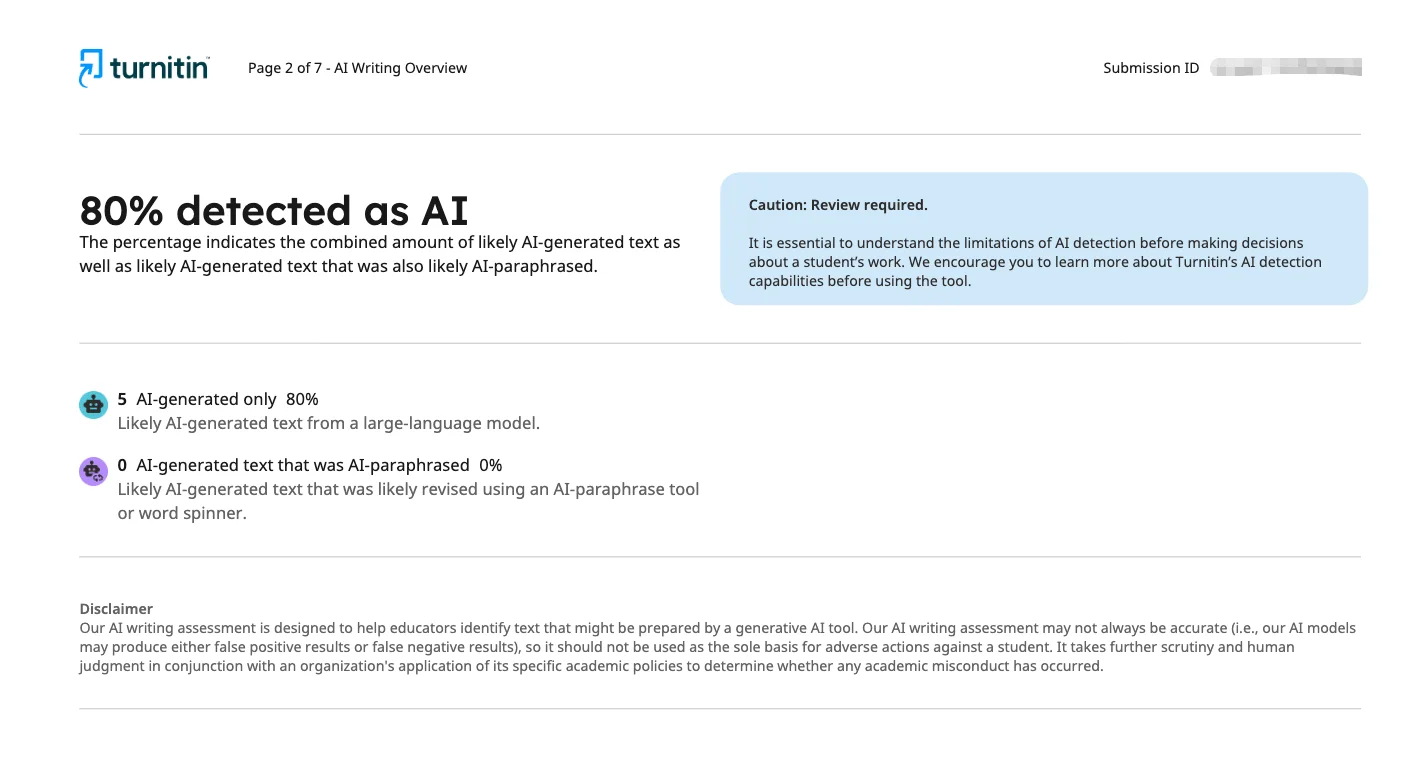
Turnitin's own model description also shows why the issue is more complicated than a single yes-or-no label. The report distinguishes between AI-generated only and AI-generated text that was AI-paraphrased. Turnitin specifically discusses detection of QuillBot writing in this context. Once text has been rewritten by another system, the boundaries between original human drafting, generated language, and paraphrased output become harder to sort cleanly.
Technical factors matter too. Turnitin recommends consistent file formats across students when AI detection is used for an assignment. It also warns that some PDFs with non-selectable text or unreadable formatting may fail to process correctly. If the file itself is messy, confidence in any report should be lower.
How Students Should Respond to a High AI Score
Start by slowing down. A high AI percentage is stressful, but reacting defensively before you review the situation usually makes the conversation harder. First, compare the AI result with the actual assignment and your own drafting history. Save outlines, notes, earlier versions, and feedback comments. Those materials help show how the paper developed.
Next, check whether the report is even final. Turnitin says uploaded files can take 10 to 15 minutes to process, while overwritten or resubmitted papers may take up to 24 hours to generate a new report. After three resubmission attempts, another 24-hour wait may apply. If you just uploaded a revision, do not assume the newest score reflects the newest file immediately.
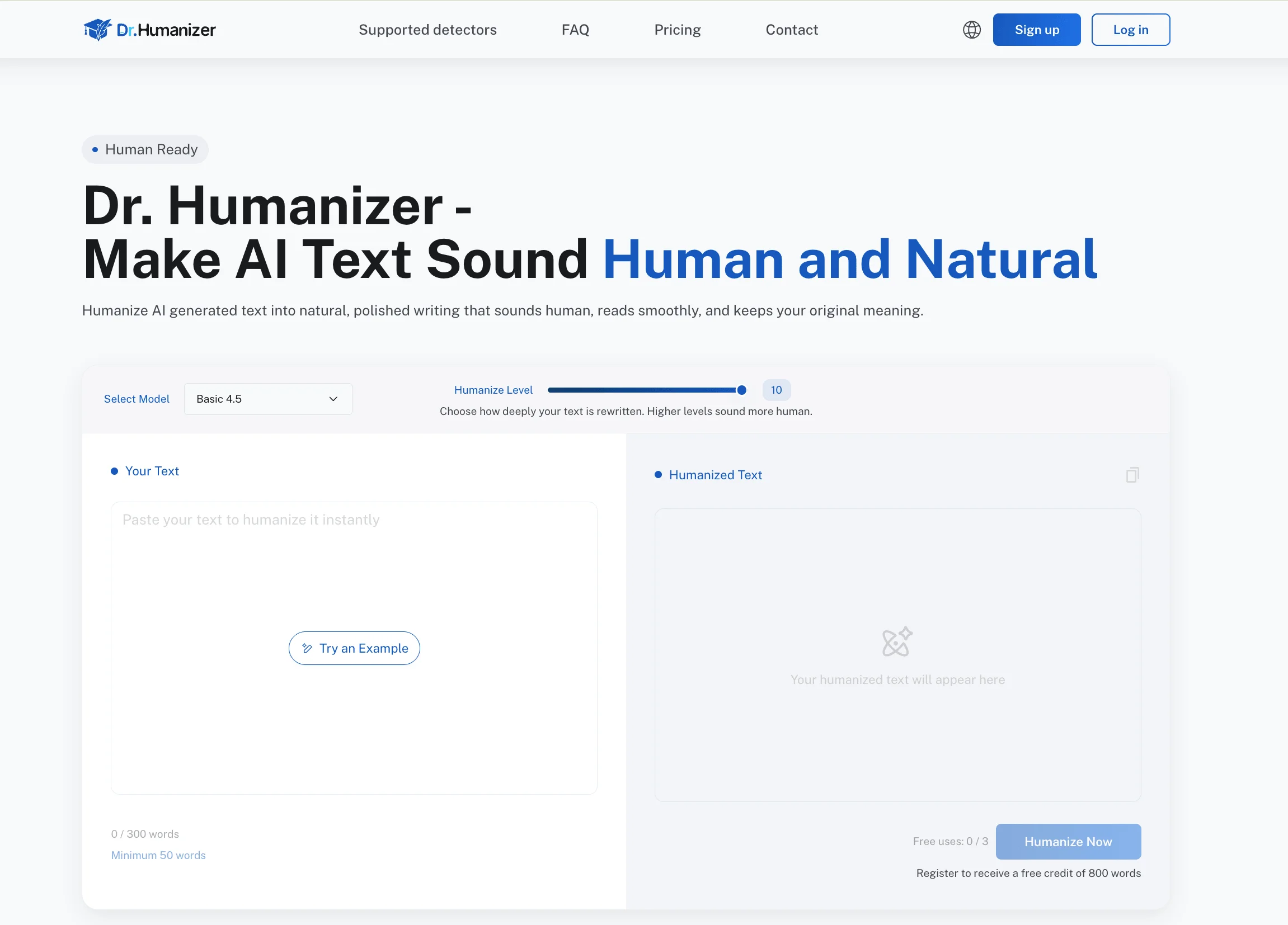
Then review practical submission issues. Turnitin accepts one document per assignment, and unreadable formatting can create processing problems. If you used AI assistance ethically for brainstorming or wording support, be ready to explain that use honestly and show your revisions. If a draft still sounds stiff or generic, focus on real revision: add course-specific analysis, concrete examples, and your own sentence patterns. A tool such as Dr. Humanizer may help reduce robotic phrasing, but the goal should be clearer personal writing, not hiding authorship.
Key Takeaways on Turnitin AI Detector Accuracy

Turnitin describes its AI writing feature as a tool to help educators identify text that might be prepared by AI systems, chatbots, word spinners, and bypasser tools.
The company says the model may misidentify human-written, AI-generated, and AI-paraphrased text.
Turnitin states that the AI report should not be the sole basis for adverse action, which means human review is built into responsible use.
The AI percentage is independent of the Similarity score, so students should not treat the two numbers as interchangeable.
Scores below 20% may be shown with an asterisk in some views because those results are less reliable and false positives are more likely.
File quality and format can affect processing, so unclear PDFs or inconsistent submission formats can complicate interpretation.
A strong student response includes drafts, notes, revision history, and a calm request for passage-level review rather than a debate over one number.
In short, the report can be meaningful, but its value comes from context, not from the percentage alone.
Frequently Asked Questions

Can Turnitin Be Wrong About AI Writing?
Yes. Turnitin says its AI model may misidentify human-written, AI-generated, and AI-paraphrased text. That means mistakes are possible in both directions. A flagged result should lead to review, not automatic judgments.
Is a Turnitin AI Score the Same as the Similarity Score?
No. Turnitin says the AI percentage is different from and independent of the Similarity score. Similarity measures matched text, while the AI report estimates whether text may have been produced by AI-related tools.
Do Low AI Percentages Matter?
They can, but they need caution. Turnitin says scores below 20% may appear with an asterisk in some views because those results are less reliable and false positives are more likely. A small percentage should not be overread.
What If My Resubmitted Paper Still Shows the Old Report?
Turnitin says normal processing can take 10 to 15 minutes, and overwritten or resubmitted files may take up to 24 hours for a new report. After three resubmission attempts, the 24-hour delay may apply again. Wait for the updated report before making judgments.
Can File Format Affect the Report?
Yes. Turnitin recommends consistent file formats when AI detection is used across an assignment. It also warns that PDFs with non-selectable text, embedded extra files, or unreadable formatting may be rejected or fail to process correctly.
Conclusion on How Accurate Is Turnitin AI Detector

For students challenging a score, the best way to think about this Turnitin question is as a question about evidence quality, not machine certainty. Turnitin's own guidance makes that clear: the system may misidentify text, lower percentages can be less reliable, and the report should not be the sole basis for adverse action.
That does not make the AI score useless. It means the score belongs inside a broader review that includes the assignment, the highlighted passages, your drafts, your revision process, and your instructor's judgment. If your paper is flagged, respond with documentation, patience, and specific questions about the report. A careful human review is where the most important decision should happen.