

AI writing can be fluent enough to read well and patterned enough to raise concern.
That tension frustrates students who use AI for allowed support and writers whose human prose gets misread by tools.
Understanding why AI content gets detected can help you revise for stronger writing instead of guessing at detector behavior.
Quick Answer to Why AI Content Gets Detected
AI content gets detected because detectors look for statistical and stylistic patterns that often appear in machine-generated text, such as predictable wording, even sentence rhythm, generic claims, and lack of source-specific detail. These signals are imperfect. Human writing can sometimes look machine-like, and AI writing can be revised to look more human. Students should respond by improving evidence, voice, citation, and process documentation rather than relying on a detector score alone.
AI Text Often Has Predictable Language Patterns
Large language models generate text by predicting likely language sequences. That can create fluent prose, but it may also produce familiar structures: broad openings, cautious transitions, and balanced summaries that do not commit to much detail.
Detectors may look for patterns related to predictability and variation. Public discussions often describe this through ideas such as how expected the wording is and how much sentence rhythm changes. The exact methods differ by tool, and many systems do not fully reveal their models.
For revision, the practical lesson is simple: replace predictable generality with specific meaning.
That does not mean every sentence needs unusual wording. It means the paragraph should show why this source, claim, or example matters in your paper.
Generic Claims Can Look More Suspicious Than Clear Evidence
AI content often sounds detached from the assignment because it lacks source-specific evidence for its claims. It may say that a topic is important, complex, or widely debated without showing which text, dataset, policy, or event proves the point.
To revise AI-flagged text, name the evidence and explain its relevance. That makes the writing easier to read and easier to defend.
Detected-Looking Pattern | Better Revision |
|---|---|
Broad claim with no source | Add the exact source, passage, study, or example. |
Overly balanced explanation | State the argument your assignment actually needs. |
Repeated transition wording | Use transitions that describe the relationship between ideas. |
Detached final paragraph | Return to the specific finding or decision the paper developed. |
Text Length and Context Can Affect Results
Short passages are harder to judge than longer ones because there is less evidence of style. Turnitin's release notes have noted that submissions below certain text requirements can produce less accurate AI writing scores. Other tools also vary in how much text they need.
Context matters too. A highly structured abstract, a formulaic lab report, a translated paragraph, or a polished scholarship essay may share surface features with generated prose. That does not prove authorship by itself.
Because context matters, students should keep drafts, notes, and source work. Those materials show the writing process behind the final text.
They also help you make AI text sound human with purpose. If a paragraph has no connection to your notes, that may be a sign to rewrite it from the source material.
Another reason context matters is genre. Abstracts, policy summaries, and lab reports often use predictable structures because the genre requires them. That structure can be good academic practice, so a detector result should be interpreted alongside the assignment type.
Human Writing Can Trigger False Positives
False positives happen when human-written text is marked as likely AI-generated. Turnitin acknowledges false positives as a possibility, and Cornell's academic integrity guidance warns that detection tools cannot provide definitive evidence of violations.
This is especially important for students who write in formal, careful, or highly standardized ways. A polished paragraph is not automatically suspicious. At the same time, a detector concern should be reviewed calmly with evidence.
If your own writing is flagged, do not try to make it worse. Instead, prepare the materials that document your writing process: essay outline, notes, drafts, citations, and feedback.
Revision Should Add Authorship, Not Just Variation
Randomly changing words can make a paragraph less coherent. Better revision adds the features that real academic writing needs: purpose, evidence, interpretation, and accurate citation.
Name the assignment task: Make sure each paragraph serves that task.
Verify the information: Check claims against reliable sources.
Add your reasoning: Explain why the evidence matters.
Adjust rhythm naturally: Let sentence length follow emphasis.
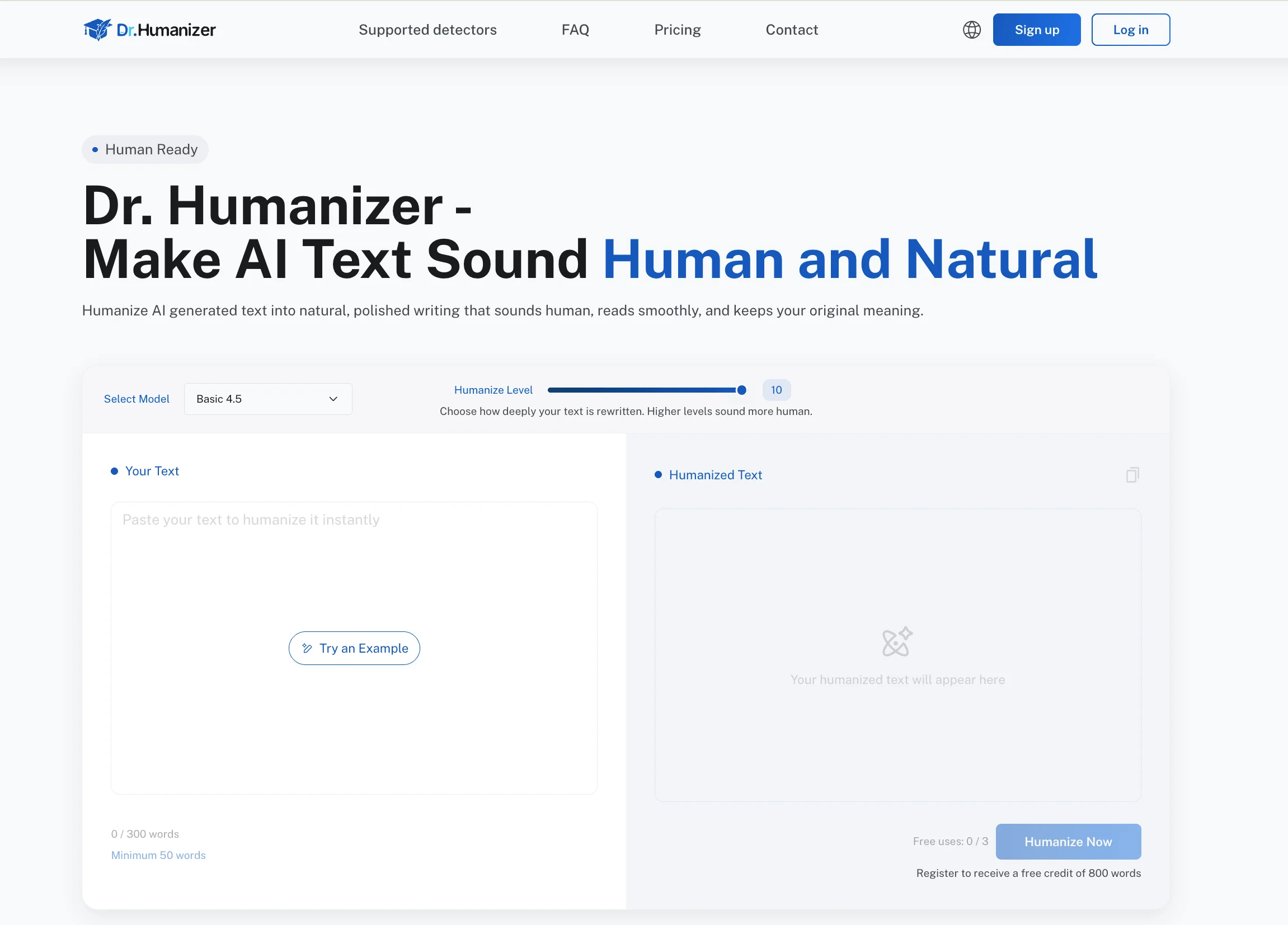
If AI-assisted prose sounds stiff, Dr. Humanizer may help make the wording more natural. Use it as an editing aid, then review the content for meaning, policy, and source accuracy.
A revision plan should focus on the strongest evidence before trying to lower AI detection scores. When you know why a paragraph belongs in the paper, you can revise its wording without losing the argument.
It is also worth checking whether the assignment genre expects formulaic language. If it does, explain your choices through sources and drafts instead of stripping away useful structure.
Key Takeaways
AI content may be detected because of predictable wording, even rhythm, and generic explanation.
Detector methods vary, and results should be reviewed with context.
False positives are possible, especially when human writing is formal or standardized.
Stronger revision adds evidence, reasoning, source control, and visible authorship.
Students should follow course AI policy and keep drafts when AI tools are involved.
FAQ
Why Does Polished Writing Sometimes Get Flagged?
Polished writing can share surface features with AI text, such as predictable structure, formal wording, or consistent rhythm. That does not prove AI use. It means the result should be reviewed with drafts, notes, and context.
Can AI Text Avoid Detection After Revision?
Sometimes revision may reduce a score, but no result is guaranteed. More importantly, a lower score does not make prohibited AI use acceptable. The final writing must follow the assignment rules.
Do Detectors Know Which AI Tool Wrote the Text?
Most text detectors estimate likelihood from patterns rather than proving a specific tool wrote a specific sentence. Some reports may separate categories, but the result still needs careful interpretation.
How Should I Revise Flagged Writing?
Start with meaning. Add source-specific evidence, remove vague claims, explain your reasoning, and check citations. Then adjust tone and rhythm so the paragraph sounds clear and natural without becoming careless.
Before the final review, ask whether every paragraph has a clear source connection and a reason to exist. That habit does more for credibility than repeatedly testing the same draft.
Conclusion
The clearest answer to why AI content gets detected involves patterns, context, and imperfect statistical judgment. Predictable prose may raise concern, but a score alone cannot tell the whole story.
Once you understand why AI content gets detected, respond with better writing habits: specific evidence, clear reasoning, honest AI use, and saved drafts. Those steps improve the paper and make the writing process easier to explain.