

Your draft may sound polished but strangely flat.
That can become stressful when a class uses AI review tools or asks students to explain how a paper was written.
If AI detection is a concern, make the writing more genuinely yours instead of trying to hide work you did not do.
Quick Answer to How to Avoid AI Detection
To avoid AI detection concerns, revise the draft until it reflects your own thinking, sources, examples, and sentence rhythm. Do not rely on a tool that promises invisible writing or guaranteed results. AI detectors can produce uncertain results, and schools may review evidence beyond a score. A better approach is to keep notes, cite sources, follow your instructor's AI policy, and rewrite AI-assisted sections in your own words after checking accuracy. If you use a humanizer, treat it as a readability helper, then review every claim and sentence yourself.
Start with Your Actual Writing Process
A detector flag is usually less important than whether you can explain how the paper came together. Keep a simple record of your evolving essay outline, source notes, instructor feedback, and revisions. Those materials show authorship in a way a percentage cannot.
Cornell's teaching guidance advises instructors to look for objective and verifiable evidence before treating AI use as an academic integrity issue, and it notes that automatic detection tools have serious limits. Students can learn from the same idea: make your process visible before there is a problem.
Save early drafts: Keep versions that show how your thesis, examples, and paragraphs changed.
Track source decisions: Note why you chose each source and where it supports your argument.
Record AI help honestly: If a class allows brainstorming or grammar help, document what you used and how you changed the output.
This process does not require a complicated log. A folder with drafts and a few notes can be enough to remind you what changed and why.
Replace Generic AI Patterns with Specific Meaning
AI-assisted paragraphs often sound smooth because they avoid risk. They may rely on broad claims, balanced phrasing, and familiar transitions without adding the details your assignment needs. That style can also make human writing look less personal than it really is.
Look for sentences that could fit almost any paper. Replace them with course concepts, a source detail, a classroom discussion point, or a concrete example from your own argument. The goal is not to make the writing messy. The goal is to make it accountable.
Flat Draft Move | Stronger Revision Move |
|---|---|
Broad claim about society | Name the group, time period, policy, text, dataset, or case your paper discusses. |
Vague transition | Explain how the next paragraph changes, complicates, or proves the previous point. |
Perfectly even sentence rhythm | Use sentence lengths that match the emphasis of your argument. |
Revision should make the paper easier to defend. If a sentence sounds impressive but you cannot explain it in class, rewrite it until the meaning is yours.
Use AI Tools Within the Assignment Rules
AI use is not treated the same way in every course. Stanford's student guidance recommends reviewing the instructor's policy before using AI and disclosing use when appropriate. That advice matters because the same action may be allowed in one class and prohibited in another.
For a class that allows grammar support, a readability tool may be fine. For a take-home exam that bans outside help, even light rewriting support may create a problem. The safest move is to ask before submitting if the policy is unclear.
If you used ChatGPT, Claude, Gemini, or another tool to brainstorm, do not paste the final response into your assignment. Turn the ideas into your own working essay outline, test them against sources, and write the paragraph from the evidence. AI can help you start thinking, but it should not replace your analysis.
Handle Detector Scores with Context
Turnitin's AI writing release notes state that false positives are possible and that an AI Writing score should not be used as the only basis for adverse action. That does not mean every score is wrong. It means a score should be interpreted with other evidence.
If your writing was flagged, gather drafts, notes, citations, and feedback. Ask what part of the submission raised concern. A calm explanation of your process is stronger than running the paper through several more detectors and chasing a lower number.
Different tools may return different results because they evaluate text in different ways. A score can change after translation, paraphrasing, formatting changes, or revision. Treat detector output as a signal that needs review, not as a final verdict on authorship.
Revise for Voice, Accuracy, and Source Control
Strong student writing usually has a pattern of decisions. It names the course issue, avoids plagiarism through attribution, and explains why the evidence matters. AI-assisted prose may skip those decisions or smooth them over.
Read the paragraph aloud: Mark sentences you would not naturally say.
Check each claim: Make sure the evidence actually supports it.
Add your reasoning: Explain the connection between source material and your argument.
Vary structure only where meaning changes: Short sentences can emphasize a finding. Longer sentences can connect evidence.
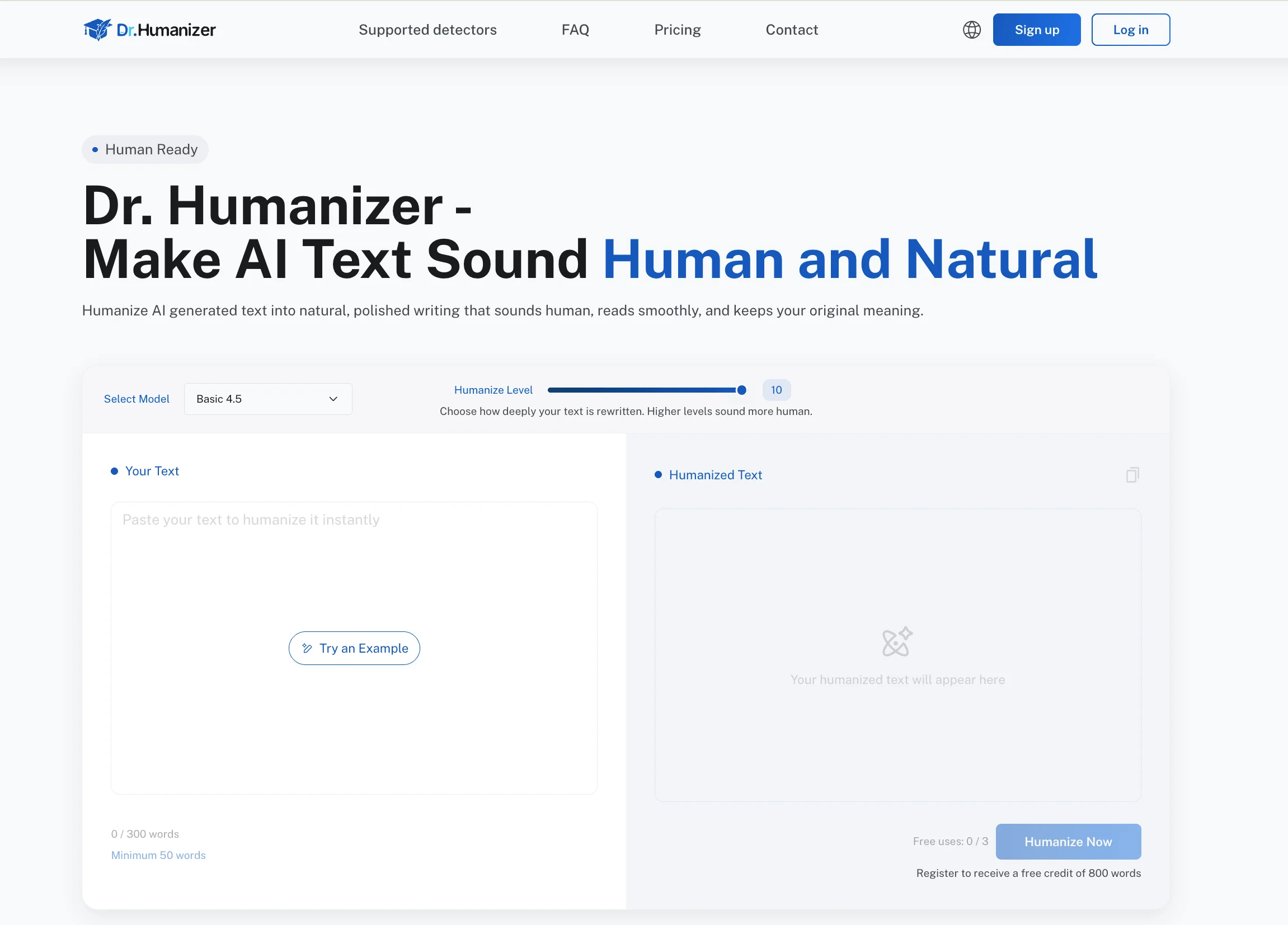
If you want help smoothing robotic phrasing, Dr. Humanizer may help reduce AI-like patterns and improve readability. Use it after you understand the argument, then review the revision for accuracy, citation, and policy compliance.
Key Takeaways
Detector concerns are best reduced through honest writing, revision evidence, and assignment-specific work.
No tool can promise that writing will never be flagged by an AI detector.
Course policy matters more than a general internet rule about AI use.
Specific evidence, source notes, and personal reasoning make a draft easier to defend.
Humanizing should improve clarity and flow, not disguise work that violates academic rules.
FAQ
Can a Human-Written Paper Be Flagged as AI?
Yes. AI detectors can produce false positives, especially when writing is very polished, generic, short, translated, or heavily edited. A flag should be reviewed with context, drafts, and other evidence. It should not replace a conversation about the student's actual writing process.
Should I Use Several AI Detectors Before Submitting?
Running a draft through several detectors can create more confusion because tools may disagree. A better use of time is revising broad claims, checking citations, saving drafts, and making sure your work follows the assignment policy.
Is It Okay to Humanize AI-Assisted Writing?
It may be acceptable when the class allows AI support and you use the tool for clarity, tone, or flow. It becomes risky when the goal is to hide prohibited AI use. Always follow the course policy and keep the final writing in your own voice.
What Should I Do If My Paper Is Flagged?
Stay calm and gather your evidence. Bring drafts, notes, source annotations, and any allowed AI-use disclosure. Ask which parts of the paper raised concern and explain how you wrote and revised the work.
Conclusion
The most reliable answer is not a trick. To avoid AI detection concerns, build a writing process you can explain: original reasoning, careful sources, visible drafts, and revisions that make the paper sound like you.
AI tools can support brainstorming or editing when your instructor allows them, but the final responsibility is yours. Keep the work honest, document what you did, and revise for meaning before you worry about a score.