

An AI draft can give you a starting point and still feel nothing like your writing.
The sentences may be smooth, but the paragraph may miss your course context, source choices, and natural voice.
Humanizing AI text works best when you revise for meaning first, then polish the sound of the prose.
Quick Answer to How to Humanize AI Text
To humanize AI text, read the draft as raw material, not finished work. Check the facts, remove claims you cannot support, add your own reasoning, and rewrite sentences so they match how you would explain the idea to a classmate. Keep useful structure if it helps, but replace generic wording with specific evidence, course vocabulary, and your own transitions. If AI use is allowed, document how you used it. If it is not allowed, do not submit AI-generated prose as your work.
Separate Useful Ideas from Ready-to-Submit Writing
The first step is deciding what the draft actually gave you. Sometimes AI offers a usable essay outline, a rough definition, or a list of points to verify. That does not make the paragraph ready for submission.
Highlight sentences in three colors: ideas worth keeping, claims requiring supporting evidence, and language that sounds too generic. This small review keeps you from polishing weak content. It also shows where your thinking needs to replace the machine's broad phrasing.
AI text often sounds confident even when it is thin. Cornell's ethical AI guidance reminds students and teachers to evaluate AI output through a critical lens, including accuracy, bias, and privacy. Humanizing starts with that kind of judgment.
Add the Evidence Only You Can Choose
A human revision should contain decisions. Which source matters most? Which lecture concept applies? Which sentence needs a citation? AI text cannot know your instructor's expectations unless you provide them, and even then it may invent or overstate details.
Take one paragraph and add evidence before editing tone. If the paragraph says a policy affected students, name the policy and explain the effect. If it says a character changes, point to the scene. If it says a study supports a claim, verify the study and cite it correctly.
Revision Question | What It Adds | Why It Sounds More Human |
|---|---|---|
What source proves this? | Evidence and citation control | The claim becomes accountable. |
What do I actually think? | Interpretation | The paragraph has a point of view. |
What would my instructor ask? | Course relevance | The writing fits the assignment. |
Rewrite for Your Natural Sentence Rhythm
AI writing often uses balanced sentences that sound polished but predictable. Human writing can be clear while still having variation. A short sentence can land a point. A longer sentence can connect evidence to interpretation.
Read a paragraph aloud. If every sentence has the same length or the same abstract tone, revise the rhythm. Replace inflated words with language you would use in office hours. Keep academic terms when they are necessary, but remove words that only make the paragraph sound formal.
Do not add errors to look human. Misspellings, awkward phrasing, and random slang weaken the paper. A better voice is precise, specific, and steady.
Use Humanizing Tools as Editors, Not Cover Stories
A humanizer can help with flow, but it cannot decide whether the argument is yours. Tools such as Grammarly and Scribbr describe humanizing as improving naturalness, tone, and readability. That use is different from trying to hide prohibited assistance.
If your AI-assisted paragraph sounds robotic, Dr. Humanizer can help produce more natural rewrites for comparison. After that, choose the version that preserves your meaning, remove unsupported claims, and edit the paragraph so it matches your own understanding.
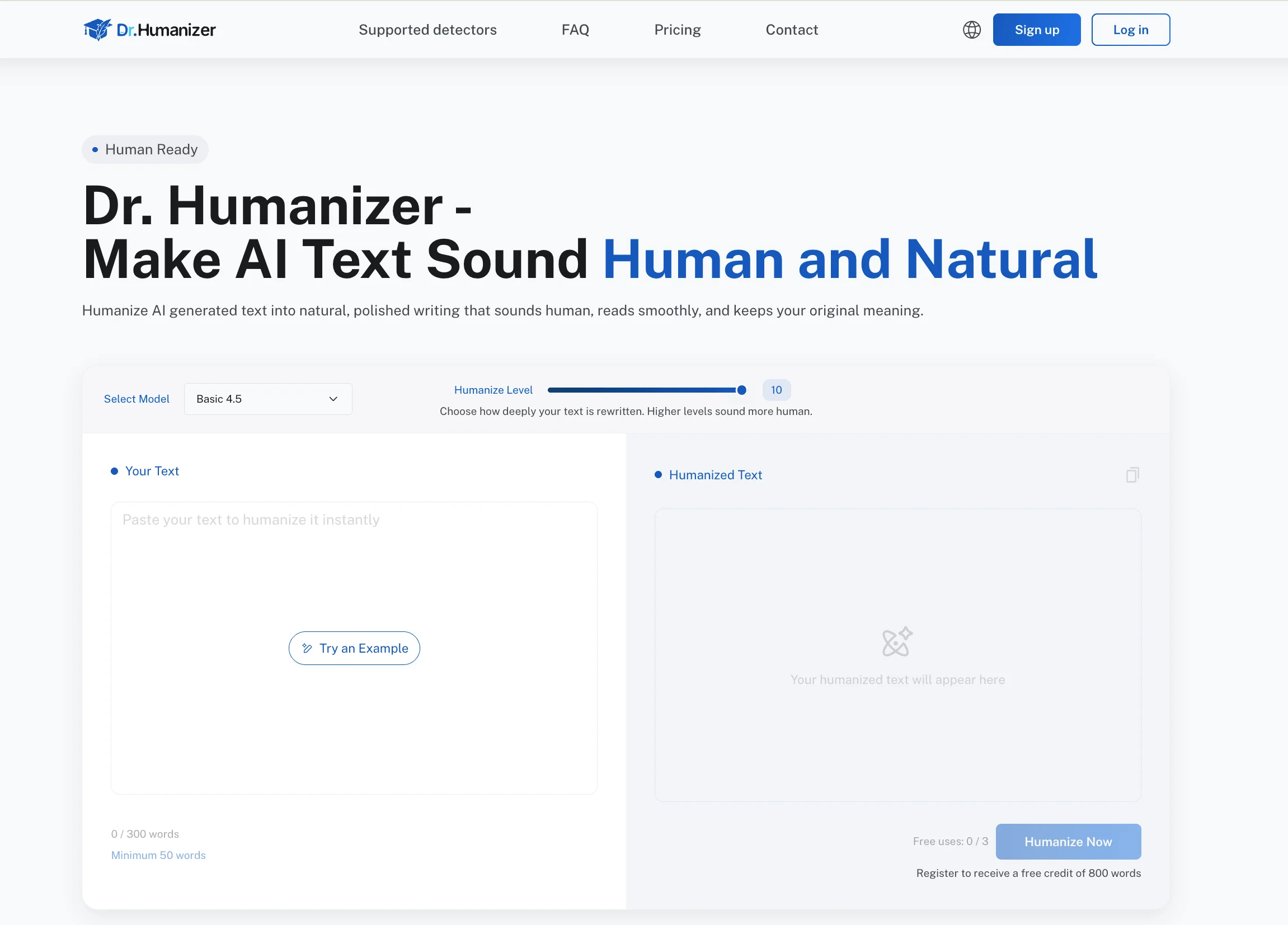
Never assume a humanizer guarantees AI detection bypass. Detector systems change, and schools may review drafts, notes, citations, and writing history. The responsible goal is better writing, not a promise about a score.
Check Policy, Disclosure, and Citation Before Submission
Stanford's student-facing AI guidance advises students to review the course policy and disclose AI use when required. That is practical advice because AI rules vary widely. One class may allow brainstorming. Another may ban generative tools for the whole assignment.
Before submitting, ask three questions. Did the assignment allow the help I used? Did I cite or disclose AI use if required? Can I explain every paragraph and source? If any answer is uncertain, pause and clarify.
This step protects more than your grade. It helps you build writing habits that still work when a professor, journal, internship supervisor, or scholarship committee asks how the work was produced.
It also gives you a calmer revision standard. Instead of asking whether the paragraph sounds human enough, ask whether it is accurate, permitted, and easy for you to explain.
A final pass should compare the edited draft with your original purpose. If the revision makes the paragraph sound nicer but less precise, restore the specific term, source detail, or explanation that made the point clear.
Key Takeaways
Humanizing AI text should begin with fact-checking, source review, and your own reasoning.
A natural voice is specific and accountable, not messy or artificially casual.
Humanizer tools can support editing, but they cannot make prohibited AI use acceptable.
Keep drafts and notes when AI tools are part of an allowed writing process.
The final submission should be something you can explain without relying on the tool.
FAQ
What Makes AI Text Sound Robotic?
AI text often sounds robotic when it uses broad claims, repeated transitions, cautious summaries, and sentences with similar rhythm. It may also avoid the specific evidence, uncertainty, and course details that make student writing feel grounded.
Can I Humanize AI Text Without Changing the Meaning?
Yes, but you need to compare the revision against the original idea and your sources. A rewrite can accidentally change emphasis, soften a claim, or introduce a new assumption. Read each revised sentence before using it.
Does Humanized Text Always Pass AI Detection?
No. AI detectors and humanizer tools change over time, and no responsible tool can guarantee a result. A stronger goal is to create accurate, policy-compliant writing that reflects your own analysis.
How Much Should I Rewrite an AI Draft?
Rewrite as much as needed for the paragraph to reflect your thinking, evidence, and assignment requirements. In many academic situations, that means using the AI output only as a rough starting point and rebuilding the paragraph yourself.
Conclusion
A good humanizing process is really a revision process guided by judgment. When you humanize AI text responsibly, the strongest drafts are not just smoother; they are more accurate, more specific, and more clearly connected to your own thinking.
Use tools carefully when your course allows them, but do not let them replace the work of reading, reasoning, citing, and editing. That is where the writing becomes yours.