

A humanizer can make AI text sound less stiff, but that does not make it invisible.
Students often face mixed messages from tools, detectors, and course policies.
The real issue is what a humanizer can change, what it cannot prove, and what academic rules still require from your writing.
Quick Answer to Can AI Humanizers Bypass AI Detection?
It depends. AI humanizers may lower some AI detection scores by changing wording, rhythm, and phrasing, but they cannot guarantee that text will pass every detector or satisfy an instructor's academic integrity standards. Some detection systems now look for AI-paraphrased or bypassed text, and schools may consider drafts, notes, citations, and student explanations. A humanizer is safest when used for allowed editing and readability, not for hiding prohibited AI-generated work.
What Humanizers Actually Change
AI humanizers rewrite text. They may vary sentence length, replace predictable phrases, make tone more natural, and reduce overly formal wording. Some tools also offer several versions so a writer can compare phrasing choices.
Those changes can improve readability. They can also remove some surface patterns that detectors associate with generated prose. But a rewritten paragraph may still carry the same deeper problems: unsupported claims, generic reasoning, missing citations, and a voice that does not match the student's previous work.
Think of a humanizer as an editor for wording. It is not a substitute for source knowledge, assignment judgment, or honest authorship.
This is why a humanizer output still needs a full student review. Check whether the paragraph keeps the original meaning, whether sources are credited to avoid plagiarism when rewriting, and whether the result fits the task your instructor assigned.
Why Bypass Claims Are Unreliable
The reasons AI text gets flagged differ across detectors, whose models also change over time. A text that receives a low score in one tool may receive a higher score elsewhere. Formatting, language, length, paraphrasing, and topic can all affect results.
Research on reliable AI-text detection has shown that practical detection remains difficult, especially when generated text is paraphrased or revised. That uncertainty cuts both ways: a detector may miss AI text, and it may also flag human text.
Claim | Safer Interpretation |
|---|---|
A humanizer bypasses detectors. | It may change features some detectors use, but results vary. |
A low score proves the paper is safe. | Policies, drafts, citations, and explanations still matter. |
A high score proves misconduct. | Scores need review with context and evidence. |
How Turnitin Treats AI-Paraphrased Text
Turnitin's AI writing release notes state that its report can include a category for likely AI-generated text that was then AI-paraphrased. Turnitin also notes that false positives are possible and that an AI Writing score should not be the sole basis for adverse action.
These points are important together. A humanizer should not be viewed as a guaranteed escape route, and a detector score should not be viewed as a full investigation. Both require context.
If your institution uses Turnitin or another detector, assume the review may include more than a single percentage. Draft history, source quality, instructor knowledge of your writing, and policy language may all matter.
That broader review can protect honest students, but it also means a tool-focused shortcut is weak preparation. A paper should be defensible even if no detector is involved.
Marketing language can make bypassing sound simple, but academic review is rarely that narrow. A teacher may notice whether the paper uses assigned readings correctly, whether the examples match class discussion, and whether the student can answer questions about the work.
Academic Integrity Comes Before Score Management
Stanford's student guidance advises students to review the course policy, assume AI use is not allowed unless the assignment says otherwise, and disclose AI assistance when required. That is a useful standard for any student using AI tools.
If the assignment permits AI-assisted editing, using a humanizer for clarity may be acceptable. If the assignment bans generative AI, using a humanizer to disguise generated text would not solve the policy problem. It may make it worse because it adds another hidden tool to the process.
Responsible use means being able to explain what help you used and what work you did yourself.
When a Humanizer Can Be a Legitimate Editing Tool
A humanizer can be helpful when the writer already owns the content. For example, a student who drafted bullet points, wrote a rough paragraph, and used AI only to test phrasing may use a humanizer to compare smoother versions if the policy allows it.
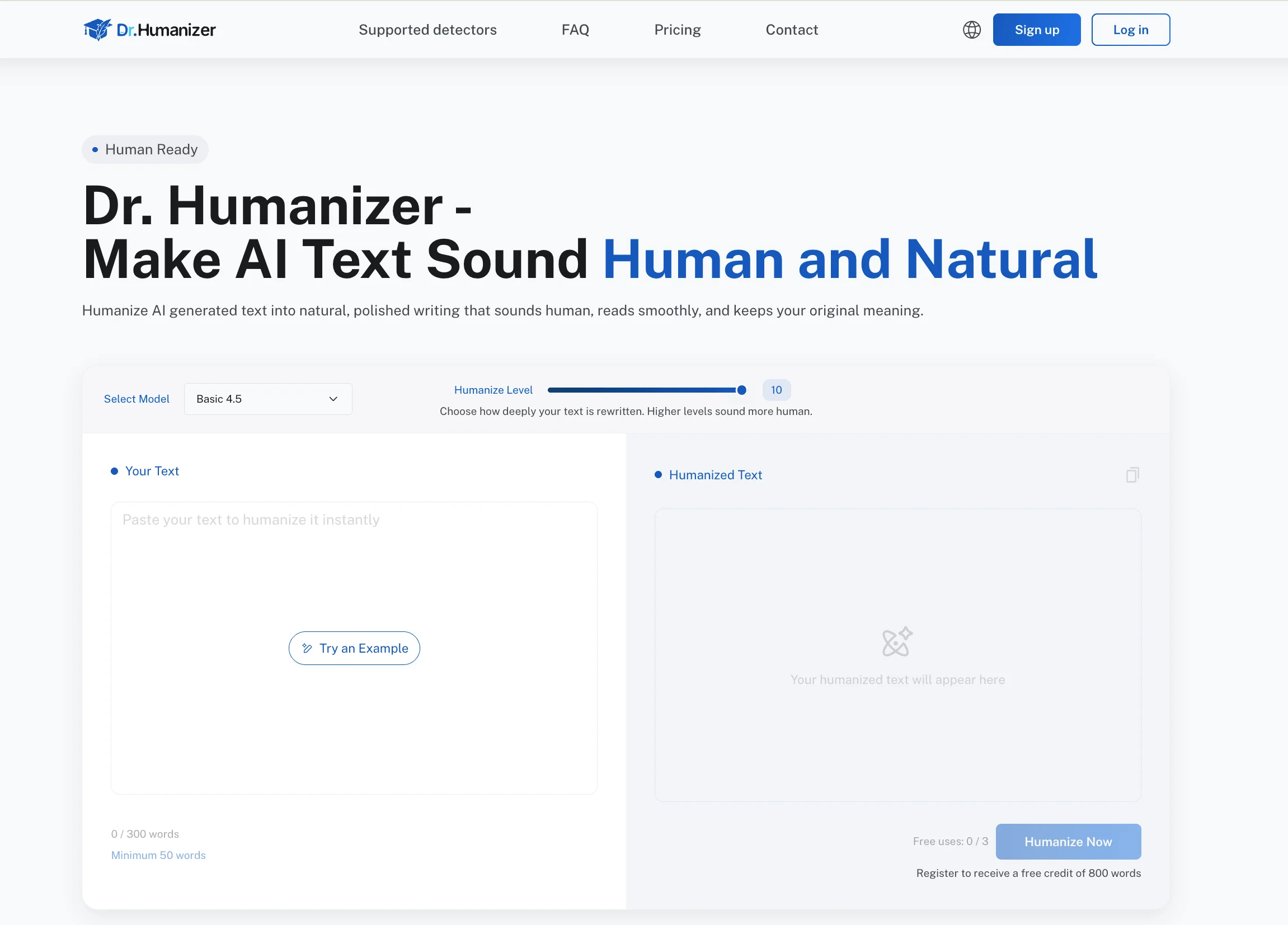
Dr. Humanizer may help make AI-assisted writing sound more natural and reduce AI-like patterns. The final review still belongs to the writer: check sources, restore your voice, remove exaggerated claims, and keep any required disclosure.
Humanizing is most defensible when it improves clarity for readers. It is least defensible when it is used to hide who produced the work.
A useful self-check is whether the final draft could survive a conversation. If you can explain the sources, choices, and revisions without relying on a tool score, the writing is in a stronger position.
Key Takeaways
AI humanizers can change surface style, but they cannot guarantee detection outcomes.
Some detection systems consider AI-paraphrased or bypassed text as part of their reports.
False positives and false negatives make detector scores imperfect evidence.
Course policy decides whether AI editing is allowed for a specific assignment.
A humanizer is safest as a readability tool for allowed work, not as a concealment method.
FAQ
Do AI Humanizers Always Beat Turnitin?
No. Turnitin has released updates related to likely AI-paraphrased text, and no responsible tool can promise a universal result. Turnitin reports also need context, so the question should not be reduced to one score.
Can a Humanizer Make AI Text Ethical to Submit?
Only if the underlying AI use follows the assignment policy. If a course prohibits AI-generated writing, rewriting the text through a humanizer does not make the work ethically acceptable.
Why Do Different Detectors Give Different Scores?
Different detectors use different models, thresholds, training data, and text requirements. They may also respond differently to paraphrasing, translation, formatting, and text length. That is why a single score should be reviewed carefully.
What Is a Safer Way to Use a Humanizer?
Use it after you have written or substantially revised the content yourself and only when AI editing is allowed. Compare versions, keep your meaning, check citations, and disclose AI assistance if your instructor requires it.
Conclusion
Can AI humanizers bypass AI detection? Sometimes they may reduce a score, but that is not the same as reliable proof, academic permission, or honest authorship.
Students are better served by using humanizers for allowed clarity improvements, keeping drafts, checking sources, and following course rules. A better paragraph should be easier to read and easier to defend.