

A high AI score can make a writer want the fastest possible fix.
That reaction is understandable, but rewriting only to reduce a number can create academic and quality problems.
A responsible approach to how to remove AI detection from text starts with authorship, evidence, and policy before style.
Quick Answer to How to Remove AI Detection from Text
To remove AI detection concerns from text, revise the writing so it reflects your own work: verify facts, replace generic claims, add source-specific evidence, and rewrite the argument in your own words. Do not use tools to hide prohibited AI use or submit work you cannot explain. AI detection scores are uncertain signals, not complete proof. If your course permits AI editing, a humanizer may help with readability, but the final text should be accurate, cited, and consistent with the assignment rules.
Decide Whether the Text Is Yours to Revise
Before editing, ask a blunt question: did you write the ideas, or are you trying to make someone else's output look like your own? If the text is mostly generated and your course does not allow that, style changes will not solve the integrity problem.
If you used AI for allowed brainstorming, you can still build an honest draft from it. Start by deleting any paragraph you cannot defend. Keep only the ideas you understand, then rebuild the writing from your notes and sources.
This distinction matters because academic writing is not only about the final wording. It is also about the thinking process behind the submission.
If you cannot explain how a sentence supports your point, remove it or rebuild it from your own notes. A cleaner sentence is not useful if it hides a missing idea.
Remove the Patterns That Make the Text Feel Machine-Like
Some AI-associated patterns are also weak writing patterns. Broad openings, unsupported confidence, repeated transitions, and evenly balanced paragraphs can make a draft feel less authentic. Removing those patterns usually improves the paper whether or not a detector is involved.
Pattern to Review | What to Do Instead | Result |
|---|---|---|
Generic summary sentence | Name the exact topic, source, or claim. | The paragraph becomes more specific. |
Unverified fact | Confirm it with a credible source or remove it. | The paper becomes more trustworthy. |
Mechanical transition | Explain how the next idea changes the argument. | The structure feels intentional. |
Do not make the text worse on purpose. Detectors may react to polished language, but poor grammar is not evidence of human thought. Strong revision adds meaning.
After editing, compare the paragraph with the assignment prompt. A responsible revision should answer the prompt more directly than the earlier version did.
Add Source Control and Personal Reasoning
AI-generated drafts often sound like they know the topic but avoid close contact with sources. A human revision should show where the information came from and what you did with it.
For each paragraph, underline the sentence that expresses your paragraph's central claim. Then mark the evidence that supports it. If you cannot find both, the paragraph needs more than paraphrasing. It needs a new purpose.
Cornell's academic integrity guidance emphasizes verifying citations and references. That advice is especially important when AI was part of the writing process because generated drafts can include inaccurate claims or invented source details.
Understand What Detector Scores Can and Cannot Do
Turnitin's release notes explain that false positives are possible and that AI writing scores should not be the sole basis for adverse action. Turnitin also changed how low scores are surfaced to reduce false positive concerns. These details show why a percentage needs context.
Research on AI-generated text detection has also found practical reliability challenges, especially when text is paraphrased or moved across different writing conditions. A lower score after rewriting does not automatically prove authorship, and a higher score does not automatically prove misconduct.
Use scores as a reason to review the draft. Do not use them as the only measure of whether your writing is ready.
If the score changed after small wording edits, resist treating that as proof. Your source notes, argument quality, and permission to use AI matter more than a single tool response.
Use Humanizing Help Only for Allowed Editing
If your course allows AI editing, a humanizer can help smooth robotic phrasing and offer alternatives. It should not decide your argument, invent sources, or turn prohibited AI output into a submission.
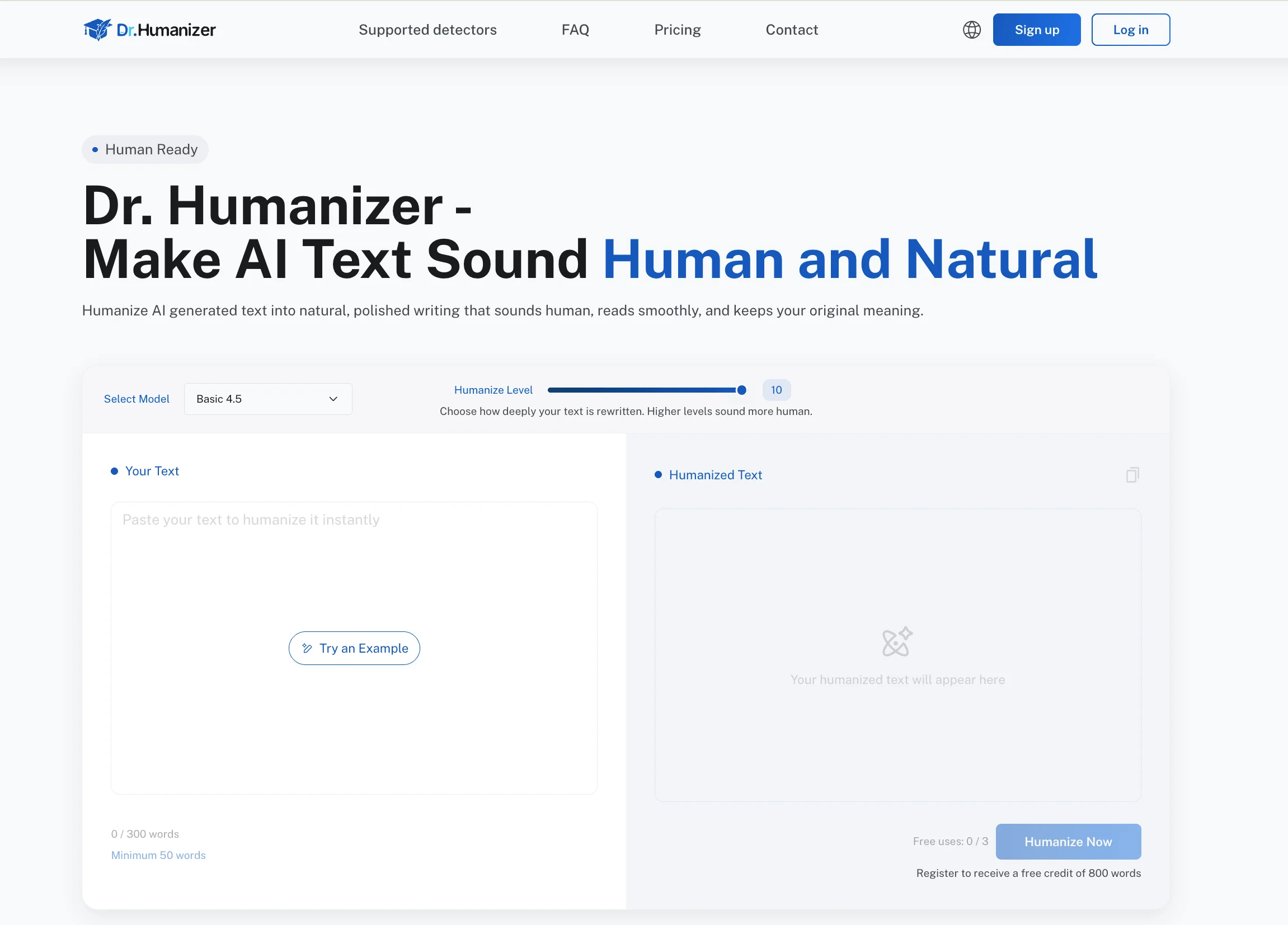
Dr. Humanizer may help reduce AI-like wording patterns and improve flow, especially when a draft sounds stiff after AI-assisted brainstorming. Review each rewrite against your notes, assignment directions, and citations before you use it.
If your instructor does not allow AI tools for the assignment, do not use a humanizer. Rewrite from your original essay outline and ask for help through approved channels such as office hours, peer review, or the writing center.
One useful test is to explain the revised paragraph without looking at it. If you can summarize the claim, name the source, and say why the paragraph belongs in the paper, the revision is moving in a healthier direction.
Key Takeaways
Reducing AI detection concerns should mean strengthening authorship, not hiding misconduct.
Specific evidence and personal reasoning matter more than surface word changes.
Detector scores can be useful signals, but they are not complete proof.
Allowed AI editing still requires fact-checking, citation review, and policy compliance.
If the assignment bans AI tools, rewrite through your own process instead of using a bypass method.
FAQ
Can AI Detection Be Removed Completely?
No responsible method can promise that. Detection tools change, and their results vary by text length, wording, model, and context. The better goal is to produce accurate, original work that you can explain and support.
Is Rewriting AI Text Enough?
Not always. Rewriting helps only if the final work reflects your own thinking and follows the assignment policy. If the ideas, structure, and evidence still come from AI without allowed use or disclosure, the problem remains.
Will Adding Personal Examples Help?
Personal or course-specific examples can help when they genuinely support the argument. They should not be random decoration. Add examples that connect to the assignment, source material, or your own reasoning.
What If My Own Writing Gets Flagged?
Collect your drafts, notes, source annotations, and revision history. Ask for the concern to be reviewed with context. A calm explanation of your process is more useful than chasing detector scores.
Conclusion
How to remove AI detection from text should be treated as a revision question, not a hiding strategy. The strongest solution is writing that is specific, sourced, and clearly connected to your own decisions.
Use approved tools only when your course allows them. Then read the final draft carefully, verify the facts, and make sure you can stand behind every paragraph.