

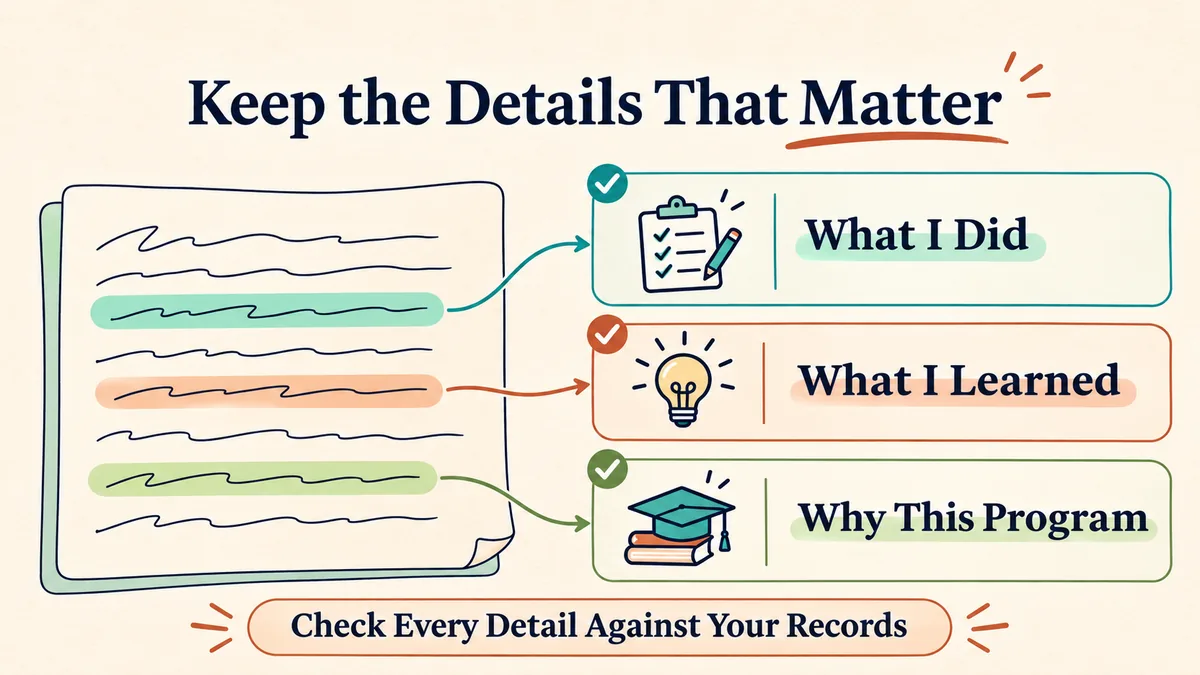
To humanize a statement of purpose, explain what you did, what you learned, and why the program fits your plans.
Start with your own truthful draft. Replace vague praise with details you can explain in an interview.
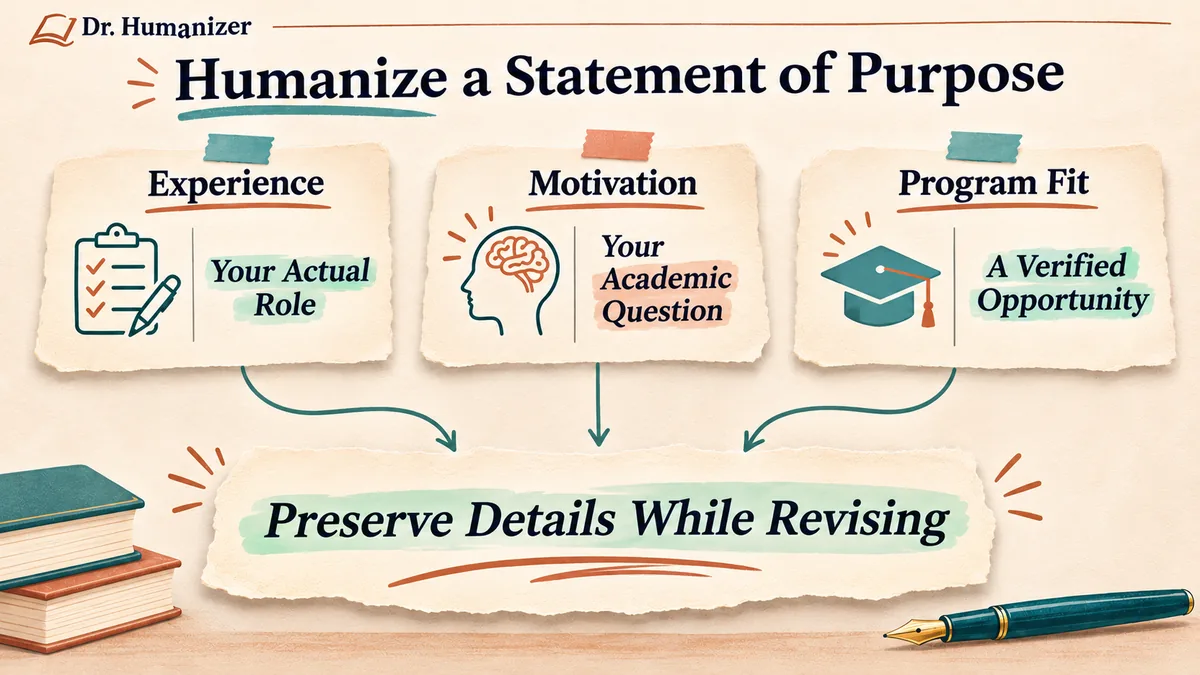
Keep Three Kinds of Detail
Detail | Keep in the Revision | Cut or Replace |
|---|---|---|
Experience | Your actual role, task, and contribution. | Unsupported claims of leadership or impact. |
Motivation | The question or insight that shaped your direction. | Generic enthusiasm that explains no choice. |
Program fit | A verified opportunity and why it matters to your plans. | Prestige claims or copied lists of faculty names. |
Berkeley's graduate admissions guidance, for example, asks applicants to connect preparation, academic interests, and intellectual fit.
Treat that as an illustration of specificity; the instructions for your own program determine what belongs in your statement.
Revise One Paragraph in Three Passes
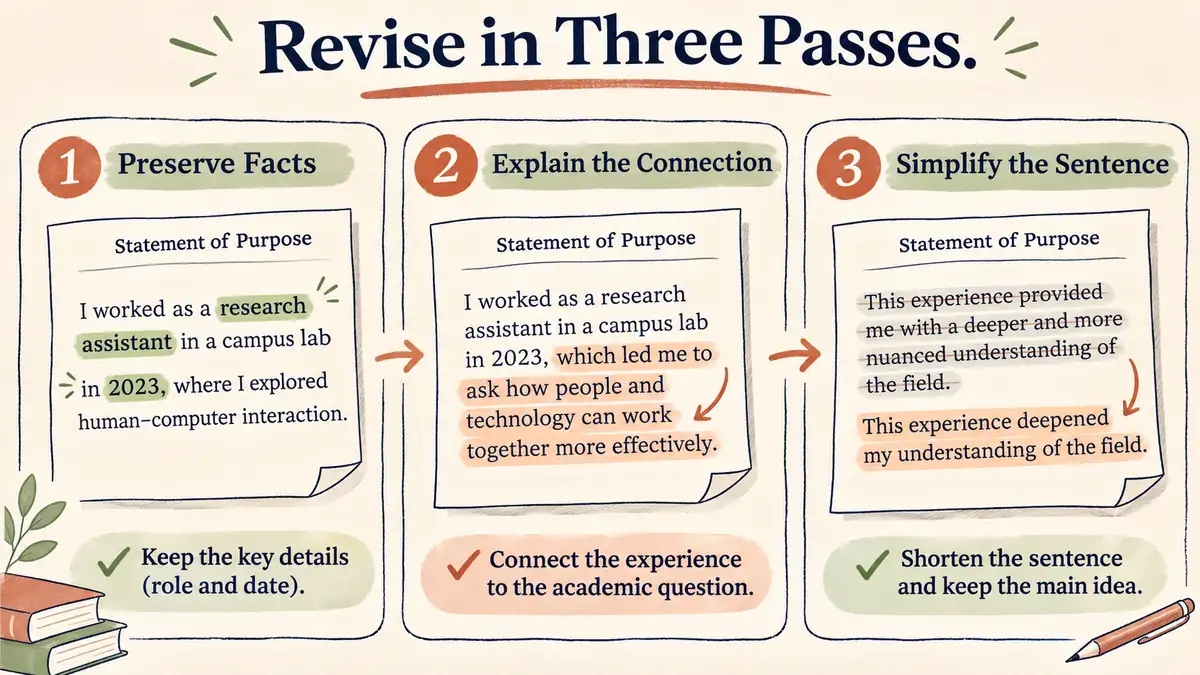
First, Mark the Facts You Cannot Change
Highlight project names, dates, responsibilities, methods, and outcomes.
Check them against your records.
A language edit must not turn assisting with a project into directing it, or an unfinished analysis into a published finding.
Next, Explain the Connection
After each experience, ask what it taught you or what question it raised.
Choose the connection you can explain honestly.
The reader needs to understand why the detail matters, not merely that the experience occurred.
Finally, Simplify the Sentence
Use a clear subject and verb, remove repeated praise, and split a sentence if it carries several unrelated points.
Keep necessary technical terms.
Natural writing does not require slang or a dramatic personal story.
Compare the Wording, Not the Applicant
Invented editing example: both versions below describe the same hypothetical activity. They are not a real applicant's experience or a product test.
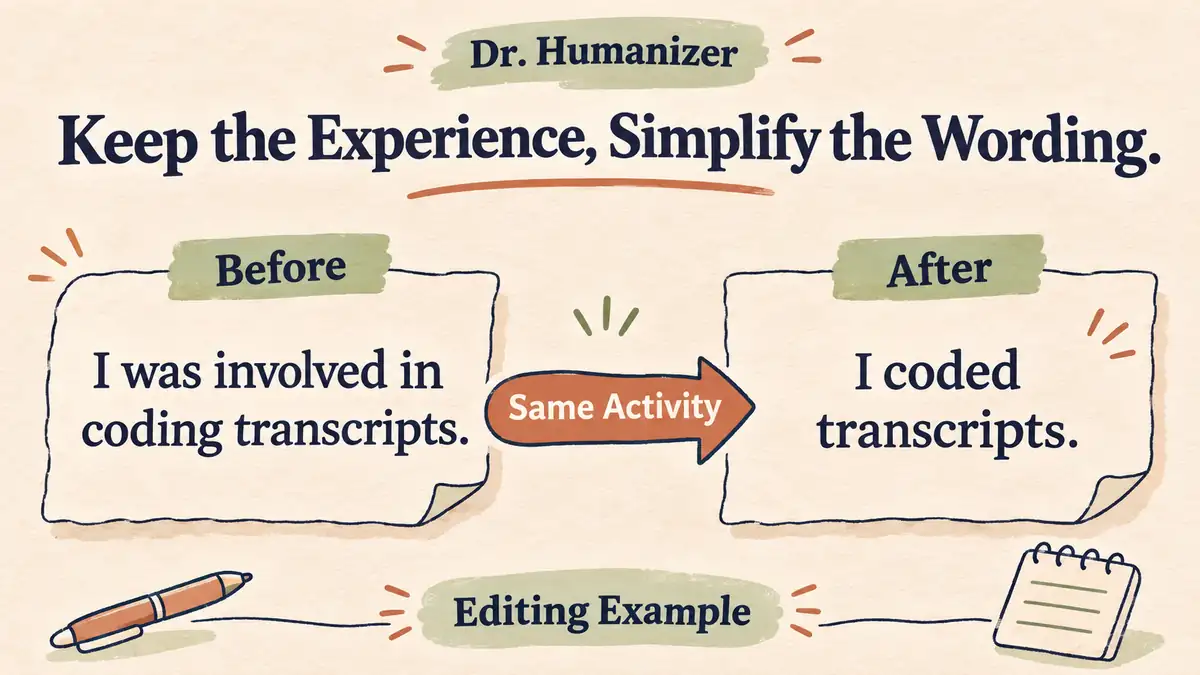
Before | After |
|---|---|
Through my involvement in the coding of interview transcripts, I was able to develop an interest in how questions influence participants' responses. | Coding interview transcripts made me interested in how question wording shapes participants' responses. |
The edit removes wordiness while preserving the activity and interest.
It does not add a sample size, discovery, publication, or leadership role.
Add such details only when they are true and relevant.
Make Program Fit More than a Name Check
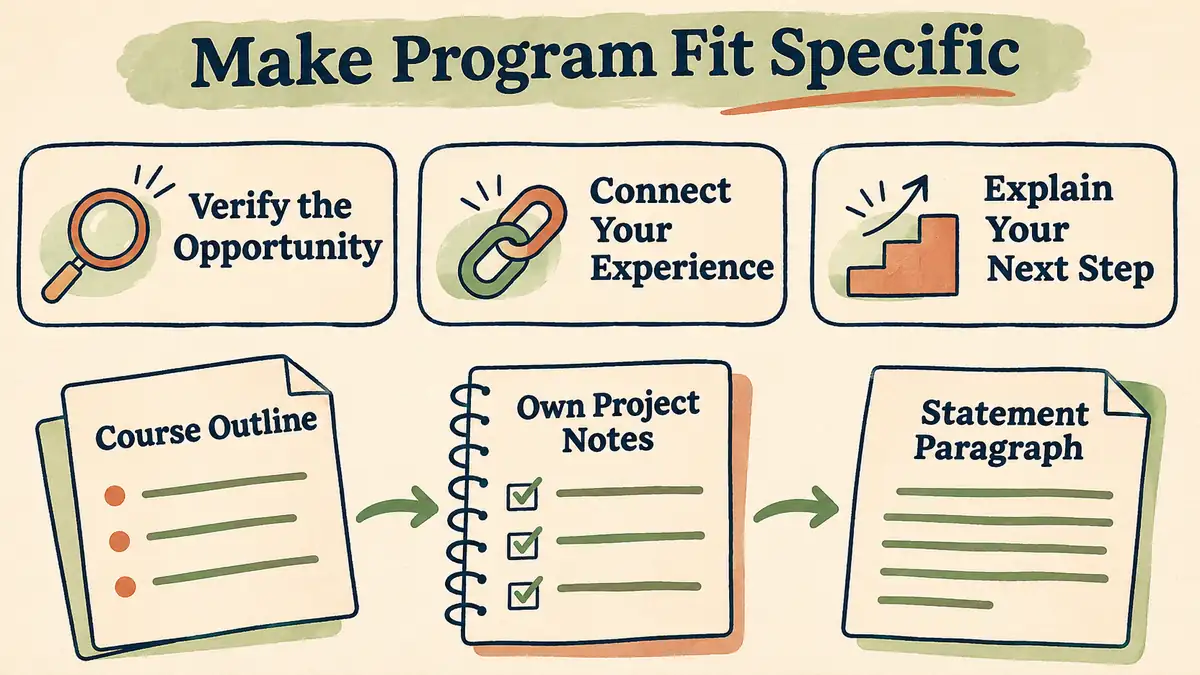
Verify the opportunity. Read the current program page before mentioning a course, research group, or faculty member.
Explain the connection. Link that opportunity to a question, skill, or direction already established in your statement.
Keep the claim modest. Interest in a lab does not mean an invitation to join it. Do not imply an arrangement that does not exist.
Statements of purpose and personal statements can overlap, but their prompts may differ.
The broader guide to writing a personal statement can help with reflection; use the actual application prompt to decide how much personal history to include.
Use Wording Assistance Within a Clear Boundary
If the application permits it, Dr. Humanizer can provide wording alternatives for a passage you have already drafted.
Keep the original beside the suggestion and accept only changes that preserve your role, motivation, and intended meaning.
Before keeping an edit, check:
Would I describe this experience the same way in an interview?
Did the rewrite add a result, feeling, or qualification I did not provide?
Does the paragraph still sound consistent with the rest of my statement?
A smooth sentence is not evidence of an accurate one. Keep source attributions where needed, and follow the application's assistance and disclosure rules.
FAQ
Should I Replace Every Formal Expression?
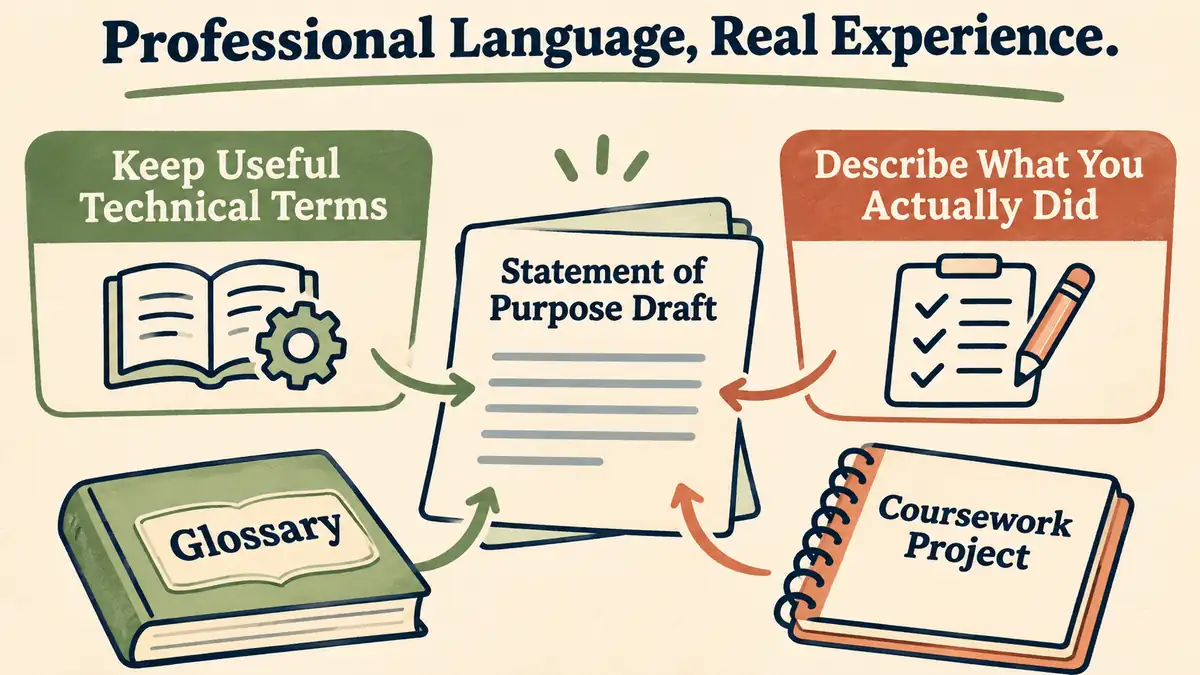
No. Keep professional language and terms that accurately describe your field. Replace stiffness when it obscures your point, not merely because a phrase sounds academic.
What If I Have Little Research Experience?
Describe relevant coursework, projects, work, or independent study accurately.
Explain what you learned and what you want to investigate next; do not invent research credentials to fill a perceived gap.
Conclusion
A stronger statement makes your actual choices easier to understand.
Preserve the details, explain their significance, and simplify the wording only after the underlying account is accurate.