

Two rewriting tools can look similar until you need them for a real assignment.
A paraphraser changes wording. A humanizer tries to change the feel of AI-assisted writing.
Understanding humanizer vs paraphraser differences helps you choose the right editing support without losing control of your work.
Quick Answer to Humanizer vs Paraphraser
A paraphraser rewrites text in different words, usually to simplify, shorten, expand, or avoid repetition. A humanizer focuses on making AI-generated or AI-assisted writing sound more natural, varied, and less robotic. Both tools can improve readability, but neither replaces your responsibility to cite sources, keep meaning accurate, and follow assignment rules. For students, a paraphraser is often useful for understanding or restating ideas, while a humanizer is more useful when AI-assisted wording sounds stiff and needs careful editing.
The Main Difference Is the Editing Goal
A paraphraser is usually about rewording. It may change sentence structure, swap vocabulary, or simplify a passage. That can help when your own sentence repeats a source too closely or when you need to test a clearer version of a thought.
A humanizer's rewriting process centers on voice and naturalness. It looks for wording that sounds machine-like and tries to make the paragraph feel more like something a person would write. That can include rhythm, tone, transition choices, and less predictable phrasing.
The difference matters because students sometimes use the wrong tool for the problem. If a source paraphrase is too close, you need citation discipline and understanding. If an AI-assisted paragraph sounds generic, you need source-specific revision and voice work.
A quick test is to name the risk. If the risk is copying a source idea without credit, think about paraphrasing and citation. If the risk is robotic AI style, think about humanizing and policy.
When a Paraphraser Helps
A paraphraser can be useful when you are working with your own draft and want to see alternative wording. It can also help multilingual students compare sentence structures or simplify a confusing sentence before rewriting it themselves.
For academic work, a paraphraser should not be used to disguise copied source material. Paraphrasing a quote requires understanding the source, writing the idea in your own words, and citing the source when the idea is not yours.
Useful: Testing a clearer version of a sentence you wrote.
Risky: Pasting source text to avoid quotation marks.
Better habit: Close the source, explain the idea from memory, then check accuracy and cite it.
When a Humanizer Helps
A humanizer can help you humanize AI-generated text when the wording sounds stiff, generic, or unlike your voice. It can suggest more natural phrasing and sentence rhythm. It may also produce several rewrites that let you compare tone.
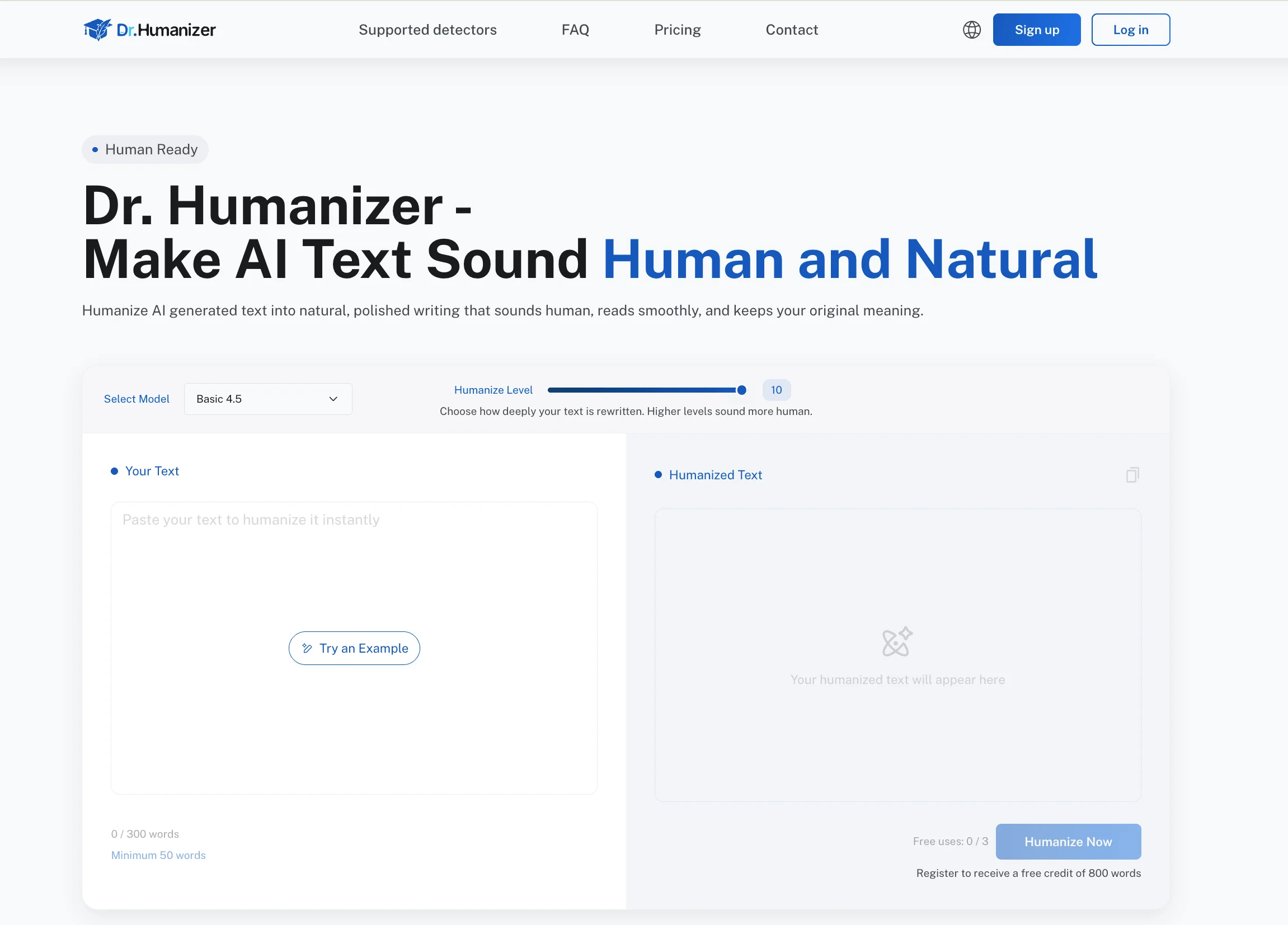
Dr. Humanizer is designed to help reduce AI-like patterns and improve natural flow, with multiple rewriting models and several rewrite options. That can be useful when you are editing allowed AI-assisted material and want to choose the most natural version.
The important limit is that a humanizer changes how text reads. It does not make unsupported claims true, create original analysis, or override course policy.
Humanizer vs Paraphraser Comparison
Feature | Humanizer | Paraphraser |
|---|---|---|
Main goal | Make AI-assisted text sound natural and less robotic. | Restate text with different wording or structure. |
Best student use | Polishing allowed AI-assisted drafts for clarity and voice. | Testing clearer phrasing for ideas the student understands. |
Main risk | Trying to hide prohibited AI-generated work. | Disguising copied source material or missing citation. |
Final check | Does this sound like me and follow policy? | Does this preserve meaning and cite the source? |
The tools overlap because both rewrite language. The ethical question is not the tool name. It is what you are rewriting, why you are rewriting it, and whether the final work is honest.
That is why tool choice should come after purpose. A paraphraser used on copied source text can still create plagiarism. A humanizer used on prohibited AI output can still create an integrity problem.
A student might use both tools in one project, but the order matters. First understand and cite the source material. Then, if permitted, use style support to improve a sentence you already own. Rewriting should follow comprehension, not replace it.
Policy and Citation Risks Are Different
Humanizers raise AI-use policy questions. If an assignment bans generative AI tools, using a humanizer may be prohibited even if the output sounds natural. Stanford's student guidance recommends assuming AI use is not allowed unless the assignment says otherwise and documenting use when required.
Paraphrasers raise citation questions. If the original idea comes from a source, changing the words does not remove the need for citation. To avoid plagiarism when paraphrasing, you still need to credit the source.
Both tools require judgment. Ask whether the help is allowed, whether the meaning is accurate, and whether another person would understand what assistance you used.
If you are unsure, choose the more transparent path. Ask your instructor, cite the source, or write the sentence yourself from your notes.
For multilingual writers, both tools can also be learning aids. Compare the tool's phrasing with your own sentence, then decide which grammar pattern or transition you want to practice in future drafts.
Key Takeaways
A humanizer focuses on naturalness, voice, and AI-like writing patterns.
A paraphraser focuses on restating text in different words.
Paraphrasing source material still requires citation.
Humanizing AI-assisted work still requires course-policy compliance.
Both tools should support your writing process, not replace your thinking.
FAQ
Is a Humanizer Better Than a Paraphraser?
Neither tool is automatically better. A humanizer is better for improving the natural flow of AI-assisted writing. A paraphraser is better for testing alternative wording. The right choice depends on the writing problem and assignment rules.
Can a Paraphraser Remove Plagiarism?
No. If the idea comes from a source, you still need a citation. A paraphraser may change wording, but it does not make the source's idea yours. Proper paraphrasing requires understanding, rewriting, and credit.
Can a Humanizer Replace My Own Revision?
No. A humanizer can suggest smoother wording, but you still need to check meaning, evidence, citations, and voice. The final version should be something you understand and can explain.
Which Tool Is Safer for Students?
The safer tool is the one used within the rules of the assignment. If AI editing is allowed, a humanizer may be useful. If you are working with source material, careful paraphrasing with citation may be appropriate.
Conclusion
The humanizer vs paraphraser choice comes down to purpose. One tool focuses on naturalizing AI-assisted prose; the other focuses on restating wording.
For school writing, the best choice is the one that supports honest learning. Keep meaning accurate, cite sources, follow the policy, and make sure the final draft reflects your own understanding.