

AI writing can be useful and still sound strangely impersonal.
That is where humanizer tools enter the conversation, especially for writers editing AI-assisted drafts.
Before using one, it helps to understand the tool and the responsibilities that remain with the writer.
Quick Answer to What Is an AI Humanizer?
An AI humanizer is a rewriting tool that changes AI-generated or AI-assisted text so it sounds more natural, varied, and readable. It may adjust tone, sentence rhythm, word choice, and flow. A humanizer can help with stiff or generic prose, but it does not verify facts, create original ideas, cite sources, or guarantee AI detector results. Students should use it only when their assignment allows AI editing and should review the final text themselves.
What an AI Humanizer Does
An AI humanizer reads a passage and rewrites it to reduce robotic patterns. It may soften overly formal phrasing, vary sentence length, replace repeated transitions, or make a paragraph sound closer to everyday academic writing.
Some tools focus on quick rewriting. Others provide several versions so writers can compare tone. The best use is not automatic acceptance; it is careful selection. A student should ask which version keeps the meaning, fits the assignment, and sounds like something they would actually say.
Humanizers are most useful when the writer already knows the material and needs help improving flow.
They are less useful when the draft has no clear evidence, no personal reasoning, or no connection to the assignment. In those cases, the writer needs to rebuild the content before worrying about style.
What an AI Humanizer Does Not Do
A humanizer does not make a weak argument strong by itself. It cannot tell whether a source is real, whether a quotation is accurate, or whether the assignment permits AI help. It also cannot promise that a detector will respond in a particular way.
Those limits matter because smooth writing can hide problems. A false claim is still false after it is rewritten. A missing citation still needs to be addressed to prevent accidental plagiarism, even after the sentence sounds better.
The safest review is practical: check facts, compare the revised sentence with your source, and remove anything you cannot explain.
Need | Humanizer Can Help? | Writer Still Must |
|---|---|---|
Natural phrasing | Yes | Choose the version that fits the purpose. |
Fact-checking | No | Verify claims with credible sources. |
Citation | No | Credit source ideas and quotations. |
Course permission | No | Read the policy or ask the instructor. |
How Students Might Use One Responsibly
A responsible student use case starts with permission. If the course allows AI tools for editing, a humanizer can help revise wording after the student has created the argument, gathered sources, and checked the facts.
For example, a student might write a rough paragraph from their own notes, use a humanizer to compare smoother versions, and then manually edit the result. That process keeps the student's reasoning in control.
By contrast, generating a full essay and using a humanizer to disguise it is risky and may violate academic integrity rules. The difference is not only technical. It is about who did the intellectual work.
Students should also think about audience. The formality you see in scholarship essay examples differs from that of a lab report or an online discussion post. A humanizer may offer a smoother sentence, but you decide whether that sentence fits the reader and purpose.
The tool is most useful when it gives you options. Comparing options can teach you what changed: a stronger verb, a simpler transition, or a sentence that puts the main idea earlier.
How AI Humanizers Relate to AI Detection
Humanizers are often marketed around detection, but detection outcomes are uncertain. Turnitin's AI writing release notes include updates for likely AI-paraphrased text and also acknowledge false positives. Cornell's academic integrity guidance warns against relying on automatic detectors as definitive evidence.
That means two things can be true at once. A humanizer may change patterns that some detectors notice, and an AI detector score may still be imperfect. Neither fact removes the need for honest writing practices.
Students should avoid guarantees that humanizers can bypass AI detection. A more responsible goal is clearer writing that follows the rules.
Where a Humanizer Tool Fits
Dr. Humanizer is an AI humanizer designed to improve natural flow and reduce AI-like writing patterns. It supports multiple rewriting models, allows longer text inputs, and gives several rewrites so users can compare options.
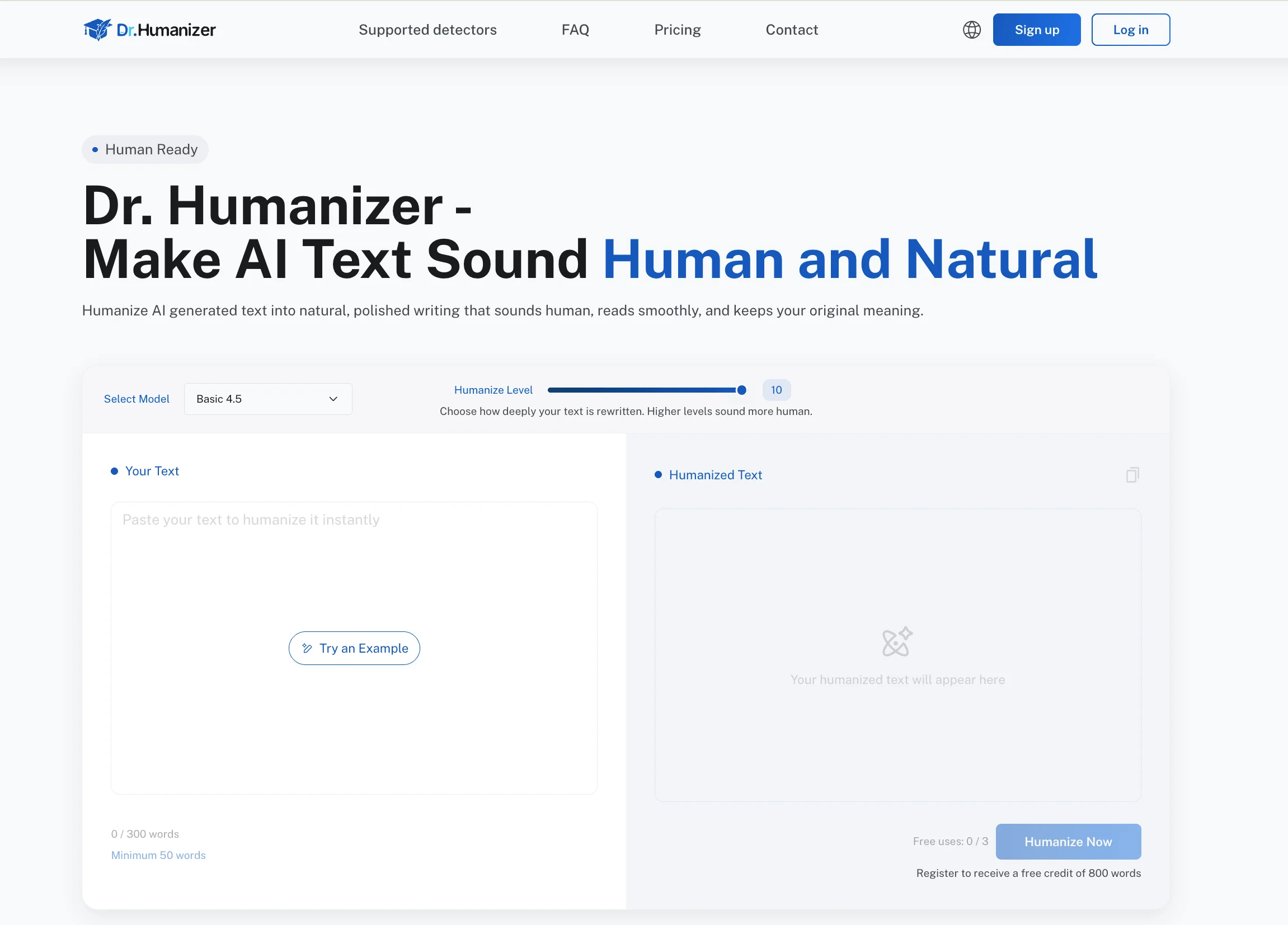
That feature set is useful when you want to review alternatives instead of accepting a single version. It is still important to check every rewrite. Make sure the final paragraph keeps your meaning, uses accurate sources, and reflects your own voice.
Use the tool as part of revision, not as a replacement for thinking through the assignment.
If your class requires disclosure, note the tool use the same way you would document other allowed writing support.
Before submitting any humanized writing, compare it with your draft notes. The final paragraph should preserve your claim, reflect the assignment, and avoid adding details that you did not verify.
That review is what turns a tool suggestion into a student decision. Without it, the rewrite may sound better while still carrying weak evidence or unclear ownership.
Key Takeaways
An AI humanizer rewrites AI-assisted text for more natural tone, rhythm, and flow.
It does not verify facts, cite sources, or decide whether AI use is allowed.
Students should review the syllabus before using any AI editing tool.
Humanizing should improve readability, not hide prohibited AI-generated work.
The final writing should still be accurate, sourced, and explainable by the student.
FAQ
Is an AI Humanizer a Writing Tool?
Yes. It is a rewriting and editing tool. It can help change tone and sentence flow, but it should be used with the same care as other writing support tools, especially in academic settings.
Can an AI Humanizer Write My Essay?
No. A humanizer rewrites existing text; it is not a substitute for researching, planning, drafting, and arguing. Submitting work you did not create may violate your course policy.
Is Using an AI Humanizer Cheating?
It depends on the assignment rules and how you use it. If AI editing is permitted and you review the work honestly, it may be acceptable. If you use it to hide prohibited AI output, it is risky.
Should I Disclose Humanizer Use?
Disclose it when your instructor, syllabus, school, or publisher requires disclosure of AI assistance. If the policy is unclear, ask before submitting rather than guessing.
Conclusion
What is an AI humanizer? It is a tool for rewriting AI-assisted text so it can sound more natural and readable.
For students, the useful part is editing support. The responsibility stays with you: follow the policy, check the facts, cite sources, and make sure the final work reflects your own understanding.