

For Dr Humanizer vs Natural Write, evaluate two separate outcomes: whether the prose reads naturally and how easily you can inspect, revise, or reject it.
This comparison uses public product information reviewed on November 17, 2026. It provides a practical evaluation method, not a head-to-head output test or quality ranking.
Compare the Workflows You Would Actually Use
A useful interface should fit your editing task. Reviewing alternative sentences differs from working through a document that needs several kinds of revision.
Dr. Humanizer presents model selection and a Humanize Level control. Its homepage describes three rewrite alternatives that users can review or combine.

Natural Write lists humanizing, paraphrasing, grammar checking, citation checking, and a document editor. Its homepage describes applying tools to selected parts of a document.
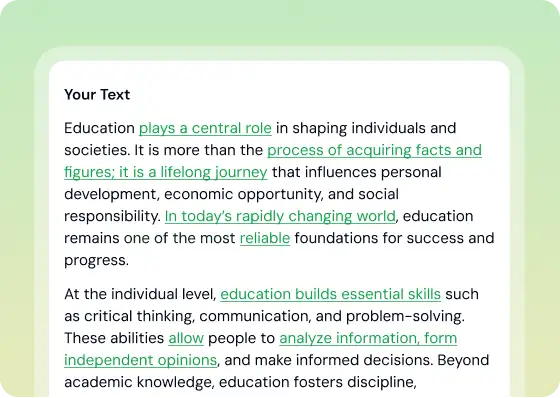
Natural Write publishes this editor illustration on its own site. Highlighted wording is product presentation material, not an output tested for this comparison.
Decision | Dr. Humanizer | Natural Write |
|---|---|---|
Starting point | A rewriting workflow with adjustable controls. | Rewriting alongside several editing tools. |
Workflow to evaluate | Compare alternative wording for a specific passage. | Review selected passages within a broader editing workflow. |
What remains unverified here | Output quality and repair effort on your text. | The same quality and repair-effort questions. |
These descriptions establish features to investigate, not a winner. Confirm availability in your account before planning a workflow around a particular control.
The distinction between a humanizer and a paraphraser can help you name the editing task before comparing workflows.
A built-in citation checker does not replace reading the source. Likewise, several rewrite options do not establish that any option preserves every qualification.
Review Naturalness Across Separate Editing Passes
Use a passage you wrote and understand, where your assignment permits AI editing. Keep the original outside either service and state one clear editing goal.
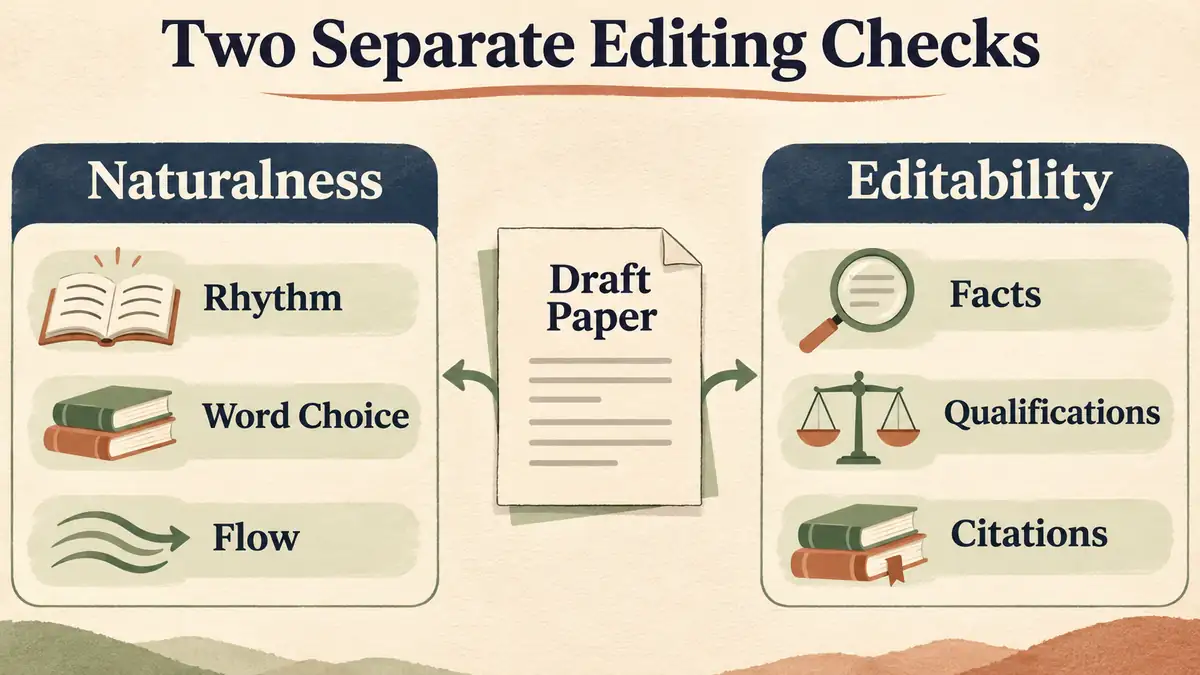
Naturalness: Read for Meaningful Flow
Rhythm: sentence lengths should fit the ideas, without repetitive openings or needless fragments.
Word choice: prefer familiar, precise wording over elaborate substitutes that change the tone.
Connections: pronouns, transitions, and repeated terms should remain easy to follow.
Voice: the passage should still sound appropriate for its writer, audience, and purpose.
Read the revision with the paragraphs before and after it. A sentence can sound smooth alone yet repeat an earlier point or break the argument's progression.
Editability: Count the Work Needed to Make It Usable
Compare each output with the same original. Record corrections needed for factual accuracy, citations, terminology, and missing qualifications before judging stylistic improvements.
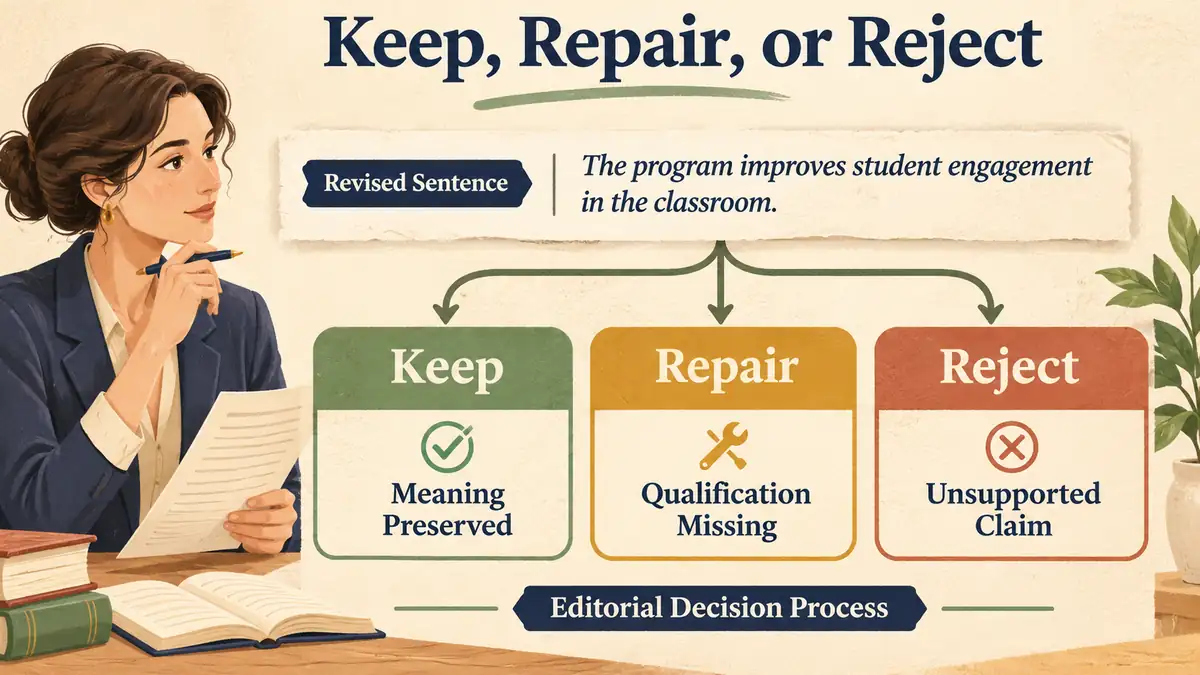
Review Result | Decision |
|---|---|
Clearer wording; meaning and attribution unchanged | Consider keeping it. |
Readable wording; a qualification is missing | Repair it and review again. |
A new fact or stronger conclusion appears | Reject the unsupported change. |
Invented editing example: “The survey suggests a possible link in this sample” should not become “The survey proves the effect.”
The shorter sentence is easier to read but changes the claim. This example illustrates a review criterion; it is not output from either product.
Keep a brief log: original passage, selected settings, proposed output, required repairs, and final decision. Use the same criteria for both services.
If you combine alternatives, check the combined paragraph again. A pronoun may lose its referent, or a citation may become attached to the wrong claim.
For a document workflow, record the selection boundaries before each pass. Include the preceding sentence when a pronoun or transition depends on it.
After a grammar pass or a second rewrite, recheck terms and citations across the whole section. A locally smoother sentence can conflict with an earlier definition.
For an alternatives workflow, keep the accepted sentences in a separate master draft. Check the joins before sending any passage through another tool.
Compare repair effort across the complete editing sequence, not just the first output. The practical question is whether successive edits remain understandable and reversible.
FAQ
Which Tool Produces More Natural Writing?
The public feature information does not establish that. Evaluate permitted samples with the same criteria and distinguish your observations from general performance claims.
Should I Choose the Output With a Lower Detector Score?
A detector score does not verify clarity, factual accuracy, or permission to use the tool. Review the writing and the applicable rules directly.
Can Either Tool Make an Unsupported Argument Reliable?
No wording change supplies missing evidence. Return to the sources and reasoning before polishing a claim you cannot support.
Conclusion
Choose the workflow that makes useful changes easiest to inspect. Assess naturalness and repair effort separately, preserve the original, and retain responsibility for the final text.