

A polished paragraph can still make a student uneasy when it sounds smoother than their usual draft.
That worry matters because class writing is judged for reasoning, evidence, and voice, not only grammar.
The useful comparison is how AI vs human writing differs in real academic prose.
Quick Answer to AI vs Human Writing
AI vs human writing is not a simple contest between perfect and imperfect prose. Human writing usually carries visible decisions: uneven sentence length, specific source handling, a developing argument, and occasional phrasing that reflects the writer's habits. AI-generated writing often reads more evenly, uses broad transitions, and may summarize without making strong choices.
Detectors look for statistical patterns, but they can be wrong, especially with short, edited, or multilingual writing. A fair review should combine close reading, draft history, source accuracy, and course policy.
Where Human Voice Shows Up
Human writing often reveals the path of thought. A student may pause to qualify a claim, return to a source, or choose a sentence that sounds slightly informal because it matches the assignment situation. Those details matter. A paragraph written by a person is not automatically messy, but it usually contains decisions that connect evidence to a specific purpose. When reviewing a draft, look for the writer's priorities, not just surface polish.
For a student working through AI vs human writing, this point matters because a detector report rarely explains the assignment context. The better habit is to connect the flagged language with a concrete draft decision: what source was used, what claim was revised, and what evidence changed between versions. That turns a vague concern into something the writer or instructor can actually evaluate.
Why AI Prose Can Sound Too Even
AI prose often feels balanced because it predicts likely next words from large patterns of language. That can produce clean topic sentences, tidy lists, and transitions that sound useful while saying little. The risk for students is that a paragraph may appear complete before the argument has actually earned its conclusion. OpenAI's own classifier notes from 2023 warned that AI detector errors can occur with predictable text, which is one reason style alone cannot settle authorship.
In practice, AI vs human writing should be reviewed alongside the paper's purpose. A scholarship essay, lab report, literature review, and discussion post all create different writing patterns. A fair review asks whether the form of the assignment explains some of the signal before assuming that a tool has found misconduct. That extra step protects both honest students and careful instructors.
How Detectors Read the Difference
AI detectors usually measure features such as predictability, repeated phrasing, sentence variation, and token patterns. Turnitin explains that its model evaluates segments and produces an overall prediction, while QuillBot describes indicators such as sentence variation and repetitiveness. These tools can support review, but they do not see intention, drafting choices, research notes, or whether a student revised heavily after using an assistant.
The student-facing lesson is simple: keep the work traceable when AI vs human writing could become a concern. Save outlines, notes, source summaries, and earlier drafts instead of relying on memory after submission. Those materials show the reasoning behind the paper, and they often answer questions that a detector report cannot see.
Revision Moves That Restore Ownership
Students revising AI-like text should focus on meaning before style. Replace vague claims with course-specific evidence, name the source relationship, and add the reasoning step that only the writer can provide. Reading the paragraph aloud also helps because overly uniform sentences become obvious. If AI helped brainstorm, the final draft should still show the student's own structure, examples, and judgment.
A careful reader should also separate writing quality from authorship when considering AI vs human writing. Fluent prose can be human, weak prose can be AI-assisted, and both can be revised. The useful question is whether the paragraph makes specific, verifiable choices that fit the assignment and whether the writer can explain those choices.
When a Score Should Not Decide the Case
Detector output is best treated as a signal, not a verdict. Turnitin states that it provides data for educators rather than a misconduct decision, and MIT Sloan Teaching & Learning Technologies cautions that AI detectors can create false accusations. A responsible response compares the score with drafts, notes, citations, and the student's explanation of process.
When the result affects a grade or integrity review, AI vs human writing deserves a higher evidence standard. A quick scan may be fine for personal revision, but a serious decision should include policy language, drafts, source checks, and a chance for the student to respond. That approach treats technology as support for judgment rather than a replacement for it.
Key Takeaways
Human writing often shows source-specific judgment, uneven rhythm, and a developing line of thought.
AI writing may sound fluent while staying broad, predictable, or weakly connected to evidence.
Detector scores should be reviewed with drafts, assignment context, and school policy.
The best revision goal is not to sound less detectable; it is to make the work more clearly yours.
FAQ
Can Human Writing Sound Like AI?
Yes. Formal academic writing, ESL writing, heavily edited prose, and formula-based assignments can look predictable. That is why a detector score should be checked against the student's drafting process, source use, and previous writing rather than treated as proof by itself.
Does AI Writing Always Sound Generic?
No. Strong prompts, detailed source material, and careful editing can make AI-assisted text more specific. The real question is whether the submitted work reflects the student's own analysis, course learning, and permitted use of tools.
What Should Students Save as Evidence?
Save outlines, notes, source annotations, comments from peers or tutors, and document history when possible. These materials show how the paper developed and can help explain a draft if a detector result is questioned.
Can a Humanizing Tool Help with Robotic Writing?
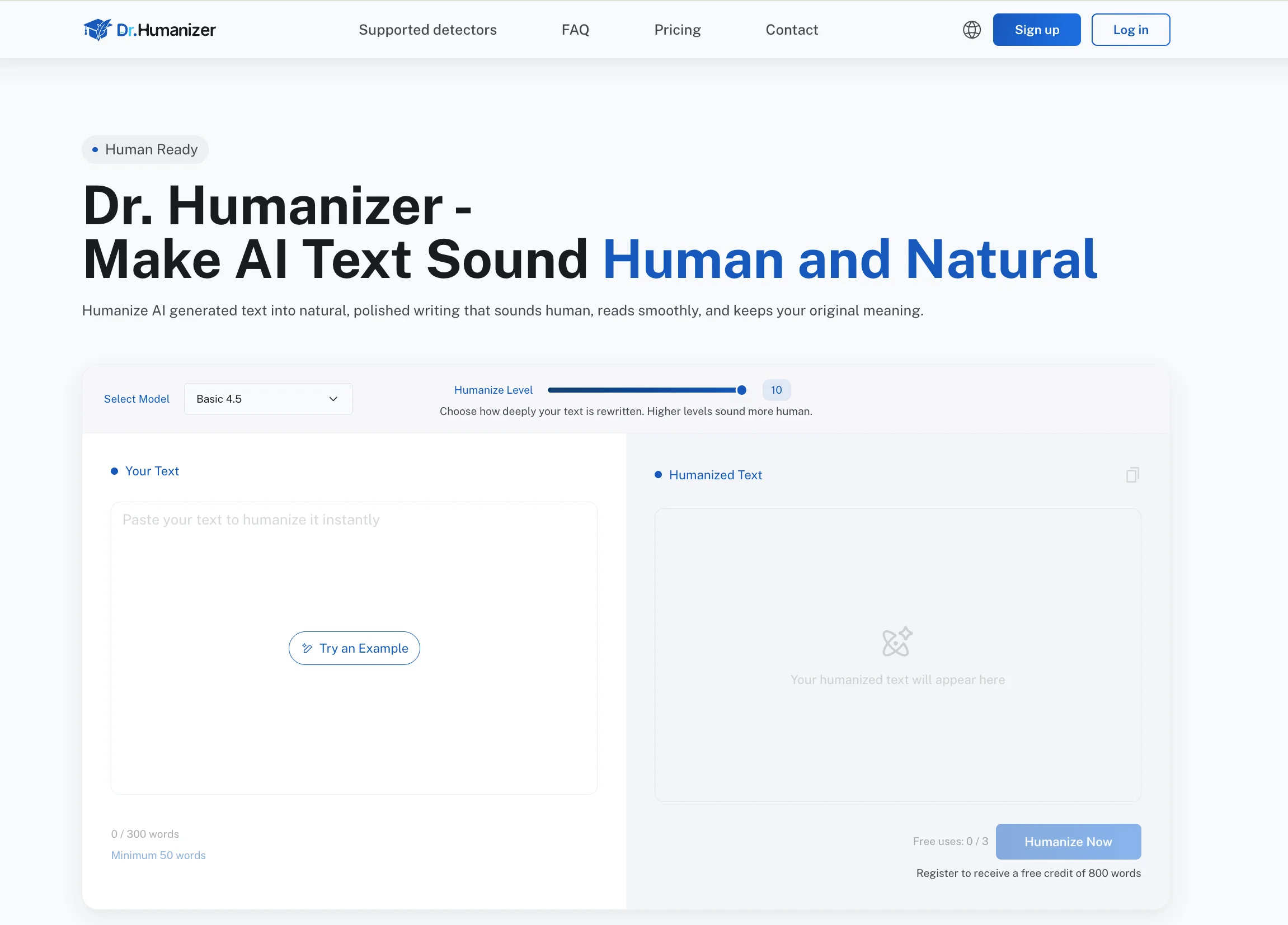
Dr. Humanizer may help smooth AI-like rhythm and improve readability, but students still need to fact-check, cite sources, follow course policy, and keep the final wording in their own voice.
What Is the Safest Way to Compare the Two?
Read for reasoning. Ask whether the paragraph makes a specific claim, uses relevant evidence, explains the connection, and sounds consistent with the assignment. Statistical signals can help, but close academic reading matters more.
Conclusion
The most useful AI vs human writing comparison is not about catching every sentence. It is about recognizing whether the work shows real choices, evidence, and ownership.
Students should revise toward clarity and accountability: document the process, cite sources, check facts, and make sure the final draft reflects their own thinking before submission.
For ai vs human writing, the most useful next step is to make the writing process visible. Keep the draft trail, review sources carefully, and treat any automated result as something to interpret with context rather than something to obey without question.