

Does translation trigger AI detection? A flag alone cannot explain how a passage was written.
Review the translation process, supported languages, and original draft. Keep machine translation, human translation, and second-language writing separate.
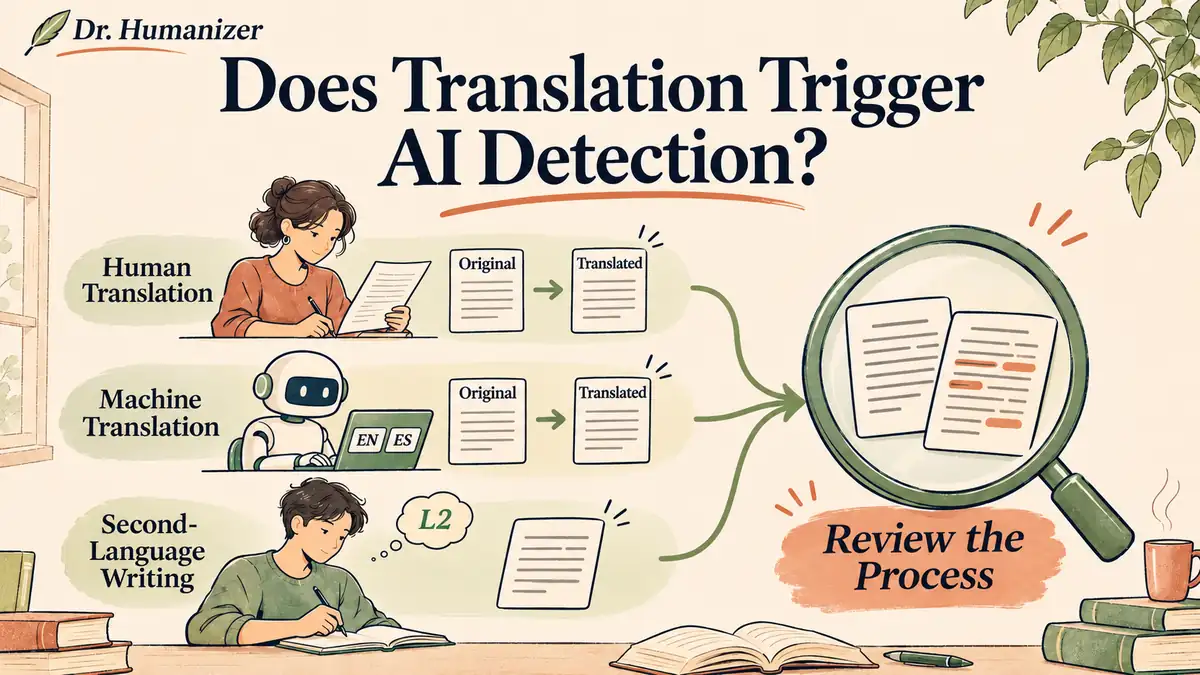
Separate the Three Writing Processes
Process | What Happened | Useful Context |
|---|---|---|
Human translation | A person translated an existing text. | Original text, translator's role, and revision notes. |
Machine translation | A service produced translated wording. | Original, tool name, output, and subsequent edits. |
Second-language writing | A person drafted directly in a language they are learning. | Drafts and notes; no translation step should be assumed. |
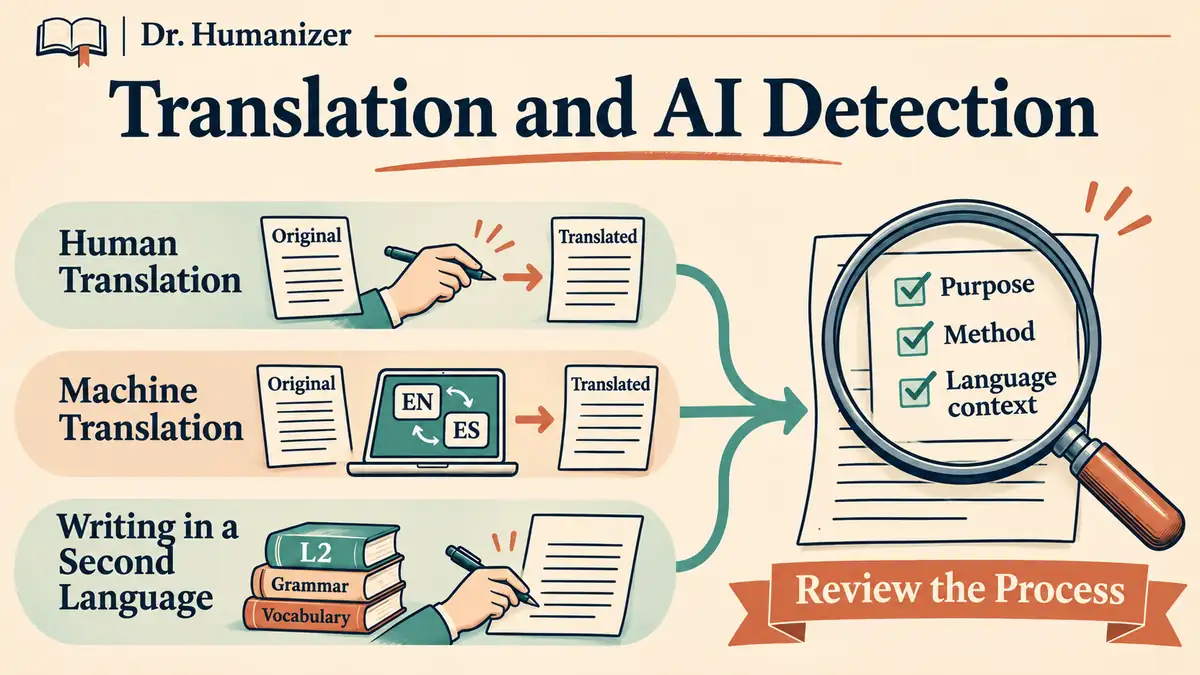
Also distinguish translating your own draft from translating someone else's work.
A translated source still needs attribution.
And permission to translate does not automatically authorize generating new arguments or analysis.
What the Evidence Does—and Does Not—Show
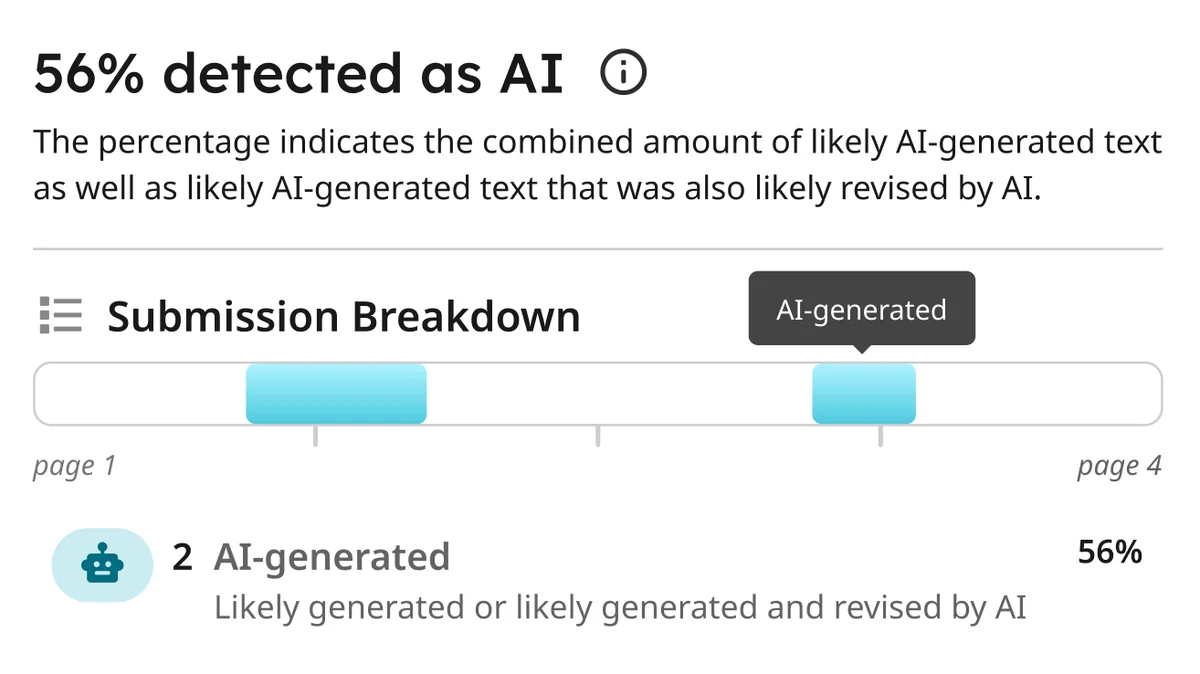
Detectors Evaluate Text, Not a Complete Process Record
Turnitin acknowledges possible misidentification. Its guidance says AI results should not be the sole basis for adverse action against a student.
The AI writing percentage is separate from the similarity score. Interpret the report alongside the actual work and applicable policy.
Older Research Is Not a Current Product Guarantee
A 2023 study by Liang and colleagues found bias against non-native English samples in the detectors it evaluated.
A separate 2023 study by Weber-Wulff and colleagues examined detection reliability and the effects of machine translation and other transformations.
These studies identify limitations under their tested conditions.
They do not establish a current false-positive rate or prove that translation caused a particular flag.
They also do not justify assuming that every non-native writer used machine translation.
Do Not Confuse Translated Matching with AI Detection
Turnitin's optional Translated Matching service translates submitted non-English content into English to look for source matches.
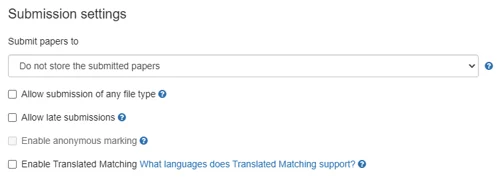
That is a similarity-checking workflow, not a finding that a student used AI to write the paper.
Similarity concern: examine the matched source, quotation, paraphrase, and citation.
AI writing concern: identify the highlighted passage and discuss how it was drafted and revised.
Translation-policy concern: establish which assistance was permitted and what was actually used.
The guide to how AI detectors work provides background, but the report type and assignment rules determine the immediate question.
Review a Flagged Translation in Four Steps
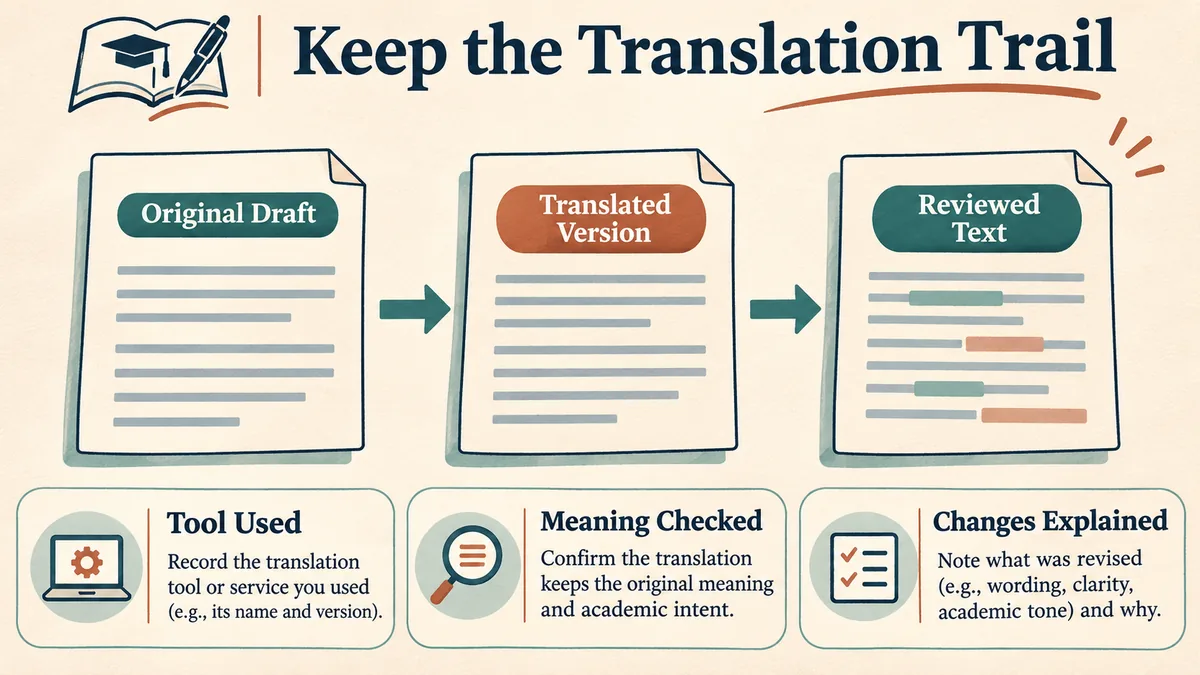
Preserve the versions. Keep the original-language draft, translated output, final submission, and report. Do not replace the original while investigating.
Record the actual assistance. Identify whether a person, translation service, or generative tool contributed, and what you changed afterward.
Compare meaning. Check negation, certainty, technical terms, numbers, and citation scope against the original. Fluency does not establish translation accuracy.
Explain the specific passage. Provide relevant existing records and ask what further clarification is needed. A score alone cannot reconstruct the workflow.
Check the detector's current supported languages and input requirements.
Support for one language or feature does not establish equal reliability for every language pair, mixed-language passage, or translation method.
Improve Clarity Without Creating Another Mystery
If permitted, Dr. Humanizer may suggest clearer wording after you have checked the translation. Save the revision separately and verify its meaning.
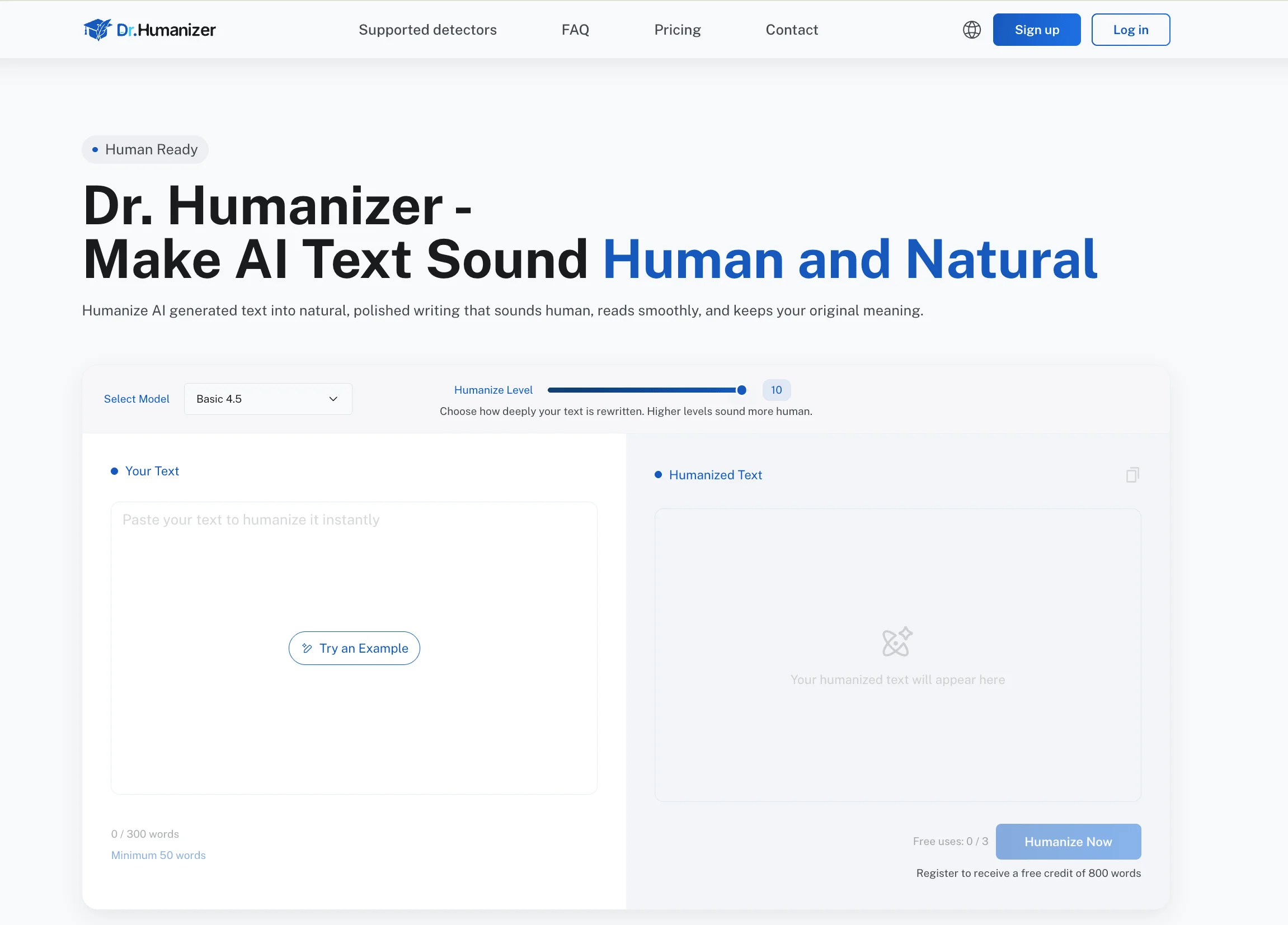
A rewrite or a changed detector score is not proof of authorship.
Where required, explain this assistance accurately using the relevant AI-use disclosure guidance. Never repeatedly translate a passage merely to chase a different detector result.
FAQ
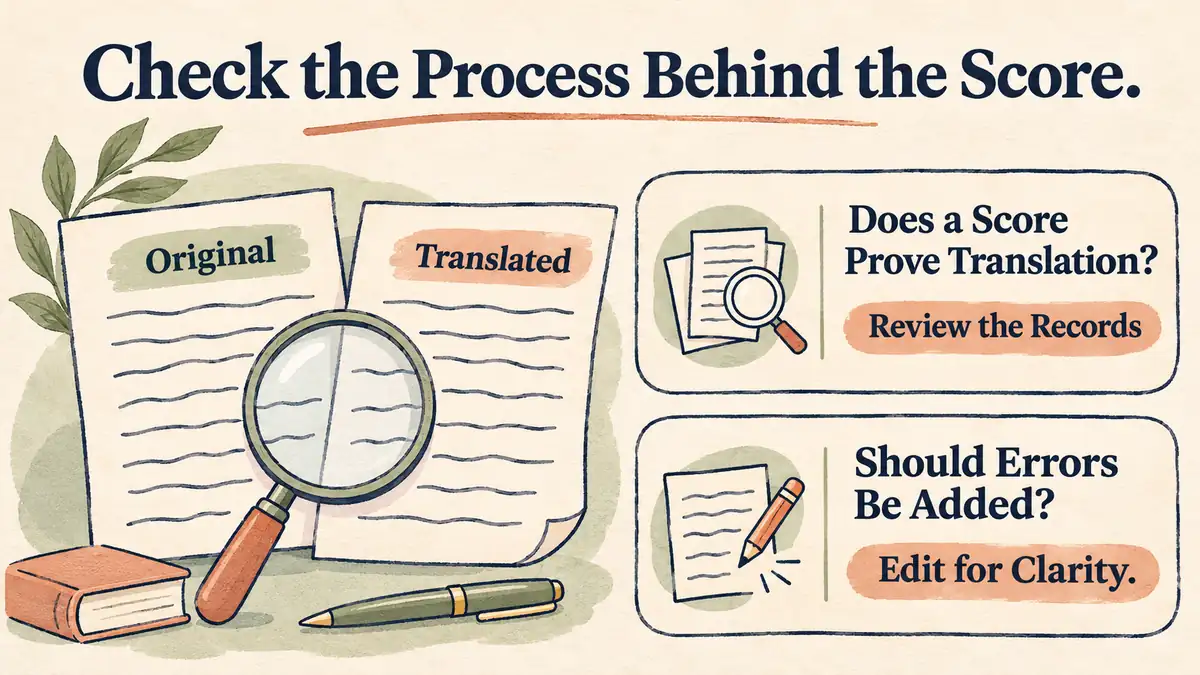
Does a High Score Prove Machine Translation?
No. An AI writing score does not establish the particular tool or process used. Review the actual records and the tool's stated limitations.
Should I Keep Mistakes to Sound Human?
No. Correct errors for meaning and clarity. Deliberately adding mistakes weakens the writing and does not establish how it was produced.
Conclusion
Evaluate translated writing through its original, translation, and revision history.
Keep similarity, AI detection, and permission questions separate, and judge changes by accuracy rather than a target score.